Applications
Application of the Month: 3D Printed Titanium Tank from South Korean Consortium
A group of South Korea’s leading companies and research institutions is driving a major breakthrough in space technology. The Korea Institute of Industrial Technology (KITECH), Korea Aerospace Research Institute (KARI), KP Aero Industries, AM Solutions, and Hanyang University hav
- 3 min read
- Applications
- Six more stories
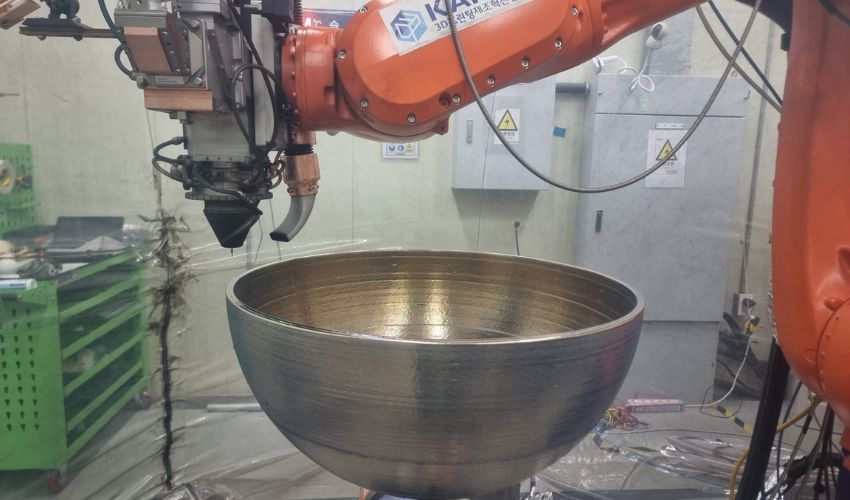
A group of South Korea’s leading companies and research institutions is driving a major breakthrough in space technology. The Korea Institute of Industrial Technology (KITECH), Korea Aerospace Research Institute (KARI), KP Aero Industries, AM Solutions, and Hanyang University have partnered on an ambitious project to advance additive manufacturing for the aerospace sector. Their goal is to produce high-pressure titanium tanks, which are essential components for launch vehicles and satellites, using additive manufacturing. The team recently reached a significant milestone by successfully manufacturing and demonstrating the reliability of a fully 3D printed titanium tank, setting the stage for future innovations in spaceflight hardware.
The goal of the project was to demonstrate the feasibility and resilience of a 3D printed space tank under realistic conditions. The resulting cryogenic tank, made of titanium, measures 640 mm in diameter and has a capacity of 130 liters. To test its performance under extreme conditions, the tank was deep-frozen and subjected to a cryogenic pressure test – with impressive results: the test was a complete success. The tank can withstand 330 bar of internal pressure at –196 °C, cooled by liquid nitrogen. This represents the world’s first successful test of a 3D printed high-pressure vessel under such extreme conditions.
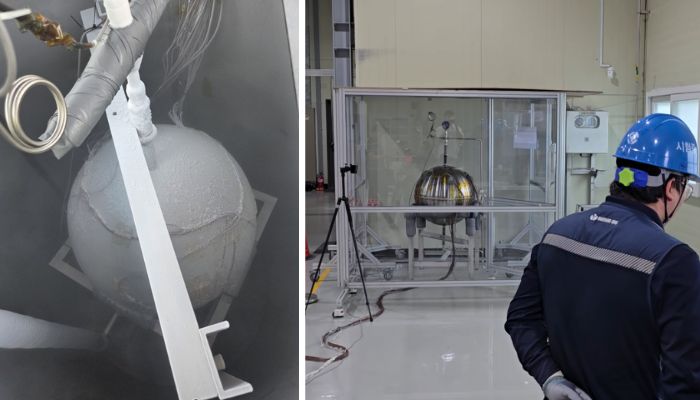
The cryogenic pressure test (left) and a pressure test at room temperature (right)
DED and Two Hemispheres
KITECH assumed responsibility for the additive manufacturing process, using DED (Directed Energy Deposition) technology, which deposits titanium material layer by layer and simultaneously melts it. The production process involved two hemispherical titanium halves, which were welded together to form a monolithic tank after precise heat treatment and machining. Real-time monitoring enabled the precise implementation of optimized deposition paths – a key to the achieved geometric accuracy and mechanical integrity.
More from the desk
Six other notes from the rest of the bench.
 NewsWEBINAR: Breaking Boundaries With Pellet 3D PrintingCurrently, more and more companies are considering taking advantage of the benefits offered by pellet 3D printing. As some of the greatest challenges facing companies are the material limitations associated with filament production, the interest in using pellets instead has&helli
 NewsThe Best Innovations at RAPID + TCT 2024Have you been keeping up with all the news from RAPID + TCT? With a rapidly changing additive manufacturing landscaping, it can be hard to know what some of the most interesting technologies shown at the event were. That is…
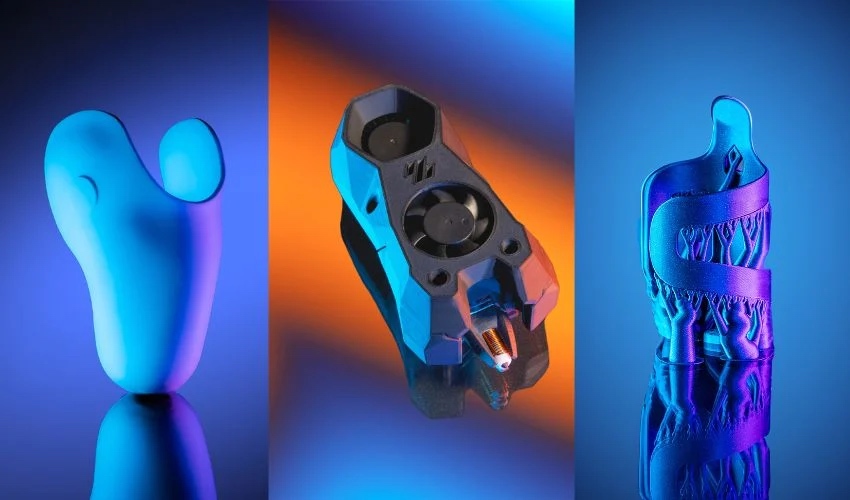 GuidesPlasmics Combines Individual Requirements and High Quality Standards With Innovative FDM PrintingPlasmics, Austrian company based in Vienna, was founded in 2018. What is interesting about the company is that it seeks to develop pioneering 3D printing solutions that do not require years of specialist knowledge. This has lead to Plasmics estbalishing…
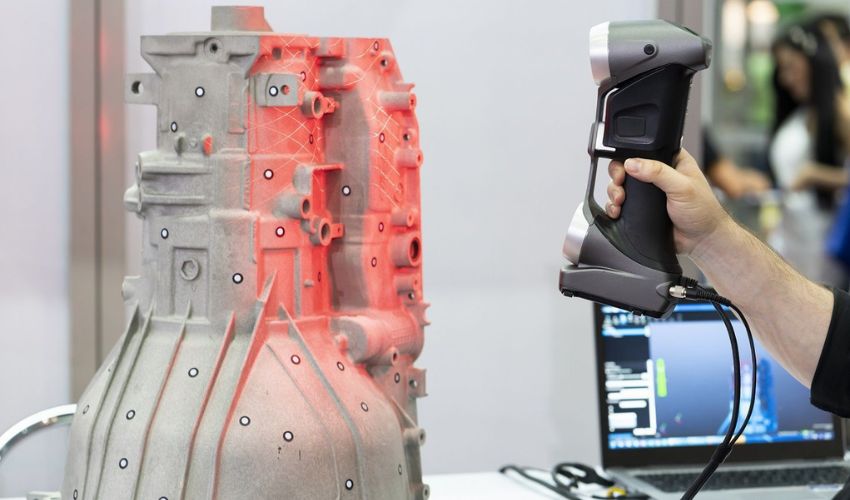 PrintersReverse Engineering and 3D Printing: All You Need to KnowReverse engineering is a method of analyzing a finished product to understand its design and manufacture. By deciphering the structure and composition of an object, this technique offers the possibility of reproducing it, improving it or drawing inspiration from it…
 NewsSinger Rosalía Stuns in Original 3D Printed DressLast week, the British Fashion Awards (BFA), an annual ceremony celebrating the best of Britain’s designers, took place in London. Described as London’s answer to the New York Met Gala, the event is highly anticipated within the fashion industry worldwide.…
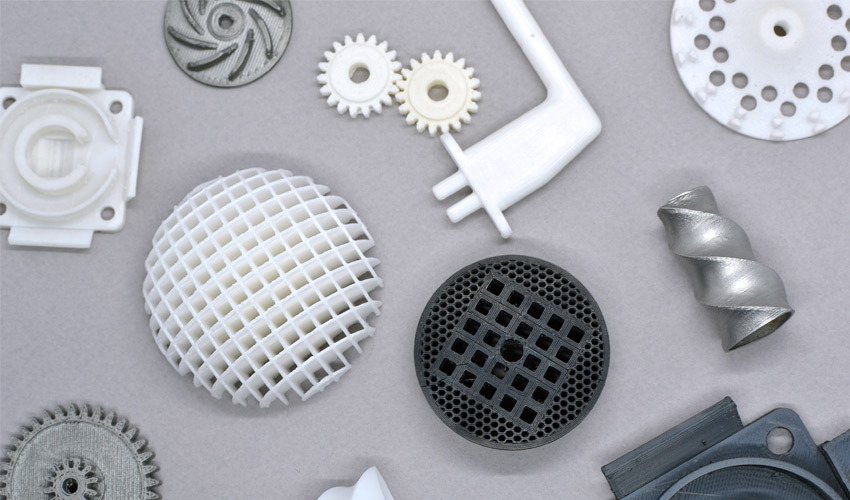 GuidesNanoe on Democratizing Ceramic and Metal Desktop Additive ManufacturingAn expert in developing raw materials for the ceramics industry since 2008, French company Nanoe entered the additive manufacturing market in 2018 with its first line of ceramic filaments. Compatible with FDM machines, they enable the design of durable parts…