News
The Impact of Additive Manufacturing on Nuclear Fuel Transport
In 2019, Orano Federal Services and the University of North Carolina at Charlotte explored the design of 3D-printed shock absorbers for containers used to transport spent nuclear fuel. However, the partners encountered several obstacles. Seven years later, the study has…
- 3 min read
- News
- Six more stories
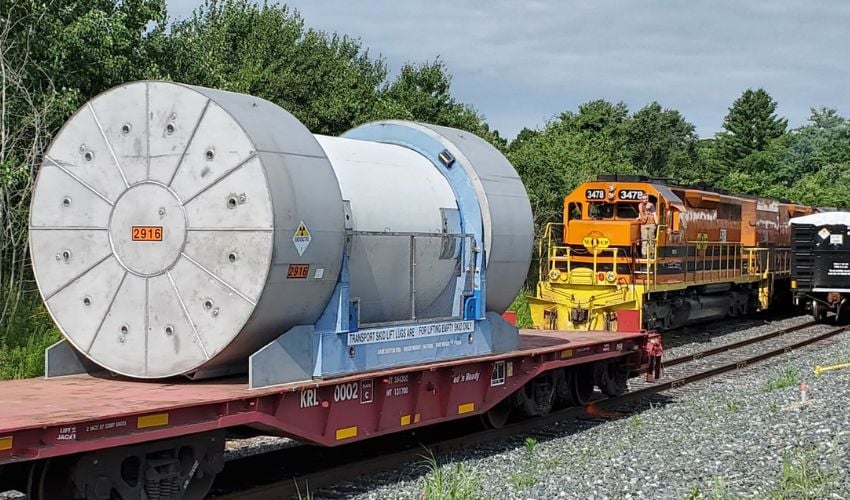
In 2019, Orano Federal Services and the University of North Carolina at Charlotte explored the design of 3D-printed shock absorbers for containers used to transport spent nuclear fuel. However, the partners encountered several obstacles. Seven years later, the study has been revived, and some of those barriers now appear to have been overcome. So, is it worthwhile to 3D print these structures for the nuclear sector?
First, it is important to understand why there is a push to redesign these shock absorbers. Traditionally, they are made from balsa wood, redwood, or aluminum. Manufacturing costs can range from $250,000 to $1 million, as these are large components requiring significant amounts of raw material.
At first glance, additive manufacturing seems like a natural fit. By optimizing material usage, it could help reduce costs. That is indeed the objective. But as you might expect, the reality is more complex.
More from the desk
Six other notes from the rest of the bench.
 NewsWhat impact does 3D printing have on the world of cinema?The applications of 3D printing are extremely diverse: from food to automotive parts, this technology is used to create a wide variety of shapes from various materials. The world of filmmaking is another area where 3D printing shows its full…
 MaterialsTop 5 Videos: How to Make Your Own 3D Printing Coffee FilamentCan you imagine using a filament for your 3D printer that is made from coffee? Well, this is what one 3D printing enthusiast has figured out after reusing coffee grounds and mixing them with PLA. In this compilation of weekly…
 NewsBANYAN ECO WALL, fully 3D printed self-watering wallThe BANYAN ECO WALL is a fully 3D printed irrigated green wall, featuring an embedded drainage system, which also showcases bionic design. It is the work of NOWLAB using BigRep’s large-format 3D printers. This prototype is a perfect example of…
 NewsThe State of 3D Printing 2019: professionals’ confidence in 3D printing is growingThe 3D printing service Sculpteo, has just published the 5th edition of its study entitled ‘The State of 3D Printing 2019’ which provides a comprehensive overview of the additive manufacturing industry worldwide. This year, more than 1,300 people participated in…
 GuidesCan a-metal Democratize Access to Laser Fusion Technology?a-metal is a startup that develops innovative entry-level solutions for metal 3D printing, with the aim of making additive manufacturing of metal parts accessible to as many people as possible. The company’s goal is to establish metal 3D printing technology…
 NewsRestoring Historic Aircraft with 3D Printing TechnologiesMaintaining a 70 year old aircraft is difficult, especially when parts are no longer manufactured and you can’t find original spares. The Air Mobility Command Museum at Dover Air Force Base, Delaware, houses many aircraft, some dating all the way…