Guides
Animal Alternative Technologies Uses 3D Printing for Ethical Meat Production
Along with dairy production, the meat industry is now known to account for 83% of agricultural land use and produces 18 per cent of greenhouse gases, including methane and nitrous oxide. What’s more, a study from the University of Oxford…
- 3 min read
- Guides
- Six more stories
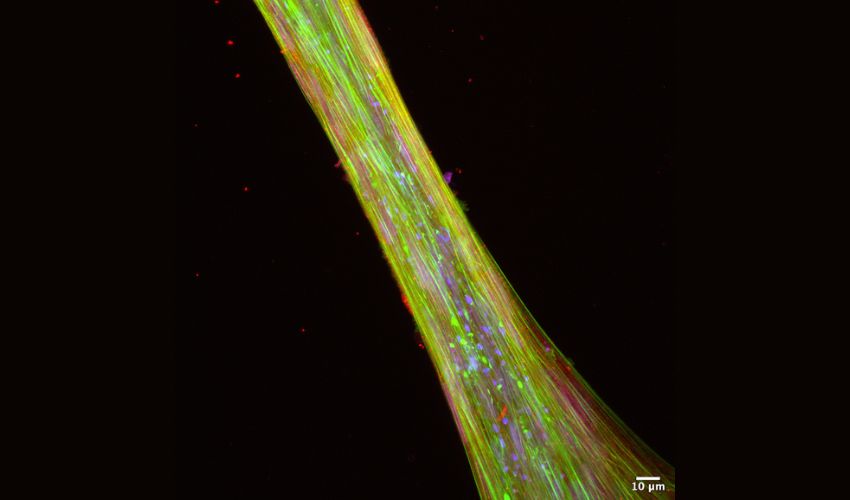
Along with dairy production, the meat industry is now known to account for 83% of agricultural land use and produces 18 per cent of greenhouse gases, including methane and nitrous oxide. What’s more, a study from the University of Oxford found that eating a vegan diet could cut an individual’s carbon footprint by up to 74%, making it the single best way to help the planet. It might like a no-brainer, right? Despite these statistics, meat features heavily in cuisines from all around the world and many of us could not imagine life without it. Thankfully, substitutes have become increasingly popular in recent years, particularly those which emulate meat in taste and texture. Something less well-known is lab-grown meat: today, we will introduce you to Clarisse Beurrier of Animal Alternative Technologies, a firm based in Cambridge, UK, which uses 3D printing to create cultured meat. To find out more about her motivations and thoughts on the meat industry as it stands, just read on.
3DN: Could you introduce yourself and explain your link to 3D printing?
My name is Clarisse Beurrier and I am the co-founder and CEO of Animal Alternative Technologies. We are an engineering B2B startup based in the University of Cambridge focused on scaling up cultured meat for food sustainability and security. 3D Printing has a big role to play in this innovative sector of Cellular Agriculture (this term means making agricultural products by growing cells instead of raising and slaughtering animals). At Animal Alternative Technologies, we already use 3D printing for many applications because it offers great flexibility, especially for rapid prototyping and the creation of custom parts.
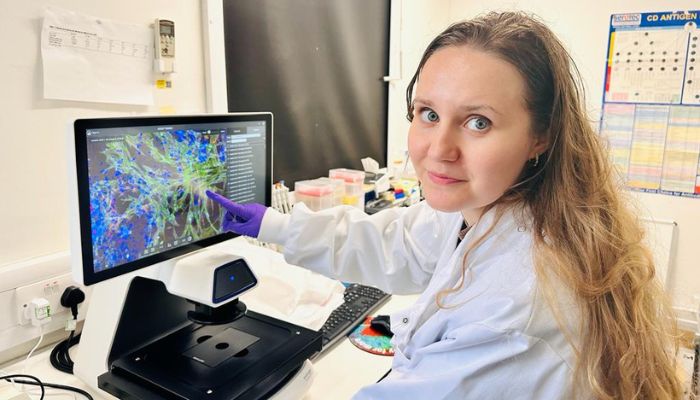
Clarisse Beurrier, the CEO of AAT
My hope is to make cultured meat production accessible to all, whilst leaving no one behind in this race to reinvent meat. We are creating scalable industrial processes for the major types of mammalian meats first processed types of meats and then structured like steaks, focusing on cost reduction.
More from the desk
Six other notes from the rest of the bench.
 NewsScan the World Calls to Immortalize Cultural Heritage After Easter Island FireLast week, a fire on Rapa Nui, colloquially often referred to as Easter Island in English, damaged many of the more than 1000 Moai statues located there. The damage was extensive and cannot be undone, with more than 100 hectares…
 GuidesRomantic STL Files to Celebrate Valentine’s DayMost likely originating in ancient Rome, Valentine’s Day is a celebration of love, celebrated, as you know, on February 14. So, we’ve put together some ideas for STL files that you can 3D print at home. Whether it’s for your…
 NewsPanic! At The Disco uses 3D printing for its snare drumsThe drummer of the band Panic! At The Disco, Dan Pawlovich used 3D printing to create the body of his snare drum, the horizontal shell that sits between his legs and produces the highest sound. This new method of manufacturing…
 MaterialsAll You Need to Know About Carbon Fiber for 3D PrintingThe advent of 3D printing has brought about a transformative revolution in the fields of design and manufacturing. And now, with the emergence of 3D printed carbon fiber composites, a whole new realm of possibilities is unfolding. Carbon fiber, which…
 NewsProject uses 3D printing to supersize and study pollenIn fields as far-ranging as medical and aerospace engineering, 3D printing has applications that can help students and professionals understand complicated concepts. For example, in the medical sector, exact anatomical models of patients’ organs are 3D printed to plan and&h
 NewsGE Research 3D printed a heat exchanger for more efficient energy conversionAs part of a two-and-a-half year mission led by Advanced Research Projects Agency, GE Research launched a $2.5 million project to 3D print a high temperature, high pressure and super compact heat exchanger. This should produce cleaner and more efficient…