News
All You Need to Know About Vapor Smoothing in 3D Printing
Many parts are not immediately usable after 3D printing and, depending on the printing process chosen, require cleaning and finishing. Through this, it is possible to improve an object’s mechanical properties or refine its surface finish. There are a multitude…
- 3 min read
- News
- Six more stories
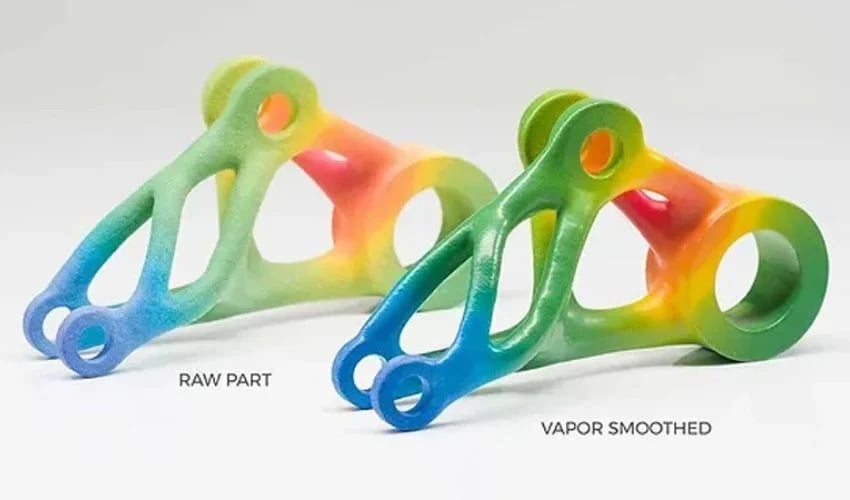
Many parts are not immediately usable after 3D printing and, depending on the printing process chosen, require cleaning and finishing. Through this, it is possible to improve an object’s mechanical properties or refine its surface finish. There are a multitude of techniques available for this purpose, but they always depend on the printing technology, the material and the application. One method of surface treatment for plastic parts is vapor smoothing.
This physical-chemical process densifies and smoothes the surface of thermoplastics. The chemical is applied to the part via steam injection. The longer and more intensive the chemical treatment, the glossier and smoother the 3D printed part. But how does it work, and what do you need to watch out for?
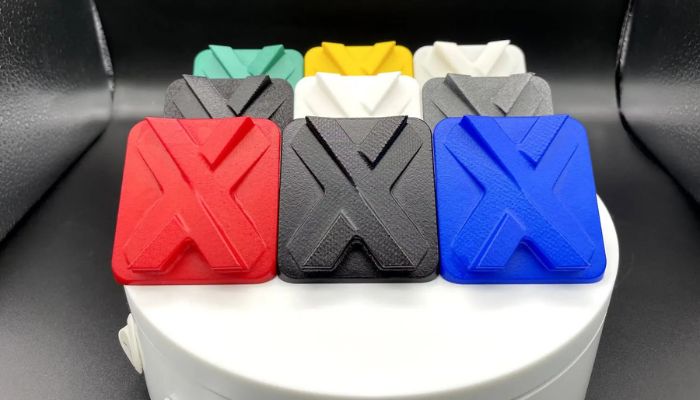
Vapor smoothing is a post-processing technique used to obtain smooth surfaces on 3D printed parts (photo credits: Xometry).
How Does Vapor Smoothing Work?
The principle of vapor smoothing is to liquefy the top print layer under the effect of steam and chemicals, and to reorganize the surface molecules, thus improving its structure. The process takes place in a hermetically sealed, heated chamber, into which the 3D-printed parts are placed.
More from the desk
Six other notes from the rest of the bench.
 MaterialsUT Austin Unveils New 3D Printing Method for Advanced ElectronicsA research team led by The University of Texas at Austin has introduced a new 3D printing technique that could redefine how semiconductor components are designed and produced. The method, known as Holographic Metasurface Nano-Lithography (HMNL), offers a way to…
 ApplicationsMercedes-Benz 3D prints their first metal part for trucksRecently, another milestone has been achieved in additive manufacturing, as the Stuttgart-based car manufacturer, Mercedes Benz, becomes the first company to rely on 3D printing to create metal spare parts for their trucks. Following a lengthy quality assurance process, the&helli
 News3D Printed Bus Shelters are being Created in ChinaAdditive manufacturing and 3D printing are currently exploding with popularity and usage in a variety of sectors. Since last year, 3D printing has expanded into producing metal parts, creating whole houses within 24 hours, and carving its niche in manufacturing.…
 Applications3D Printed Antibacterial Scaffolds for Bone RegenerationBone surgeries are a complex and painful process, and surgeons take extensive precautions to prevent infection. Bone infections are difficult to treat, often requiring at best antibiotics and at worst lengthy hospital stays and surgeries. Therefore, any product which aims…
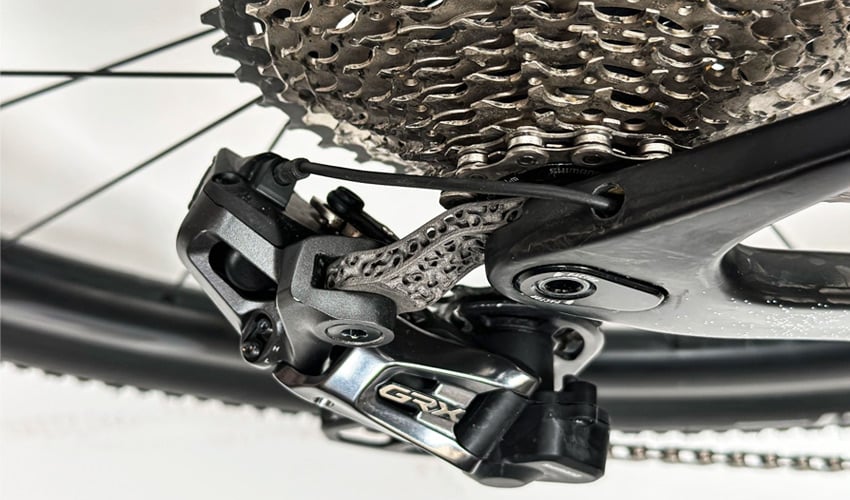 NewsSilca Is Creating 3D Printed, Titanium Derailleur Hangers for BicyclesAmong the different application sectors in which we can find additive manufacturing, there is one that stands out in particular. This is the use of 3D printing in cycling, either to create specific part or entire bicycles. Undoubtedly, this method…
 ApplicationsFirst RAF-Made 3D Printed Part Installed on Operational Typhoon JetIn a new development within the defense sector, the United Kingdom’s Royal Air Force has successfully installed its first in-house manufactured 3D printed component to an operational Typhoon fighter jet at RAF Coningsby. This is a new milestone that signals…