News
The AIRLAB pavilion made from 3D printed steel nodes explores design freedom
A number of designers and architects have been exploring 3D printing technologies in order to experiment with materials and structures. Yet another example is AIRLAB’s mesh-covered pavilion made from 3D printed steel nodes at Singapore’s Garden by the Bay. The…
- 3 min read
- News
- Six more stories
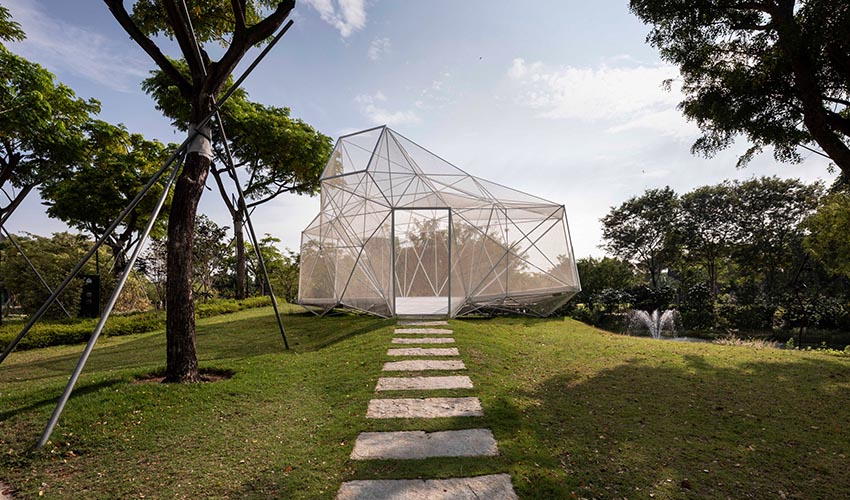
A number of designers and architects have been exploring 3D printing technologies in order to experiment with materials and structures. Yet another example is AIRLAB’s mesh-covered pavilion made from 3D printed steel nodes at Singapore’s Garden by the Bay. The lab is based at the Singapore University of Technology and Design and was founded by architects Carlos Banon and Felix Raspall – both have developed an interest in studying parametric design and 3D printing technologies applied to actual building components.
The pavilion is called AIRMESH and is the product of five years of research and development. According to the lab, this structure is a first of its kind, made from 3D printed components in stainless steel and assembled within two days using hex keys only. The form of AIRMESH is conceived as a polyhedron defined by four rectangular view frames. The system was imagined to enable a perfect fit of components, taking construction in stainless steel to a next level of rapidity and performance.
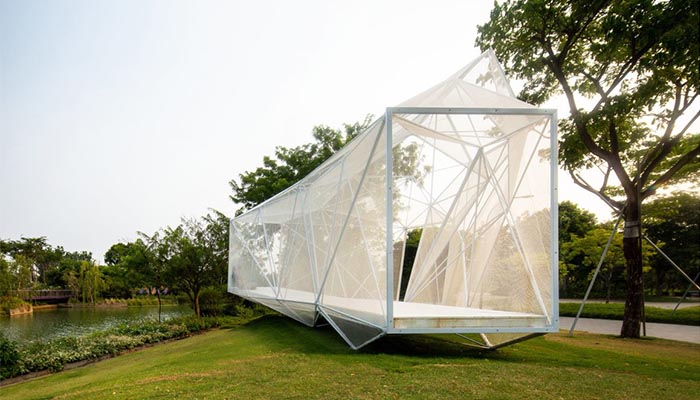
The AIRMESH pavilion is conceived as a polyhedron defined by four rectangular view frames | Credits: AIRLAB
3D printing enables greater geometric freedom
In terms of design, AIRLAB explains that the structure was developed to be efficient. The designers used a custom parametric tool that optimizes the topology of the frame, the section of the bars and the geometry of the node. As a result, the structure presents the optimal configuration and distribution of material where mechanically needed. The pavilion consists of 216 bars of different lengths and sections, and 54 unique nodal joints 3D printed in a steel and bronze alloy.
More from the desk
Six other notes from the rest of the bench.
 News#3DExpress: Enhanced Ocean Conservation Through 3D PrintingWe are back with #3DEXPRESS to show you all the highlights of the news from the additive manufacturing sector this week! First up, QOROX partners with CyBe Construction to leverage 3D printing for artificial reefs, promoting biodiversity and habitat reconstruction…
 NewsBigRep and Etihad Airways, conquering aerospace with additive manufacturingGerman large-format 3D printer manufacturer BigRep has unveiled its collaboration with Etihad Airways Engineering to develop the next 3D printed solutions for the aerospace industry. A collaboration that should allow for the creation of parts for aircraft cabins, but also…
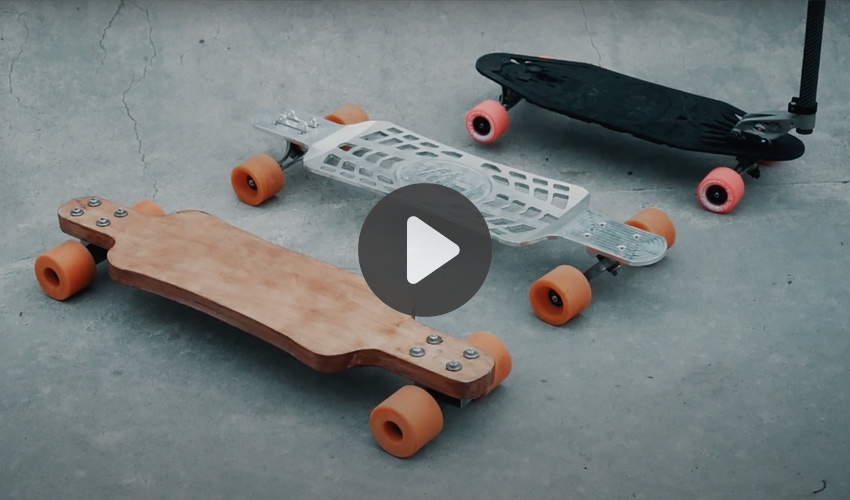 ApplicationsTop 5 Videos: Manufacturing Scooters & Recreus’ New Purifier FilamentDid you know that the manufacture of skates and scooters is not what it used to be? Advances in new manufacturing technologies have reimagined the way these modes of transportation are produced. And that’s what we’ll see in the weekly…
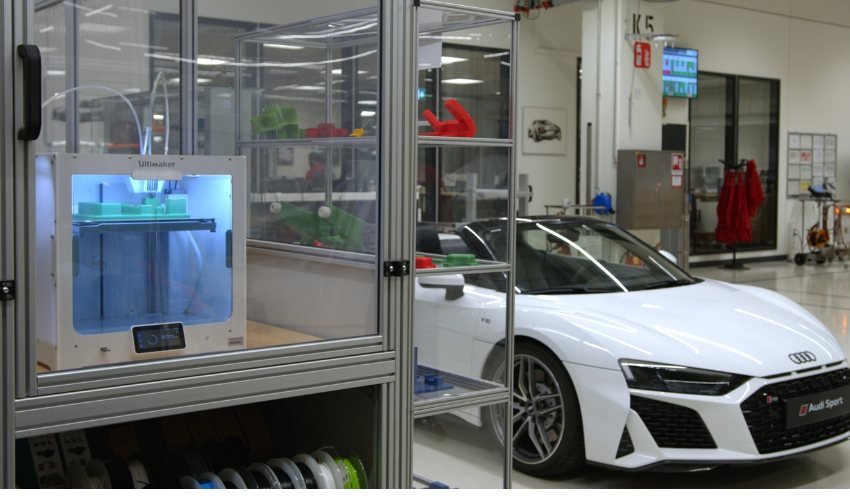 ApplicationsAudi Sport Enhances Production and Tooling with 3D PrintingFollowing the emerging trend of increased use of 3D printing in the automotive sector, Audi Sport‘s Böllinger Höfe facility in Germany, renowned for developing high-performance vehicles like the Audi R8 and the fully electric E-Tron GT, recently adopted the technology&helli
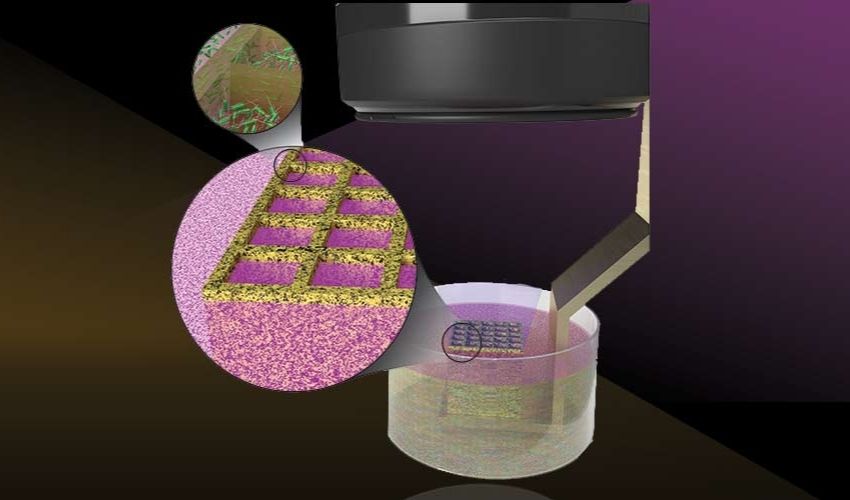 NewsScientists Develop New Method to 3D Print Living MicrobesScientists from Lawrence Livermore National laboratory (LLNL), a U.S. federal research facility located in California and founded by the University of California, Berkeley, have announced that they have developed a new method print living microbes in controlled patterns using 3D&
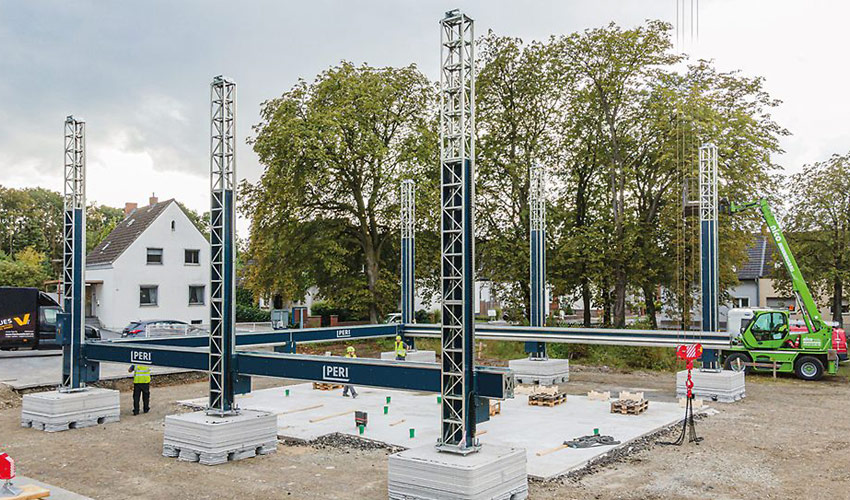 NewsThe first 3D printed residential building in GermanyThe first 3D printed residential building will be erected in Germany, more precisely in the city of Beckum, Westphalia. The two-storey house will offer 80 square meters per floor, with walls built by the concrete 3D printer BOD2 from the…