Applications
How AI and 3D Printing Fast-Tracked the NNSA’s Aires Tide Prototype
The National Nuclear Security Administration (NNSA) has successfully demonstrated the first tangible output of the federal Genesis Mission with the creation of Aires Tide: an AI-designed, 3D-printed flight test vehicle. Initiated back in November 2025 via a presidential Executive
- 3 min read
- Applications
- Six more stories
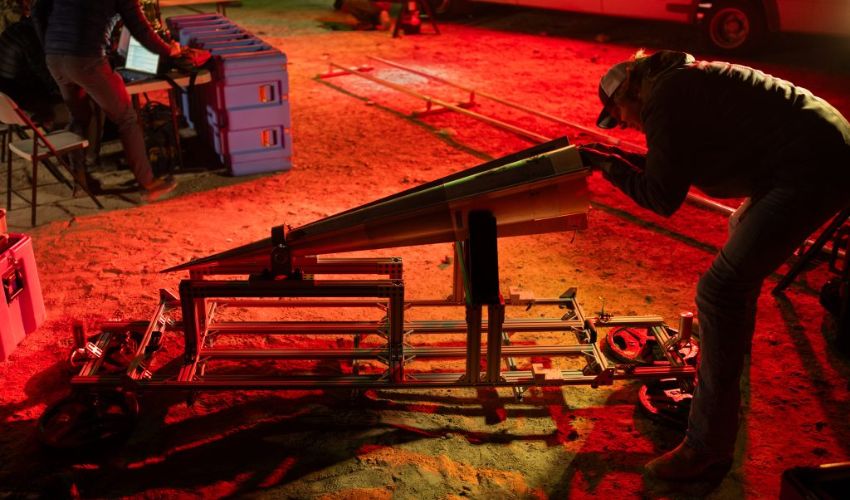
The National Nuclear Security Administration (NNSA) has successfully demonstrated the first tangible output of the federal Genesis Mission with the creation of Aires Tide: an AI-designed, 3D-printed flight test vehicle. Initiated back in November 2025 via a presidential Executive Order, the Department of Energy’s Genesis Mission connects national laboratory AI-enabled supercomputers. Leveraging this platform, a team across NNSA’s National Laboratories (Los Alamos, Lawrence Livermore, and Sandia), alongside NNSA’s Kansas City National Security Campus, designed, built, and tested the prototype vehicle in just five months. Normally, this process takes about two years.
What Is Aires Tide?
Aires Tide is an 11-foot-tall vehicle built for fast-tracked, scientific flight tests. Launched into the atmosphere, the vehicle measures the intense heat and vibrations a nuclear weapon would experience on its path to a target. The critical data gathered from these tests is relevant to the nation’s stockpile and will be used to optimize future systems developed under the same design and manufacturing model.
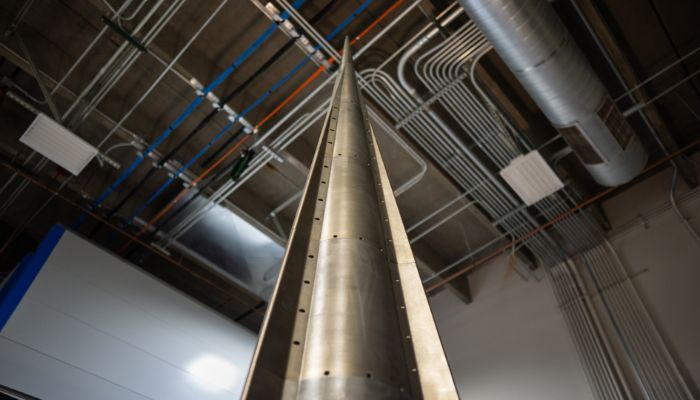
The final Aires Tide prototype was printed in Inconel (Photo Credit: NNSA)
The Role of Supercomputing and AI in Aerospace Design
To achieve the rapid timeline between October 2025 and March 2026, researchers utilized two of NNSA’s flagship AI-enabled supercomputers: Venado and El Capitan. AI tools were used to design the vehicle’s internal shape and structure, including. They optimized the vehicle’s ability to handle extreme heat and stress, and determined the precise location of internal components, such as sensors and power buses.
More from the desk
Six other notes from the rest of the bench.
 NewsLuminous, Self-Powered 3D Skins for Underwater CommunicationA team of researchers at the National University of Singapore has successfully 3D printed an elastic “photonic skin” capable of generating light without the need for batteries or cables. Thanks to an auxetic design, meaning it expands when stretched rather…
 NewsSilent Auction to Support Ukraine Launched by Leading 3D Printing CompaniesFor the past weeks, the world has looked on in horror at the devastation that is happening in Ukraine as a result of the ongoing conflict with Russia. There have been thousands of deaths and injuries with at least $600B…
 NewsVoices AMplified RAPID TCT 2023: Who Was Exhibiting?Now that the show has wrapped up, you can check out our new series, Voices AMplified, made in collaboration with SME, the main organizer of RAPID + TCT 2023, the largest additive manufacturing trade show in North America. Through these…
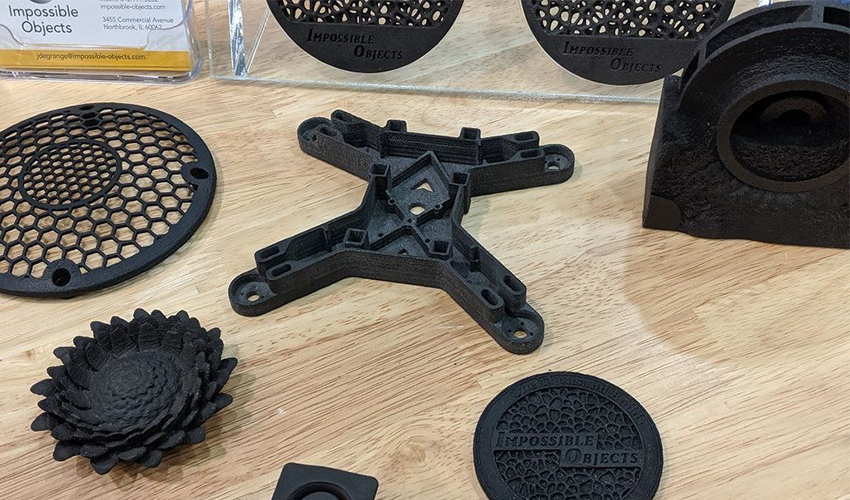 MaterialsRicoh 3D and Impossible Objects Develop New Composite MaterialsMore and more companies specializing in additive manufacturing are turning to composite materials to develop parts. And that’s exactly why Ricoh 3D, a Japanese 3D printing service provider, has teamed up with composite 3D printer manufacturer Impossible Objects. This collab
 PrintersExclusive interview with the creators of the 3D printer with 6-axisLast week, we presented you with a 6-axis printer that was created by two Swiss students from the University of Applied Sciences in Zurich, Switzerland. This printer allowed you print without having any material support. We wanted to know more…
 ApplicationsEOS and Hyperganic 3D Print More Efficient Space Propulsion ComponentsThe German manufacturer EOS recently signed a partnership with Hyperganic, a company based in Munich, which develops algorithmic engineering software based on artificial intelligence. The goal of this cooperation in is to integrate the Hyperganic core platform with EOS’ 3D&