News
The Cumulative Benefits of Additive Manufacturing: The True Added Value of the Technology
In its latest report on trends in additive manufacturing, Jabil drew up a picture of the uses and practices of more than 300 professionals who have decided to bet on 3D printing. A few months later, it looks back at…
- 3 min read
- News
- Six more stories
In its latest report on trends in additive manufacturing, Jabil drew up a picture of the uses and practices of more than 300 professionals who have decided to bet on 3D printing. A few months later, it looks back at the main applications of the market by asking the following question: what is the real value of additive manufacturing? Is it in rapid prototyping? Is it in tooling applications? How do we measure its impact on the entire value chain? While many believe that the impact of additive manufacturing lies in the product development phase, particularly in terms of cost and time, in reality, according to Jabil, one should analyze the ongoing, cumulative downstream benefits of the technology, regardless of the application.
In terms of the use of additive manufacturing, the current trend is toward industrialization, with more production of small and medium-sized runs of finished, ready-to-use parts. Users are looking for repeatability and automation in their processes to increase the printing of finished parts – in fact, 81% of participants in Jabil’s study expect the use of 3D printing for production to at least double in the next three to five years. Rapid prototyping remains the most important application when evaluating different market shares, but it is stagnating.
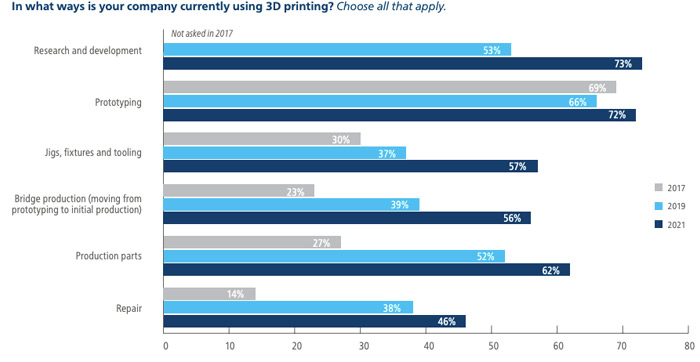
How is 3D printing used in businesses? Prototyping is often the first application (photo credits: Jabil)
The Added Value of 3D Printing in the Prototyping Phase
The use of 3D printing in rapid prototyping is obviously beneficial in terms of cost and time: teams can design iterations faster, test and evaluate multiple concepts easily and correct any defects in record time. These are widely known benefits that have led to the adoption of additive manufacturing in-house for many companies. But we need to broaden the scope and consider the entire value chain.
More from the desk
Six other notes from the rest of the bench.
 MaterialsFrom Prototyping to Full-Scale Production: The Role of Ceramic Additive Manufacturing in Industrial ApplicationsAmong the different 3D printing materials, technical ceramics generate the most curiosity and interest. This can be seen by the fact that the market for ceramic 3D printing is growing year by year as it finds its place in different…
 MaterialsXYZprinting SLS Machines Are Compatible with High Performance PP and TPU3D printing solutions manufacturer XYZprinting has announced a partnership with AM Polymers to offer two new materials for its selective laser sintering (SLS) machines. The range now includes an FDA-approved, food-grade PP01 polypropylene powder and a PB01 TPU powder for…
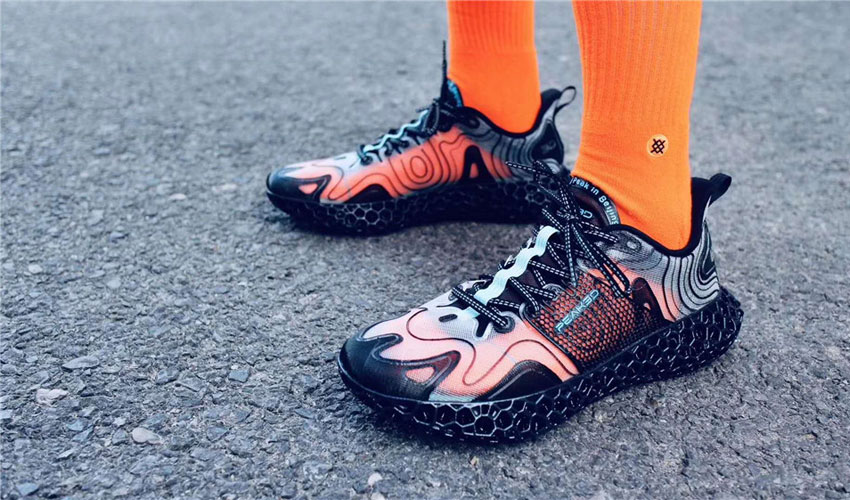 NewsFuture Fusion PEAK3D are fully 3D printed sneakersThe Chinese sportswear brand Peak Sports recently made a hit in the shoe market. The company introduced its new pair of sneakers, designed and manufactured thanks to 3D printing technologies. They are called the Future Fusion PEAK3D and 600 pairs…
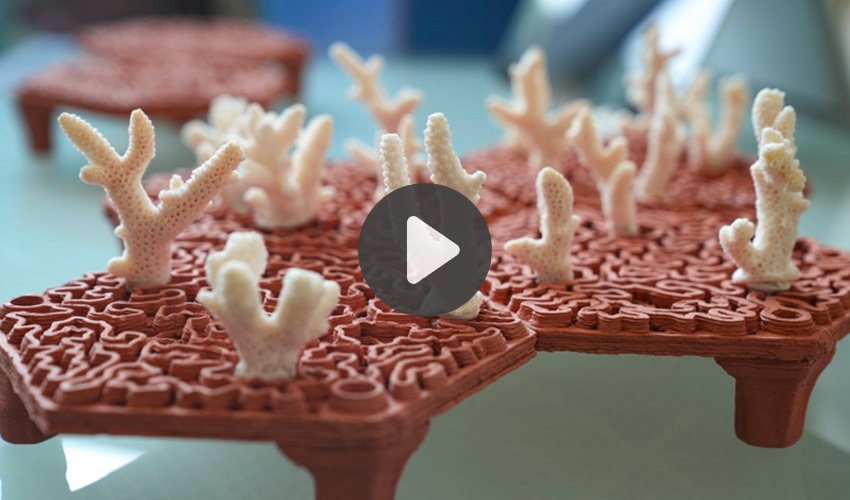 NewsTop 5 Videos: 3D Printed Coral Reefs Promote Marine BiodiversityWelcome to this week’s top 5 most compelling 3D printing videos. We kick off this week’s edition with our very own video, covering how some companies are fighting to prevent the extinction of coral reefs through 3D printing technology. Moving…
 NewsVoices AMplified RAPID TCT 2023: Who Was Exhibiting?Now that the show has wrapped up, you can check out our new series, Voices AMplified, made in collaboration with SME, the main organizer of RAPID + TCT 2023, the largest additive manufacturing trade show in North America. Through these…
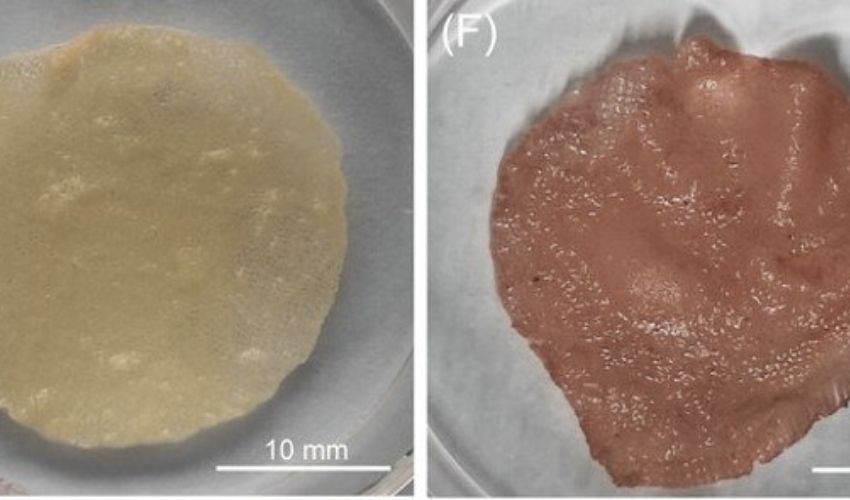 NewsNew Ink for Emerging 3D Printing Technology to Make Cheaper Cultured MeatLab-grown meat is created by the reproduction of meat (animal muscle) cells in vitro. The process has great potential to offer eco-friendly and ethical meat to those who require the nutritional benefits of the food source but who take issue…