News
A 3D Printed Robot Equipped With GPT-5 to Lead Meta
Recently renamed Meta, Facebook is one of the undisputed giants of emerging technologies, whether in the fields of virtual reality, augmented reality, artificial intelligence or even additive manufacturing. Indeed, the group is progressively advancing in this market, slowly but s
- 3 min read
- News
- Six more stories
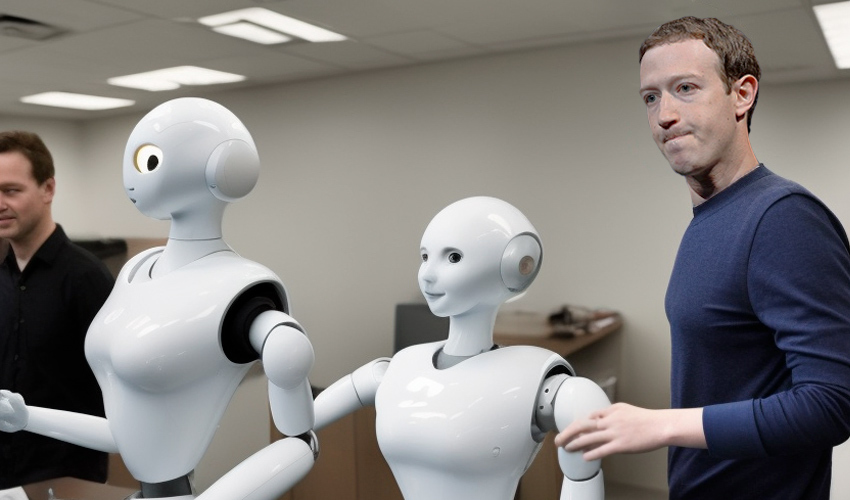
Recently renamed Meta, Facebook is one of the undisputed giants of emerging technologies, whether in the fields of virtual reality, augmented reality, artificial intelligence or even additive manufacturing. Indeed, the group is progressively advancing in this market, slowly but surely. Notably, the American giant already announced the acquisition of Luxexcel a few months ago. This time, Meta has decided to combine all this expertise to announce a new and somewhat… surprising project. Mark Zuckerberg, founder and CEO of the former Facebook, declared in an official press release that the company has 3D printed a robot equipped with OpenAI’s GPT-5 to sit on the board of directors and support it in its strategic decisions. The objective is to test the relevance of such a humanoid: if the project proves successful and the robot manages to improve Meta’s financial performance, the group might seriously consider replacing certain positions with this type of robot. This could lead to savings in terms of recruitment, training and greater efficiency. Science fiction or reality, one thing is sure, Mark Zuckerberg seems more determined than ever to bring together new technologies and managerial performance.
It is news that could send shivers down anyone’s spine, and we certainly are not unaffected by this announcement as it raises more questions than it answers to say the least. For example, will we soon have to collaborate with robots endowed with a form of human intelligence superior to ours? This debate has been ramping up for a number of years now, centering especially on whether we could be replaced by machines at some point in the future. In any case, this is the direction that the Meta group is starting to take, perhaps distressed by the negative financial results it has had for the past several years. By combining artificial intelligence – and moreover the latest GPT-5 system – and additive manufacturing, it hopes to find a solution that could reduce some of its costs and solve its challenges quickly and efficiently. So it has announced the creation of a 3D-printed robot equipped with the latest iteration of OpenAI’s artificial intelligence, despite an open letter written on March 29 that warned of the dangers of such intelligence. Mike Catfish, Director of Technical Operations at Meta, commented, “We believe that the GPT-5 system can truly revolutionize the way we do business today and despite the misgivings expressed by some, we are continuing our developments with OpenAI and are confident of the positive impact our robot will be able to have.”
A Robot Endowed With Human Intelligence
To make this robot, Meta opted for 3D printing, a method that allowed it to test several iterations at a lower cost and, above all, to allow for a robot that is as customizable and as realistic as possible. The robot’s body was manufactured by CNC machining and covered with a fully 3D printed shell, reinforced with carbon fiber to make it as strong and light as possible. The shell was then dyed white. Meta explains that it used an extrusion process, though they did not specify which machine was used.
More from the desk
Six other notes from the rest of the bench.
 NewsTop 5 Videos: The Velaskello project promotes recycling using 3D printingIn this week’s top five we will cover a universally important topic: recycling. Specifically, we will get familiar with the Velaskello project, by SuperForma, which uses 3D printing with PLA to incorporate more sustainable solutions that reduce humanity’s ecological f
 NewsWhat Can We Expect from the Long Awaited Return of Formnext 2021?Next Tuesday, Formnext 2021 will open its doors in Frankfurt, and will welcome, after an 18-month absence, the entire additive manufacturing ecosystem, between exhibitors, researchers and visitors. More European players are expected to be there this year due to the…
 NewsJob Market 2024: What Were the Trends in the 3D Printing Sector?Every year, 3Dnatives conducts a study of the 3D printing job market, highlighting the most relevant trends and developments for the future of the sector. This analysis is based on job offers published on our job board in different languages:…
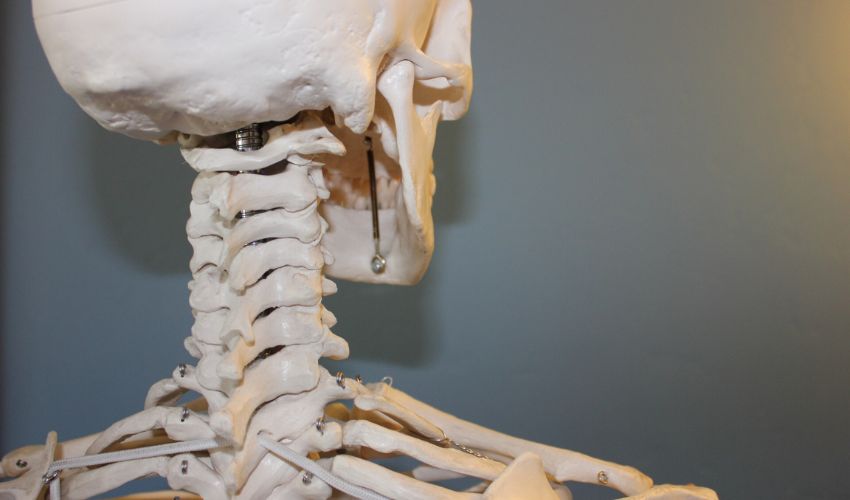 ApplicationsOxford Performance Materials Aids Ukraine War Victims with 3D Printed Orthopedic ImplantsAmerican additive manufacturing company Oxford Performance Materials (OPM) recently announced an agreement to assist the non-profit organization Orthopedic Help for Ukraine (OHFU). Through this, the company will be aiding victims of the Russian invasion of Ukraine, by supplying 3
 NewsHow Can 3D Technologies Help Solve Crimes?It’s a common motif on both movie screens and TVs: a murder is committed and the police investigate to find the culprit. The most modern techniques are used and the culprit is usually quickly arrested. And of course, this has…
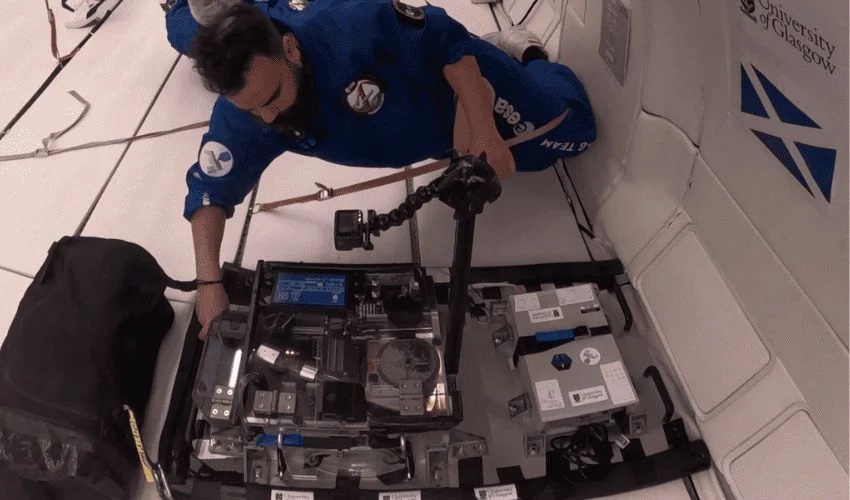 ApplicationsScottish Researchers Pave the Way for Space Factories With Zero Gravity 3D Printing3D printing in space travel has made considerable progress in recent years. Initiatives from both NASA, which is researching the use of additive manufacturing in space including for structures, and the ESA, which has tested metal 3D printing on the…