Materials
8 Reasons Why Multi-Material 3D Printing Is the Next Frontier
As 3D printing continues to mature, one development is standing out: the rise of multi-material printing. What was once a niche capability is quickly becoming a practical tool for engineers, designers, and manufacturers who want to build more functional parts…
- 3 min read
- Materials
- Six more stories
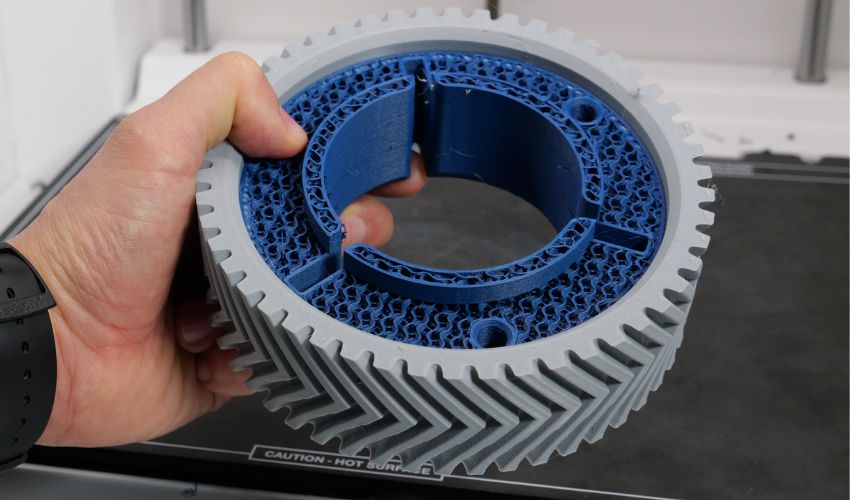
As 3D printing continues to mature, one development is standing out: the rise of multi-material printing. What was once a niche capability is quickly becoming a practical tool for engineers, designers, and manufacturers who want to build more functional parts in fewer steps. Multi-material printing is supported by several major additive technologies, including fused deposition modeling (FDM), stereolithography (SLA), material jetting, and more, making it increasingly accessible across industries. By allowing multiple materials to be combined in one build, it streamlines production, reduces reliance on assembly, and opens the door to more integrated designs. Here, we’ll dive into why multi-material printing is poised to become the next frontier in AM.
1. Growth of Multi-Material Printers
The most obvious indicator of the rise of multi-material printing is the proliferation of new multi-material machines. On the desktop side, Bambu Lab’s new H2C can print up to seven materials in a single run while generating minimal purge waste. Prusa has also entered the space with the INDX, an eight-material multi-tool upgrade for the Prusa CORE One that promises zero purge waste and faster tool changes.
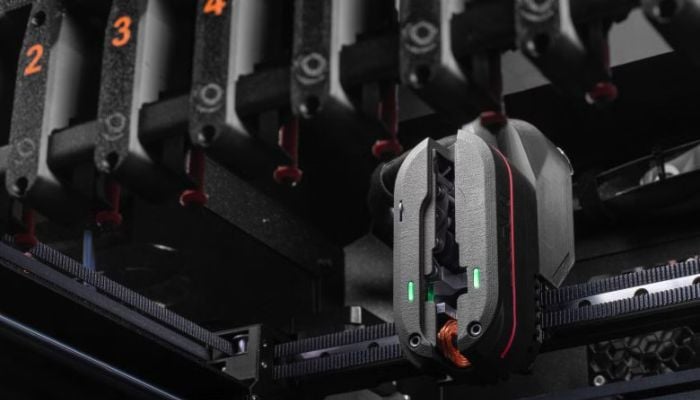
Prusa and Bondtech developed a new multi-material printing system called INDX that introduces a tool-changing approach based on a single active “Smart Head” and multiple passive toolheads. (Photo Credit: Prusa)
Industrial systems are advancing just as quickly. Manufacturers such as OMNI3D and Rapid Fusion now offer large-format multi-material extrusion solutions designed for production environments. Beyond FDM, companies like Stratasys have long supported multi-material workflows through material jetting, while Aerosint (now part of Schaeffler) has demonstrated multi-metal laser powder bed fusion and binder jetting using its selective powder deposition technology. Together, these developments show how multi-material capability is becoming a more mainstream feature.
More from the desk
Six other notes from the rest of the bench.
 SoftwareYeggi, The Search Engine to Find 3D FilesIn 3D printing, it all starts with a 3D file sent to the 3D printer. Creating such a file can be difficult for a user who has no experience in modeling. That’s why they can go through platforms and marketplaces…
 ApplicationsWill the Mobile Gantry Soon Allow Life on Mars?Just recently, we illustrated what life in space could potentially look like, introducing various applications such as spacesuits, habitats and even patches. All of which can be 3D printed on the spot. Now, researchers from the Department of Physics and…
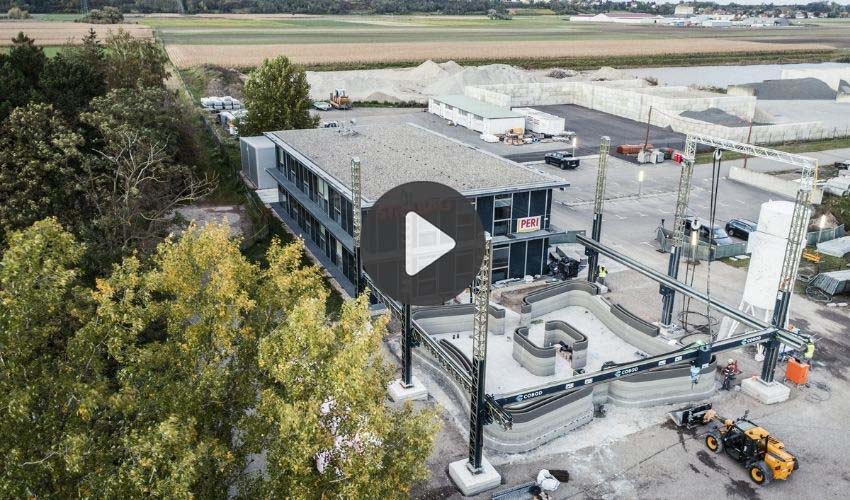 NewsTop 5 Videos: The Biggest 3D-Printed Office Space in EuropeThis week, we invite you to the largest 3D-printed office space in Europe. This new construction is located in Austria. Construction and architecture companies PERI, STRABAG, and COBOD collaboratively built this massive 3D printing feat. Then, 3Dnatives brings you back…
 ApplicationsResearchers Have Developed A Safer Bioink That Hardens at Body Temperature3D bioprinting is a technique that is gaining momentum in the medical industry. This technology uses bio-materials to create artificial tissue structures needed to treat patient diseases or injuries. The hydrogel-based bioinks used for this process are composed of cells.…
 ApplicationsSURGE Aims to Predict Life of Critical Military Parts During ProductionThe Defense Advanced Research Projects Agency (DARPA) works to advance technology for United States national security. Created in 1958 in response to the Soviet Union’s 1957 launch of Sputnik, the agency positions itself as the nation’s commitment “to never agai
 SoftwareAll You Need to Know About CreoCAD (or computer-aided design) is an essential component of the digital workflow of additive manufacturing. As is in the name, it involves the use of computer software to create, modify, or analyze a design before it is ready to be…