Materials
8 Reasons to Use High-Performance Polymers in Additive Manufacturing
High-performance polymers (HPP) have been used in industry for several decades, particularly in injection molding and machining. However, in recent years, they have ceased to be materials exclusive to traditional engineering and have made their appearance in additive manufacturin
- 3 min read
- Materials
- Six more stories
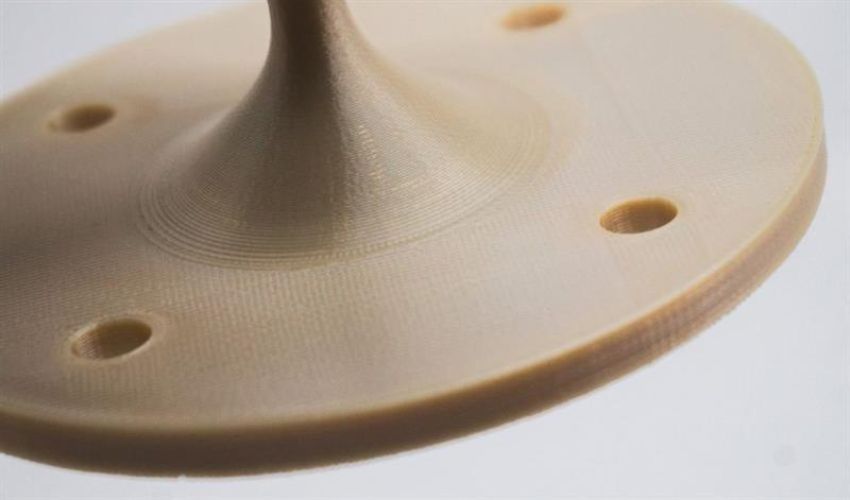
High-performance polymers (HPP) have been used in industry for several decades, particularly in injection molding and machining. However, in recent years, they have ceased to be materials exclusive to traditional engineering and have made their appearance in additive manufacturing. This type of polymer is characterized by properties superior to those of conventional polymers. We are talking here about greater strength, better wear resistance, and greater durability. Among the HPPs most commonly used in additive processes are the polyaryletherketone (PAEK) family, which includes PEEK and PEKK, and polyetherimide (PEI), better known by its trade name, ULTEM.
The processing of HPPs in 3D printing continues to be refined, but their role is increasingly important in solving real-world problems in increasingly complex value chains, with shorter lead times and optimized costs. Here, we explore eight reasons to choose high-performance polymers in additive manufacturing. The goal is to understand why these materials can move beyond being an experimental alternative to becoming an advanced manufacturing resource.
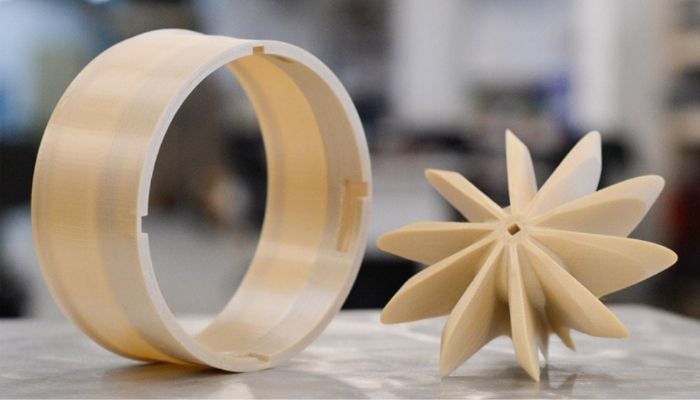
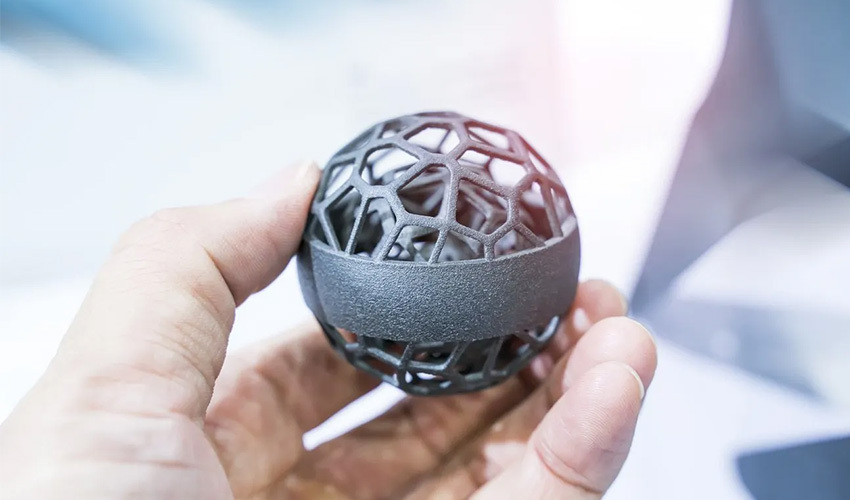
3D-printed parts in PEEK. (Photo Credit: Elecrow)
#1: Good Thermal Resistance
One of the most remarkable features of high-performance polymers is their thermal stability under extreme conditions. While standard plastics like ABS start to lose their mechanical properties at around 90–100 °C, materials such as PEEK maintain their structure during continuous use up to 250 °C and can withstand temperature spikes up to 300 °C. PEKK and PEI behave similarly, with heat deflection temperatures above 200 °C, making them a strong choice for applications where thermal stability is essential. This level of performance allows these polymers to be used in harsh industrial environments, including parts located near engines in automotive applications or structural supports in aerospace turbines.
More from the desk
Six other notes from the rest of the bench.
 MaterialsPolymer 3D Printing Is Being Driven by Material and Technological InnovationsThe first 3D printing process invented was stereolithography, a method wherein a photosensitive polymer is hardened via a laser, putting plastics at the forefront of the market since the very beginning. Something that has continued to this day. Indeed, according…
 ApplicationsDesktop Health’s Dental Resin Flexcera Acquires FDA ClearanceDesktop Health, Desktop Metal’s new healthcare business, announced last week that it has received clearance from the U.S. Food and Drug Administration (FDA) for its proprietary resin designed for use in 3D printed dental prosthetics. Though the 3D printing dental…
 NewsWorld’s first 3D printed community project aims to be a solution to homelessnessVulnerable populations are usually the last to benefit from innovation” writes Fuseproject, the design studio based in San Francisco. In fact, they recently announced they have joined New Story on their mission to end global homelessness. According to the studio,…
 NewsBentley is Expanding its 3D Printing CapabilitiesUK-based Bentley Motors Limited, a manufacturer of luxury cars and SUVs and a subsidiary of the Volkswagen Group since 1998, has announced a £3 million investment in its 3D printing facility, based in Crewe, England. The ultimate goal of the…
 ApplicationsA New Geometric Shape Travels to the International Space StationA geometric model developed through a collaboration between the University of Oxford and the Budapest University of Technology and Economics has just become the focus of one of the most remarkable experiments ever carried out in space. These “soft cells”…
 NewsWohlers Report 2022: Strong Growth in the Additive Manufacturing IndustryFor the 27th consecutive year, Wohlers Associates has published its annual report on the additive manufacturing industry. Wohlers Report 2022 marks the first report that has been published by Wohlers Associates since its acquisition by ASTM International late last year.…