Applications
8 Reasons to Use 3D Printing for Space Exploration
Humanity has always dreamed of conquering space, and every technological advance brings us a little closer to this goal. Among these innovations, 3D printing has emerged in recent years as a major asset for the space industry. But contrary to…
- 3 min read
- Applications
- Six more stories
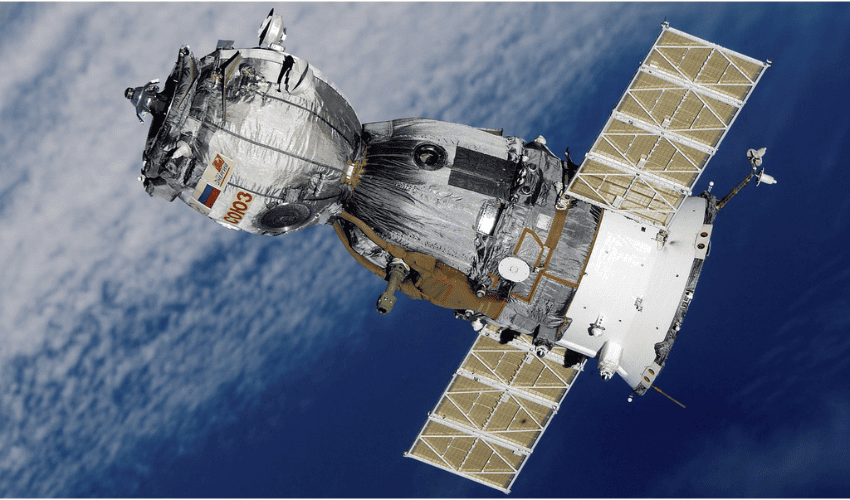
Humanity has always dreamed of conquering space, and every technological advance brings us a little closer to this goal. Among these innovations, 3D printing has emerged in recent years as a major asset for the space industry. But contrary to what you might think, its use in this field is not new.
In 2014, a 3D printer was sent into space for the first time, marking a turning point in the use of this technology in extreme environments. Since then, its applications have continued to evolve. Far beyond small repairs and simple experiments in weightlessness, it is now integrated into rocket design and opens the way to new possibilities, including on-site manufacturing. But why use 3D printing in space? We give you 8 reasons!
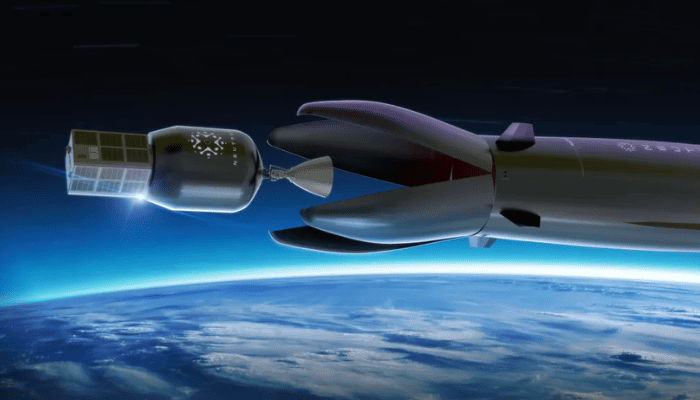
Neutron is a space launcher, designed for partial reuse, developed by Rocket Lab. (photo credits: Rocket Lab)
To Go to Space
#1: Optimization of Rocket Parts
When it comes to space exploration, every gram counts. The lighter the rocket or satellite, the cheaper and more efficient the launch. By lightening the craft, it is possible to reduce the amount of fuel needed and free up space to carry more useful equipment. To achieve this, 3D printing offers an interesting solution: it can be used to design customized parts, optimized to be both strong and light.
More from the desk
Six other notes from the rest of the bench.
 MaterialsAutomotive AM Takes a Green Turn with Brose and CNPC Powder PartnershipCNPC Powder and automotive supplier Brose have entered a strategic partnership to promote sustainable, circular manufacturing in the automotive industry. This collaboration will convert steel scrap metal from Brose’s Chinese production lines into CNPC’s iron-based powders f
 ApplicationsCan all drugs be 3D printed?Researchers at University College London (UCL), home of the startup FabRx, have discovered some limitations to 3D printed drugs. Using a stereolithography process to produce a polypill, they realized that certain substances – in this case amlodipine, used to prevent…
 PrintersAnother Successful Kickstarter Campaign: The Swapmod Kit for Bambu Lab’s A1 Mini 3D PrinterThe Kickstarter campaign for Swapmod, an automation kit for the Bambu Lab A1 Mini 3D printer, has come to a successful close, raising $51,785 from 661 backers, well above its initial $5,391 goal. The aim of this ambitious project is…
 PrintersHeyGears Launches New Precise and Fast UltraCraft Reflex RS 3D PrinterWhen it comes to new 3D printing options on the market, it is clear that there are certain characteristics that users desire above all others. These are precision, speed and ease of use. All of which can be found in…
 NewsWhat is the Takeaway from ADDITIV Aerospace?ADDITIV Aerospace came to a close on March 18th, 2021 at 6PM EDT. With 1534 registrants from 71 countries, 40 virtual booths and 21 speakers, it is clear that there is clear potential for growth for additive manufacturing in the…
 News3D Printing Unlocks Promising Solar Cavity Receiver SolutionIn solar energy production, a solar cavity receiver maximizes light captured from the sun, converting it into thermal energy. However, high-temperature solar receivers tend to distribute heat unevenly, causing thermal stress. This can lead to plastic deformation and a shorter&hel