News
3D Printing Unlocks Promising Solar Cavity Receiver Solution
In solar energy production, a solar cavity receiver maximizes light captured from the sun, converting it into thermal energy. However, high-temperature solar receivers tend to distribute heat unevenly, causing thermal stress. This can lead to plastic deformation and a shorter&hel
- 3 min read
- News
- Six more stories
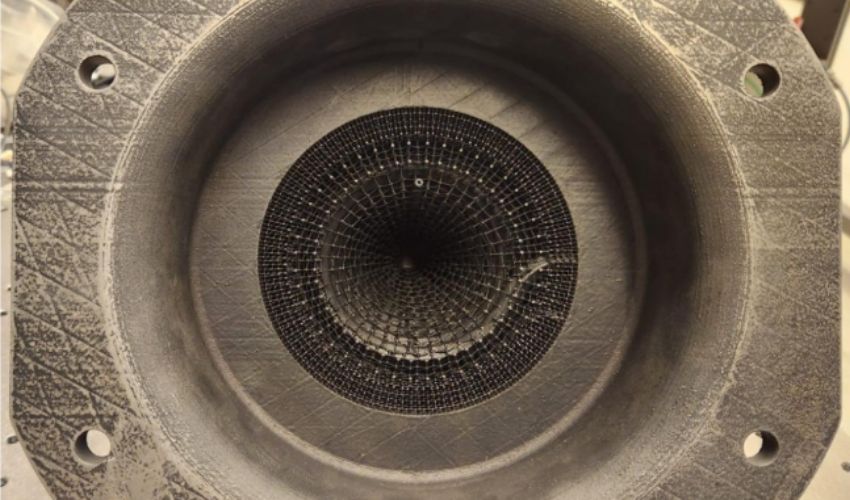
In solar energy production, a solar cavity receiver maximizes light captured from the sun, converting it into thermal energy. However, high-temperature solar receivers tend to distribute heat unevenly, causing thermal stress. This can lead to plastic deformation and a shorter lifetime for the part. To address this issue, three researchers from the King Abdullah University of Science and Technology (KAUST) in Saudi Arabia designed a solar cavity receiver to ameliorate how heat is distributed. What interests us is that 3D printing has played a vital role in the model’s development.
Current cavity receivers are designed with vertical tubes that do not allow heat to flow evenly. The non-uniform heat influx distribution and a temperature gradient between the front and back of the tube walls result in thermal stress. These issues are particularly pronounced in the case of gas solar receivers because of gasses’ lower thermal conductivity.
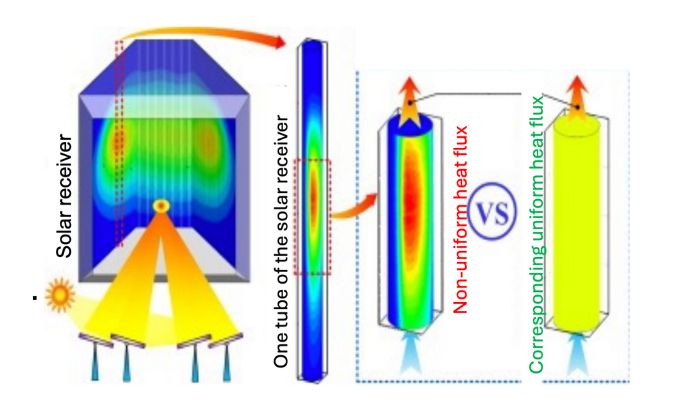
Current solar receiver with non-uniform heat distribution. (Image credits: International Journal of Heat and Mass Transfer 135 (2019) 732–745)
By contrast, the KAUST team’s model has a conical cavity receiver with a honeycomb lattice structure—entirely 3D printed. The device features a double helix heat exchanger, as opposed to vertical tubes, to reduce thermal stress, improving heat transfer and radiation trapping. This design enhances optical performance and facilitates radiation reaching the back of the helical tube. Heat is moved throughout the device’s inner tube because of pressurized air, which is heated by concentrated sunlight. Simultaneously, the honeycomb lattice structure regulates heat distribution, reducing thermal stress.
More from the desk
Six other notes from the rest of the bench.
 NewsThe inventor of the microprocessor joins ROBOZE’s Advisory BoardIt was announced today that the world-famous physicist and inventor of the microprocessor, Federico Faggin, is joining the Advisory Board of ROBOZE, an Italian-American company that specializes in the design and production of the industrial 3D printers. The renowned physicist, wh
 NewsTop 5 Videos: When Basketry Meets 3D Printing…The first video of our selection this week focuses on the Crossing Parallels project which examines the potential link between basketry and 3D printing. So how can 3D technologies help to take this craft skill to the next level? Designer…
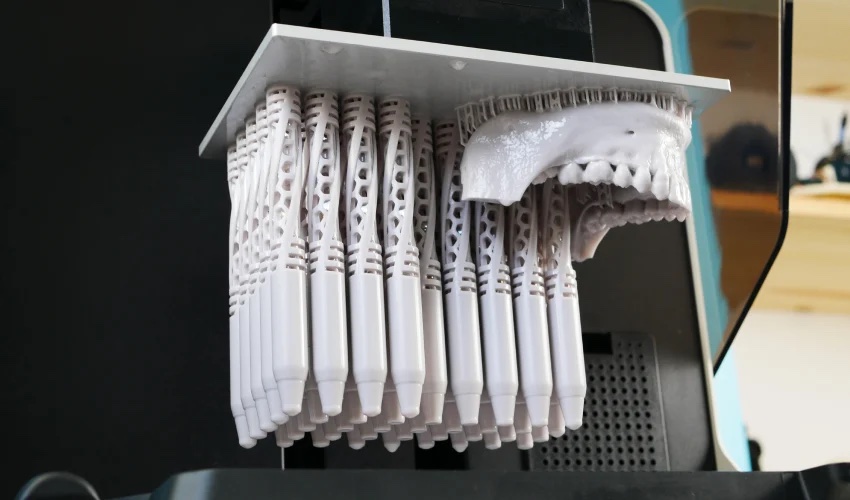 NewsAll You Need to Know About Resin 3D PrintingResin 3D printing, also known as vat photopolymerization, is one of the most popular families of 3D printing technologies. It offers precise, detailed and high-quality results, making it a popular choice in many industrial sectors, such as jewelry, dentistry and…
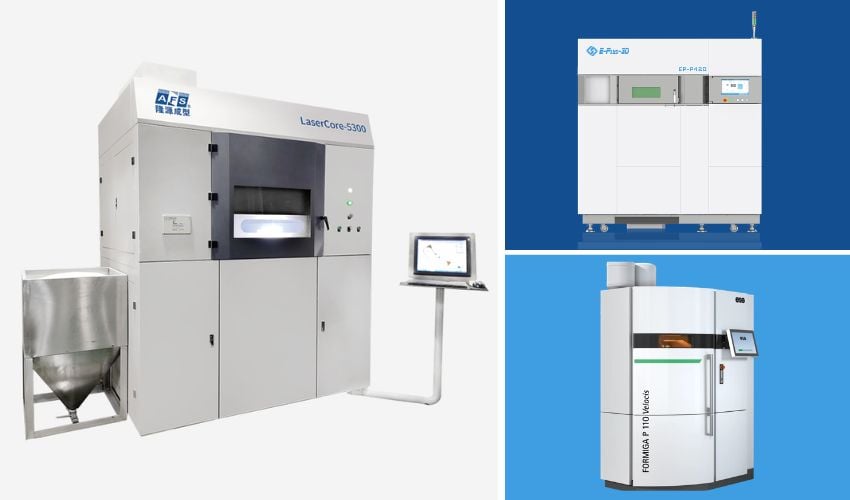 PrintersThe Different SLS 3D Printers on the MarketOnce an exclusive tool for high-budget labs, selective laser sintering (SLS) has become a practical solution for modern manufacturing. The technology uses a laser to fuse plastic powder layer-by-layer, and historically, it was sidelined by high costs and operational complexity.&h
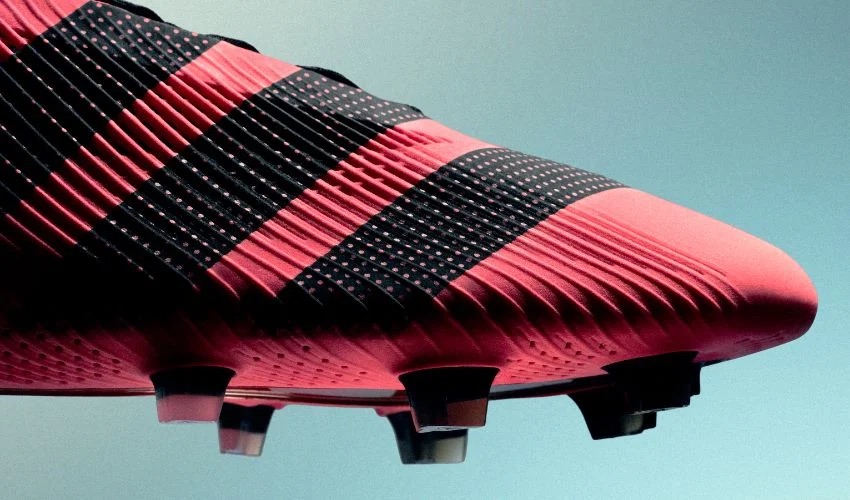 Newsadidas Unveils Its First Fully 3D-Printed Soccer Cleats3D printing in the world of athletic footwear is nothing new. Nike, PUMA, and ASICS, among others, have been experimenting with 3D-printed shoes and soles for years. But there is one area where none had fully taken the leap: soccer…
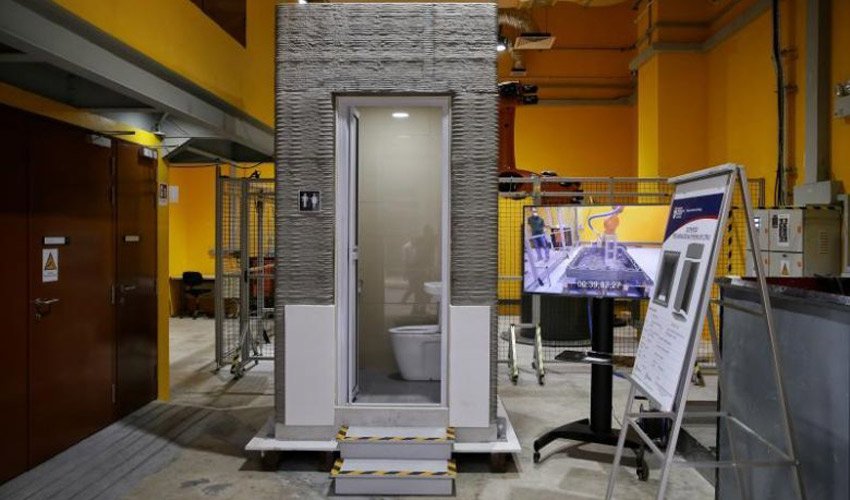 NewsResearchers have created a 3D printed bathroomAt Nanyang University of Technology in Singapore, a team of professors claim to have developed a small 3D printed bathroom cubicle in less than a day: once the cubicle printed, it is equipped with a toilet, shower, sink and mirror. …