Guides
#3DStartup: How AMAREA Technology is Shaping the Future of AM with Multi Material Jetting Technology
As we know, the additive manufacturing market is very dynamic. Numerous companies want to position themselves with their approach and offer high-performance hardware and software to overcome challenges in AM. As a result, there is now a wide range of…
- 3 min read
- Guides
- Six more stories
As we know, the additive manufacturing market is very dynamic. Numerous companies want to position themselves with their approach and offer high-performance hardware and software to overcome challenges in AM. As a result, there is now a wide range of innovative technologies and an extensive spectrum of AM materials. These are opening the door to more and more possible applications in different sectors. However, with the increasing professionalization of 3D printing and its entry into high-performance sectors, the requirements are also increasing. The demand for reliable multi-material solutions is growing ever louder. One company that specializes in this is AMAREA Technology. The German start-up develops industrial 3D printers that can process several materials simultaneously, as well as the appropriate printing materials. With its technology, Multi Material Jetting, AMAREA Technology wants to inspire both existing and new users for additive multi-material production. The company is pursuing the major goal of working with its customers to use resources more efficiently, actively shaping the future of manufacturing. In an interview with the founders, we talked about the beginnings of the company, the motivation for founding it, multi-material jetting technology and its benefits.
3DN: Could you briefly introduce yourself and tell us how you got into 3D printing?
AMAREA Technology is a system developer and manufacturer of additive manufacturing machines for industrial applications that can process high-performance materials such as technical ceramics, metals, composites and polymers and, above all, combine them in a printing process, thus addressing the still relatively new field of multi-material 3D printing. The company has three founding partners, consisting of Steven Weingarten (CEO), Lutz Gollmer (COO) and Robert Johne (CTO). Steven Weingarten and Robert Johne both have a background in materials science and Mr. Gollmer has a background in business administration. Our origins lie in applied research. All founders worked for years at the Fraunhofer Institute for Ceramic Technologies and Systems (IKTS), where the Multi Material Jetting technology was developed by Mr. Weingarten from 2014 and commercialized with the support of the EXIST research transfer program initiated by the Federal Ministry of Economics and Climate BMWK from 2021.

The AMAREA Technology team from left to right: Steven Weingarten (co-founder, CEO & Managing Partner), Robert Johne (co-founder + CTO), Philipp Horn (employee), Lutz Gollmer (co-founder, COO & Managing Partner)
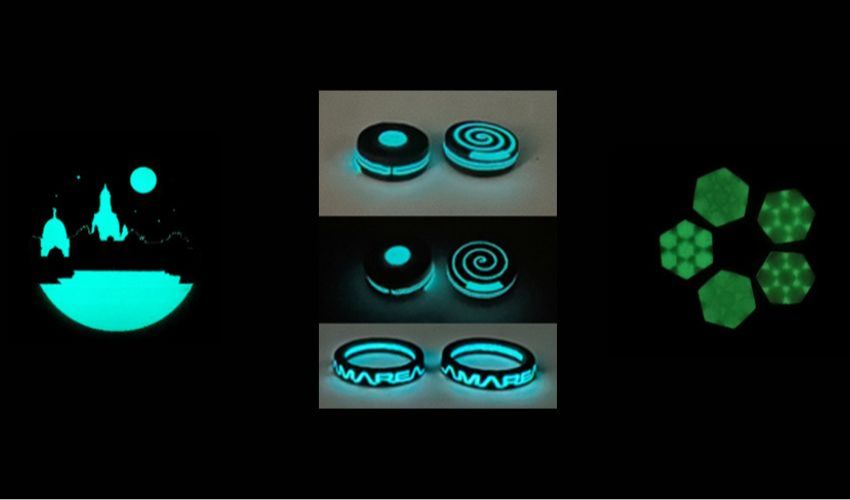
The path to (multi-material) 3D printing began at Fraunhofer IKTS in 2014, when Steven Weingarten was still a student and faced the challenge of combining different technical ceramics, and at the same time, implementing this with a freedom of form that conventional manufacturing processes such as ceramic injection molding do not provide. The quickest and probably most unconventional solution at the time was to develop our own technology, which was launched under the name “Thermoplastic 3D Printing – T3DP”, as there was no commercially available technology on the market. After successful trials with oxide ceramics and later the combination of stainless steel with zirconium oxide, a system concept based on microdispensing systems was developed and the EU project CerAMfacturing significantly expanded the understanding of materials and processes for this new technology. In 2017, components consisting of up to four different materials were manufactured for the first time. Sintered glass with luminescent particles of different colors that glow when exposed to light or near-net-shape tool blanks made of carbide, whose mechanical properties are in no way inferior to conventionally manufactured components, could also be implemented in this way.
More from the desk
Six other notes from the rest of the bench.
 NewsTop 5: Adding Text to Your 3D Printed Part With MarkforgedHello everybody, and welcome to our selection of the top 5 3D printing videos of the week! As ever, we have selected the best 3D printing content from all across the industry, so whatever your speciality, you’ll find something for…
 PrintersNew PSLA 270 from 3D Systems Combines Projection Technology Speed with SLA QualityUntil now, there has been no solution in the additive manufacturing market that meets the requirements of high productivity, injection molded quality high resolution, long-lasting durability and part size. In response to this demand, 3D Systems has unveiled a new…
 NewsMakerBot’s Latest Survey Shows How 3D Printing Helped During Remote LearningIf you are a regular reader then it will come as no surprise to you that over this past year, 3D printing has been flourishing. Besides the many mergers, acquisitions and companies going public, there have been several reports that…
 GuidesThe Most Influential Personalities of Additive Manufacturing 2020With the end of the year comes a unique opportunity to recognise the personalities who have most impacted the additive manufacturing industry: those behind the latest innovations, investments made, and most remarkable projects. 2020 was a special year in which…
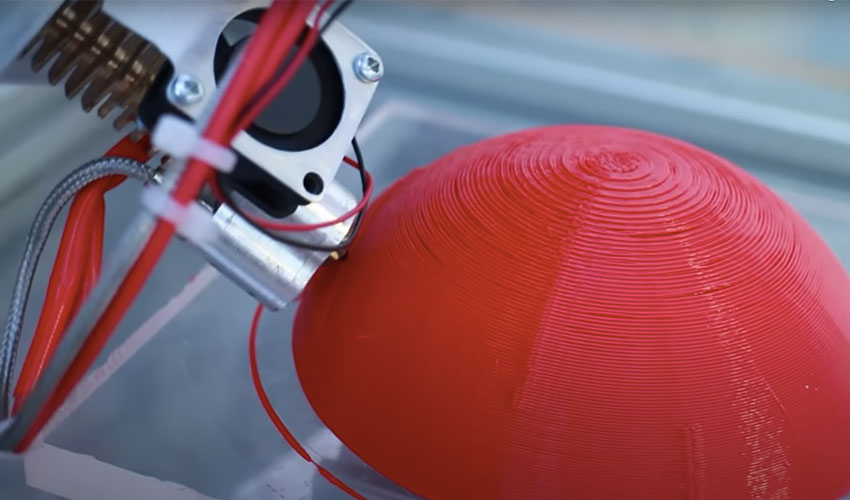 NewsProcess planning for five-axis additive manufacturingXinyi Xiao, PhD in industrial engineering at Penn State, has published a research study in the Journal of Additive Manufacturing on five-axis additive manufacturing to build parts without printing support structures. The project involved designing automated process planning softw
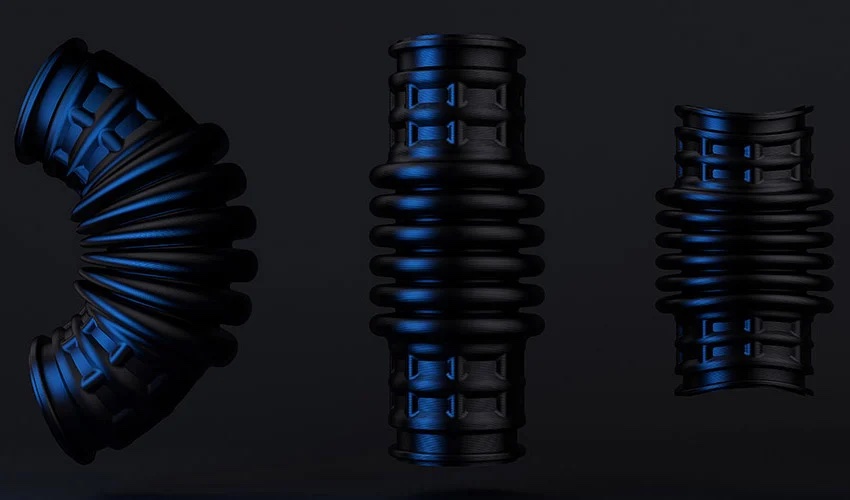 Materials3D Printing Elastomers Market Expected to Reach $1.389 Billion by 2030American research organization Report Oceans recently published a study in which it evaluated the growth of elastomers in the 3D printing market. The organization estimates that the elastomers market will reach 1.389 billion dollars within eight years, with an annual…