News
Process planning for five-axis additive manufacturing
Xinyi Xiao, PhD in industrial engineering at Penn State, has published a research study in the Journal of Additive Manufacturing on five-axis additive manufacturing to build parts without printing support structures. The project involved designing automated process planning softw
- 3 min read
- News
- Six more stories
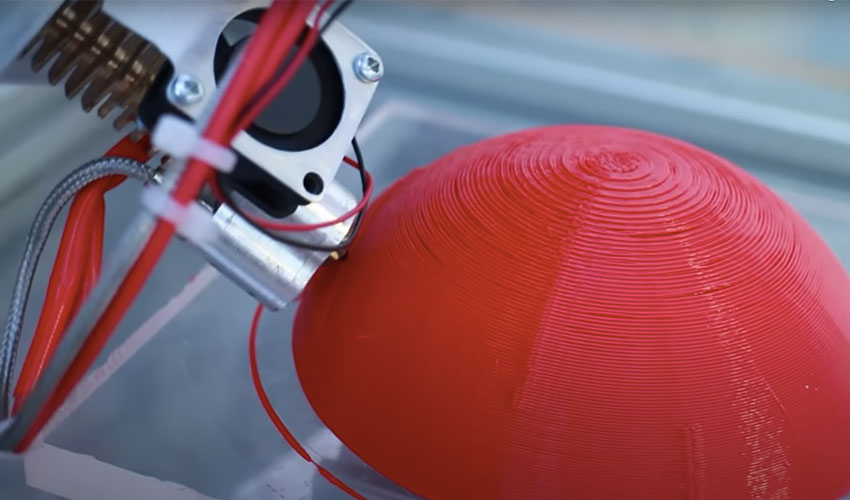
Xinyi Xiao, PhD in industrial engineering at Penn State, has published a research study in the Journal of Additive Manufacturing on five-axis additive manufacturing to build parts without printing support structures. The project involved designing automated process planning software for five-axis 3D printing solutions. The aim of the study is to find a viable solution to reduce costs, time and resources needed during the additive manufacturing production process.
Over the years, additive manufacturing systems have developed tremendously. However, software to support these solutions can quickly become outdated. Traditionally, 3D printing is a two dimensional layer-by-layer material deposition process – also known as three-axis additive manufacturing – which requires building the support structures along the build of the desired model. Five-axis 3D printers can move linearly along an X, Y, Z plane, but can also rotate on the A and B axis, thus having the potential to build structures without the need for supports. Despite the time and money savings of this technology, five-axis additive manufacturing lacks the same design planning and automation as three-axis machines, so creating planning software for this method is vital to support its full use in the industry.
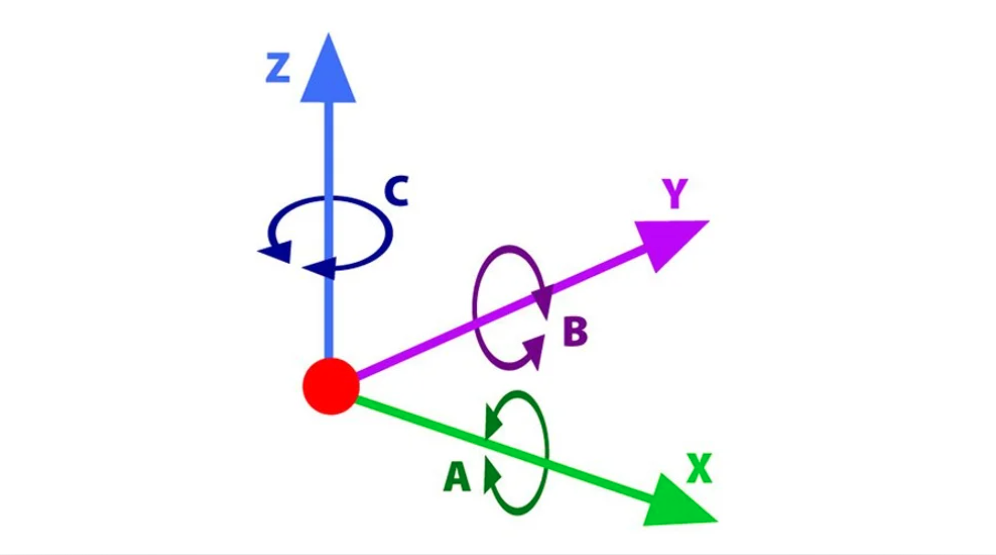
In this example, we have 6-axis. In the case of 5-axis, the 3D printer can move along the X,Y and Z plan, and rotate on the A and B axis.
How were the algorithms developed?
The author of the project, Xinyi Xiao, carried out the work as part of her curriculum, under the supervision of Professor Sanjay Joshi, a specialist in industrial engineering. The professor commented: “The idea of the software is to make five-axis additive manufacturing fully automated without the need for manual work or redesign of a product. Xinyi came to me when she needed guidance or had questions, but in the end, she led this project.” The study shows that the software’s algorithm was able to automatically reorient the part during the build using a five-axis machine.
More from the desk
Six other notes from the rest of the bench.
 NewsEuropol Concerned About Growing Number of 3D Printed WeaponsIn recent years, an increasing amount of 3D printed weapons has been seized in Europe, which is raising concerns for the European Police Office (Europol). For that reason, a conference was recently held to bring together a number of professionals…
 NewsNew Concrete 3D Printing Method Reduces Ecological Footprint3D printing is gradually transforming the construction industry. Various projects, from houses to shopping malls, have already been created thanks to this technology. Today, one project in particular is attracting attention: researchers at Nanyang Technological University in Sing
 NewsTOP 5 VIDEOS: A 3D printed shell for a tortoise…This week we found the top 5 videos about 3D printing and the way additive manufacturing is shaping our society. The technology has infiltrated many sectors, from medical to space! Check out our selection of the week to keep up with the innovations! This week we…
 NewsHypsole Launches the World’s First 3D-Printed Cleat GuardsSports equipment is not always cheap, which is why parents always teach their offspring to handle expensive shoes, equipment and gear with care. However, looking after and caring for sports equipment often involves a lot of effort and time. Who…
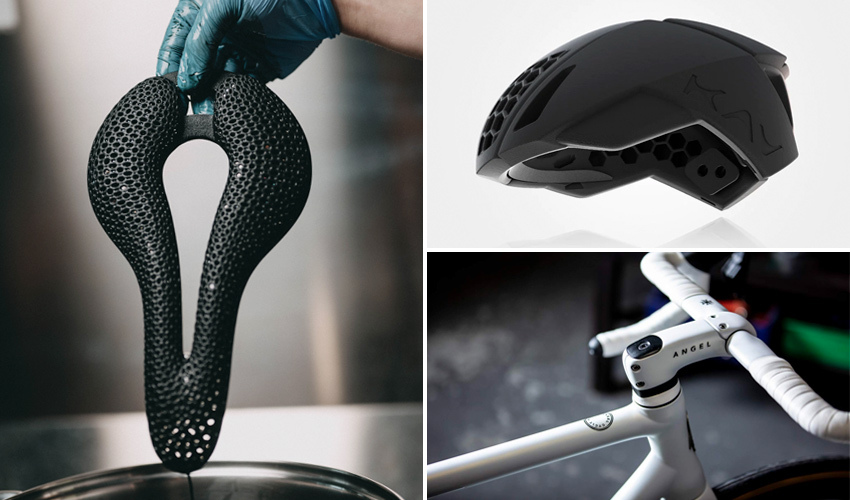 GuidesThe Top Bicycles Made With 3D PrintingAs you know, more and more additive manufacturing is playing an important role in the world of sports, where it allows for the design of custom-made equipment. Cycling is undoubtedly one of the sports where 3D technologies are most widely…
 NewsZero-waste 3D printed skirtWe met with designer Julia Daviy recently, we had the pleasure of discussing with her the benefits that 3D printing technologies bring to the fashion industry in terms of design opportunities and sustainability. Recently, she launched a new piece, it’s…