Guides
#3DStartup: HETEROMERGE and Multi-Material, Micro 3D Printing
Although additive manufacturing is an increasingly democratized production tool, we can still find certain limitations in adoption. For example, industry in particular is experiencing an increasing need for precision in end-use parts. This is especially important for micro- and n
- 3 min read
- Guides
- Six more stories
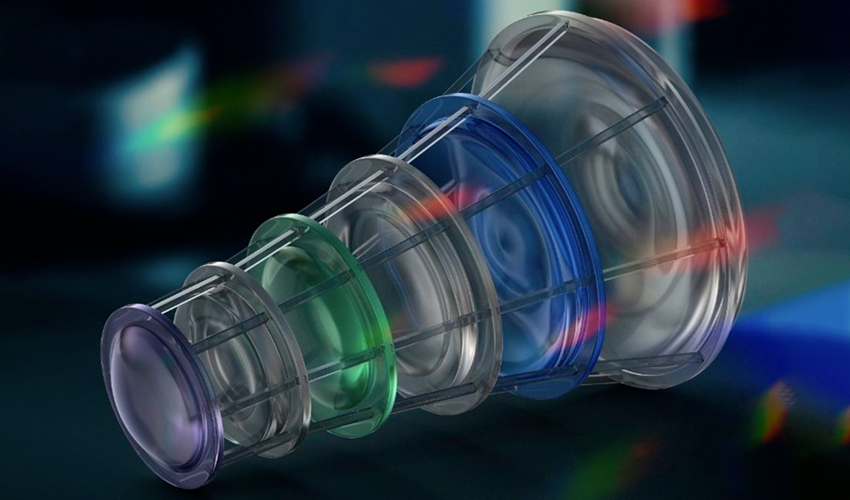
Although additive manufacturing is an increasingly democratized production tool, we can still find certain limitations in adoption. For example, industry in particular is experiencing an increasing need for precision in end-use parts. This is especially important for micro- and nanoscale models. For this reason, we are seeing more and more micro 3D printing solutions that meet these needs. One such companies developing this manufacturing method is Germany’s HETEROMERGE. We spoke with its founder and CEO to learn more about its technology and multi-material 3D printing on a microscopic scale.
3DN: Could you introduce yourself and your connection to 3D printing?
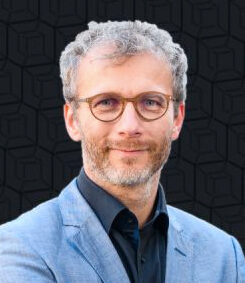
Robert Kirchner
I am Robert Kirchner, co-founder and CEO of HETEROMERGE GmbH, based in Dresden, Germany. I have a background in electrical engineering and received my PhD in polymer microsystems fabrication in 2011. During my PhD, and especially afterwards in my professional positions, such as at the Fraunhofer Institute for Photonic Microsystems (IPMS) and the Paul Scherrer Institute, I did intensive research in the fields of nanoimprint lithography, grayscale lithography and 3D printing using 2-photon absorption-based laser writing.
The core of this research has always been the fabrication of very small and functional structures. We have created advanced original structures and exploited polymer replication techniques to be able to enable high volume production. One recent example here is the fabrication of waveguide structures that enable today’s augmented reality glasses. Thanks to the 2-photon 3D printer, in 2013 we were able for the first time to produce extremely small, but at the same time highly precise, 3D free-form structures. What started with the first printing experiments has never left me.
More from the desk
Six other notes from the rest of the bench.
 NewsHow 3D Printing is Transforming Water InfrastructureYou learned it in science class: water is the foundation of life. The renewable resource is often taken for granted, since for many of us, it is easily accessible with a turn of the tap. However, the infrastructure that delivers…
 NewsTop 5 Videos: Backstage tour of BCN3D’s factory!This week we found the top 5 videos about 3D printing and the way additive manufacturing is changing production processes. The technology has infiltrated many sectors, from medical to automotive – check out our selection of the week to keep up with the innovations!…
 GuidesThe Faces of Additive Manufacturing: Gil LaviAfter Avi Reichental and Hanan Gothait, we continue our series on additive manufacturing personalities with Gil Lavi. This industry pioneer began his career in the 2000s, working for the manufacturer Objet Geometries (now Stratasys) before embarking on his own entrepreneurial&hel
 NewsXtreeE launches new 3D printing construction unit in Dubai3D concrete printer manufacturer XtreeE has announced the export of its technology internationally: it has opened an additive manufacturing centre in Dubai, which completes its production site in Rungis. The company based in France took the opportunity to announce a…
 Guides3DCeram Discusses Industrial Scale Production of Ceramic Parts3DCeram is a manufacturer of industrial 3D printers, specializing in ceramics and stereolithography in particular. For several years now, the French company has been designing solutions to meet the requirements of a wide range of industries, from defense to biomedical…
 NewsMX3D and Schindler Have Used 3D Printing to Design an ElevatorWhat began in 1857 in the Haughwout department store in New York has become an indispensable part of our lives: the passenger elevator. However, we realize that although we are in one almost every day, it rarely leaves a lasting…