News
What If the Next 3D Printing Material Came from Your Kitchen?
Researchers at Chalmers University (Sweden) have developed a biodegradable material for 3D printing made from baker’s yeast, wood cellulose fibers, seaweed alginate, vegetable glycerol, and water. The end result aims to be an alternative to construction materials such as plastic,
- 3 min read
- News
- Six more stories
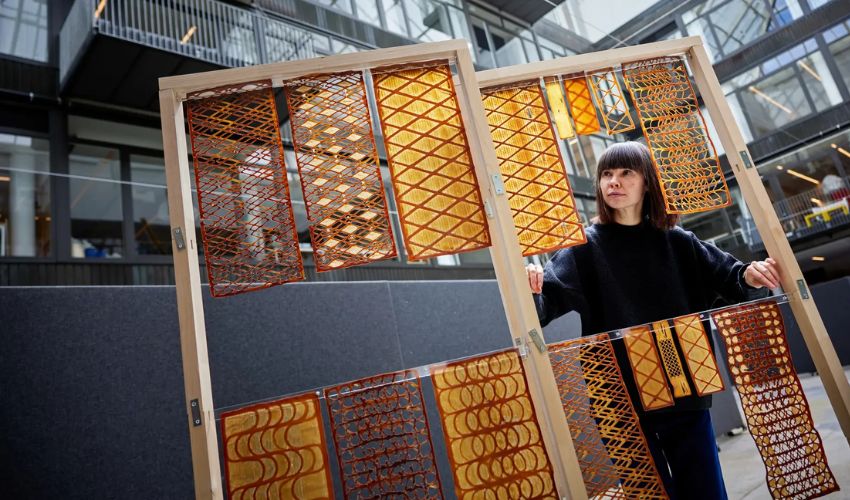
Researchers at Chalmers University (Sweden) have developed a biodegradable material for 3D printing made from baker’s yeast, wood cellulose fibers, seaweed alginate, vegetable glycerol, and water. The end result aims to be an alternative to construction materials such as plastic, plaster, or synthetic textiles, but made from organic and industrial byproducts.
Each ingredient serves a specific function. Alginate provides stability during printing; cellulose reinforces the structure and adds strength; glycerol acts as a plasticizer and provides flexibility. The yeast, meanwhile, acts as a binder for all the ingredients and gives the mixture viscosity. “Because [yeast] consists of single-celled organisms, we can produce a more homogeneous, predictable material,” explains Malgorzata Zboinska, a professor at Chalmers and the lead researcher on the study. The five ingredients form a malleable hydrogel that is ready for printing.
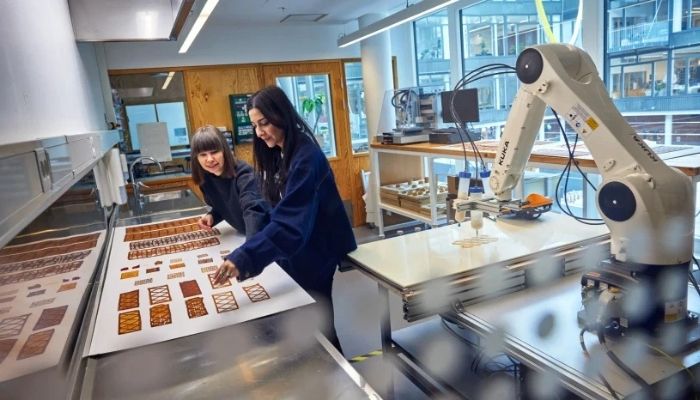
Malgorzata Zboinska (left) and Yagmur Bektas (right).
3D Printing with Yeast
The researchers explain the process as follows: first, the yeast is heated to deactivate it, and then all the ingredients are combined until a homogeneous paste is obtained. This paste is loaded into syringes that deposit the material with the help of a robotic arm. The entire process takes place at room temperature. Once printed, the piece is left to dry until it reaches its final shape. “3D printing makes it possible to create complex shapes without producing waste. We can design and manufacture the material directly – with a high degree of control over its shape, texture and material distribution,” notes Yagmur Bektas, a PhD student at Chalmers and co-author of the study.
More from the desk
Six other notes from the rest of the bench.
 ApplicationsDental 3D Printing: how are 3D technologies revolutionising this sector?Additive manufacturing has reached a significant number of sectors and industries, subsequently offering important advantages in terms of productivity, costs, customisation and lead times. In the field of dentistry the technology creates solutions adapted to the needs of each pat
 GuidesTOP 10 3D Models / STL Files of 2018Every year at 3Dnatives, we search through our selection of our favorite 3D models published online in the past year. This year, the level of STL file designs stepped up a level in comparison with previous years. These models are…
 GuidesHow 10 US startups are innovating with 3D printing?On 3Dnatives, we regularly talk about the giants of additive manufacturing, from machine manufacturers to 3D printing services or material suppliers. However, there are a growing number of startups that see this technology as the future of their industry. AM…
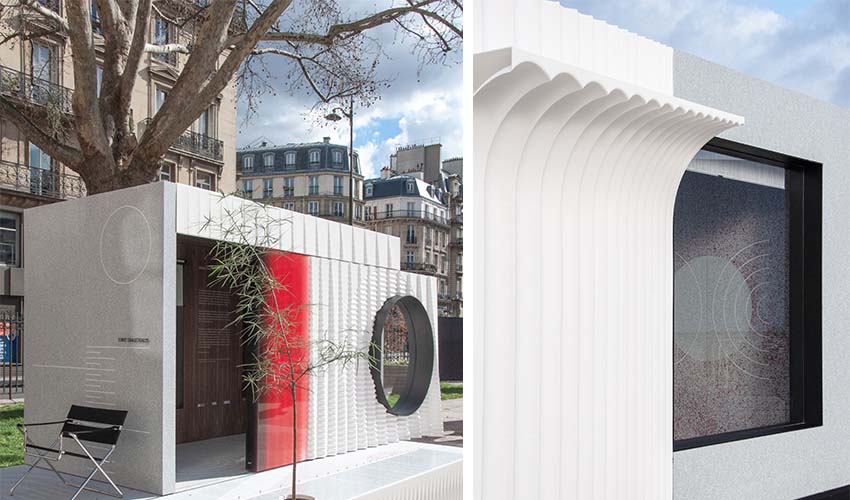 NewsTiny Bauhaus building: custom high-design architecture thanks to 3D printingAectual, the construction-tech company based in Amsterdam is a digital platform and 3D print factory that produces a variety of architectural elements. Recently, they revealed that they teamed up with DUS architects to create a novel ‘Tiny Bauhaus’ building. The…
 NewsWhat Can You Expect from AMUG 2026?AMUG 2026 is on the horizon! As an organization, the Additive Manufacturing Users Group (AMUG) continues its mission to “educate and advance the uses and applications of additive manufacturing technologies.” This upcoming event will take place March 15th – 19th,…
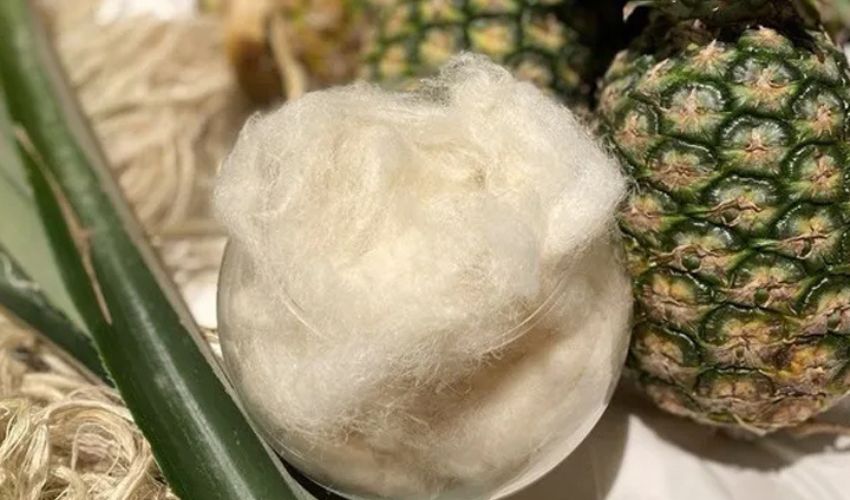 NewsReinforcement of PLA For 3D Printing Using Plant WasteA recent study from an international group of researchers suggests that pineapple leaf fiber (PALF) could be used to reinforce polylactic acid (PLA). They tested two types of PALF (raw, and alkali-treated) combined with PLA, and results showed better ductility…