Applications
3D Printing Could Improve Cosmetic Surgery Procedures
Scientists at Swansea University in Wales have developed a solution that they believe will transform the future of plastic surgery. They have developed an additive manufacturing technology capable of creating 3D printed artificial cartilage. This project aims to change the&hellip
- 3 min read
- Applications
- Six more stories
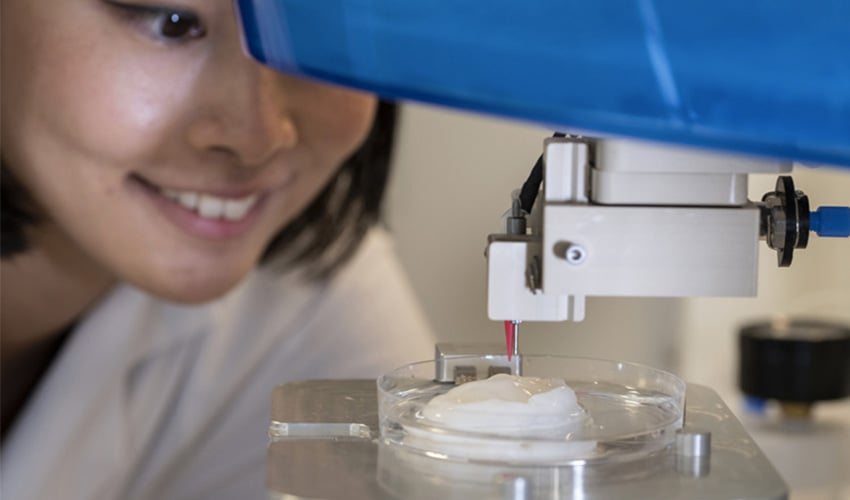
Scientists at Swansea University in Wales have developed a solution that they believe will transform the future of plastic surgery. They have developed an additive manufacturing technology capable of creating 3D printed artificial cartilage. This project aims to change the lives of people who have lost a part of their face, such as a nose or an ear, due to an accident or cancer. One of the byproducts of the program is to change the way surgeons operate. Currently, interventions consist of extracting the cartilage of the ribs of the patients to create a new structure for the part of the face. However, this method is not necessarily suitable. This cartilage remains weaker than the original one, making this part of the body more sensitive and less flexible.
The project, named “3D Bioface,” has been funded by the medical charity The Scar Free Foundation, and is expected to help address problems facing the sector right now, as no actual surgery will be required. “This life-changing research is part of our commitment to achieving scar-free healing for the millions of people living with scars in the UK and around the world,” said Brendan Eley, chief executive of The Scar Free Foundation.
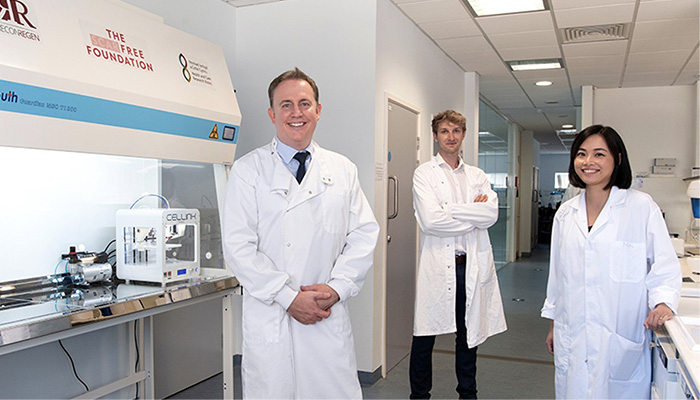
In the middle, Professor Whitaker, a scientist involved in the project (photo credits: Swansea University)
3D Printed Artificial Cartilage
In order to create a nose or an ear, scientists at Swansea University are using their technology to create cartilage from nanocellulose hydroge, a kind of resinous wood pulp. This substance has been mixed with hyaluronic acid, a molecule naturally present in the epidermal tissues. This improves the hydration and firmness of the skin. Once combined, this material can be 3D printed to obtain the required shape. A biological catalyst then hardens the mixture. The artificial cartilage is then immersed in a solution containing cartilage cells from the patient’s body. This step is crucial. It allows these cells to colonize and stiffen the 3D printed structure. Finally, the final phase consists of implanting a new nose or ear on the patient’s face.
More from the desk
Six other notes from the rest of the bench.
 SoftwareThe Best FDM Slicer Software For All Levels3D printing a part is a process involving several stages – modeling, file preparation, post-processing and so on. One of these is called slicing: it involves cutting your 3D model into a series of layers, and tells the 3D printer…
 NewsSaab Successfully Flies Gripen Fighter with External 3D Printed PartsOn Tuesday, Swedish aerospace and defense company Saab announced that it had successfully tested a Gripen fighter with 3D-printed parts on the exterior for the first time. The trial was conducted on Friday March 19th in Linköping, Sweden above Saab’s…
 MaterialsMaterialise on Using Sustainable Materials to 3D-Print Designer EyewearOne of the many benefits of using 3D printing for the manufacture of products is that it enables companies to move from away mass-production to mass-customization — offering a selection of colors and styles to suit the tastes of each…
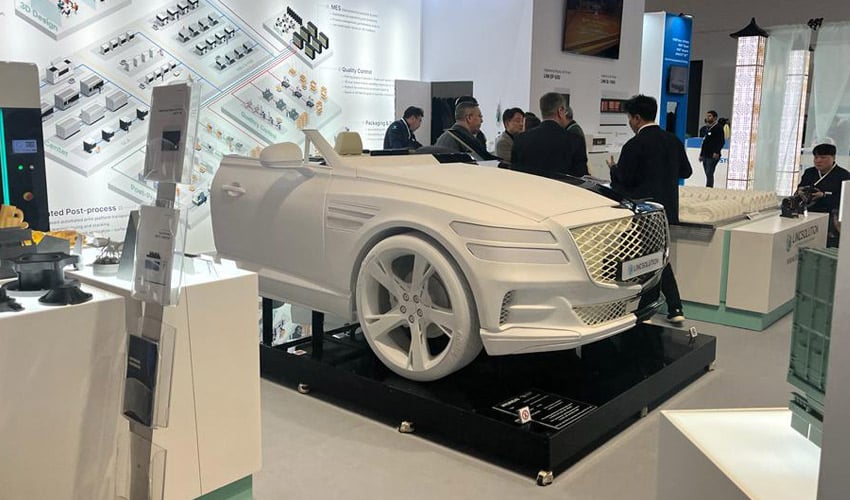 ApplicationsMobility and Sustainability Take the Stage at Formnext 2023Wherever you went around the Formnext expo in Frankfurt this year, you heard similar buzzwords: automation, mobility and sustainability are some that could be picked up several times – in every industry. We took a closer look and asked around…
 NewsFully 3D printed rocket engine unveiled by Skyroot AerospaceThe Indian startup Skyroot Aerospace has just unveiled its first fully 3D printed rocket engine. Named Dhawan-I after the famous engineer Dr. Satish Dhawan, it is a cryogenic engine – it uses gases kept in a liquid state at low…
 PrintersRevopoint POP 2 Kickstarter Launched by RevopointAfter the success of the Revopoint POP 3D scanner, a cost-effective 3D scanner that is remarkable for its many features, Revopoint has now launched a Kickstarter for their latest scanner: the new Revopoint POP 2. The new scanner is set…