News
Photogrammetry Used for Exhibition Of Naval Shipwreck
A joint venture between software company NVIDIA and researchers at Curtin University in Western Australia has seen the recreation of the wreck of a shipwreck using photogrammetry and 3D printing technology. The exhibition, at the WA Maritime Museum, was developed…
- 3 min read
- News
- Six more stories
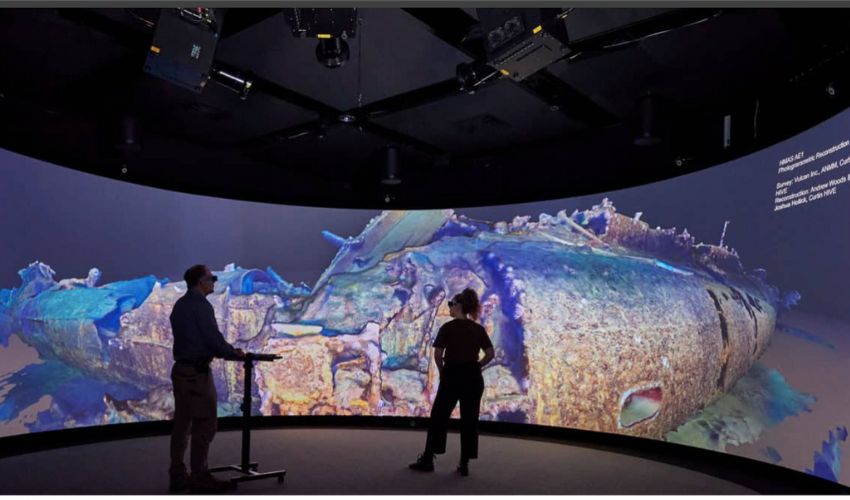
A joint venture between software company NVIDIA and researchers at Curtin University in Western Australia has seen the recreation of the wreck of a shipwreck using photogrammetry and 3D printing technology. The exhibition, at the WA Maritime Museum, was developed to show an wartime battle that occurred on November 19, 1941. Namely, that day Australia’s HMAS Sydney (II) and Germany’s HSK Kormoran exchanged fire for over an hour with over 700 resultant deaths. Moreover, both ships sank over 8,000 feet where they lay undiscovered for decades. Now, the shipwrecks are on the Australia National Heritage List, and thanks to 3D models, museum-goers can view the shipwrecks from the comfort of the museum.
This project has been created as part of the Curtin HIVE, a Curtin University group which works on simulation and visualization within the country. Andrew Woods, an associate professor at Curtin University and an expert in stereoscopic 3D visualization, built an underwater rig with more than a dozen video and still cameras to capture details of the wrecks in 2015. These scans then were converted into 3D models.
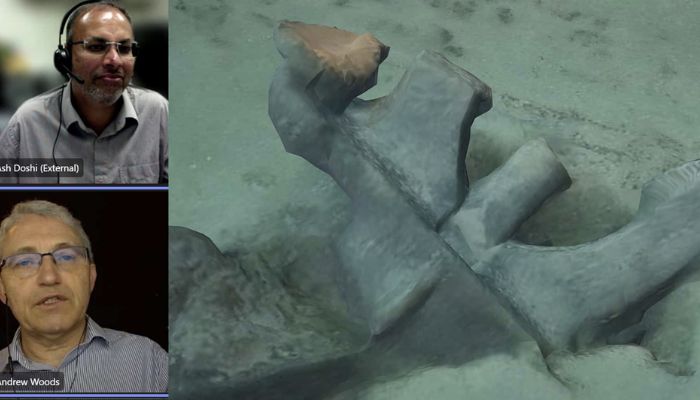
The shipwreck project was made using photogrammetry, a technology which involves the interpretation of photographic images, for example for the purpose of 3D printing. However, the technology is not necessarily easy to use. “It’s highly computationally intensive — when you double the number of images, you quadruple the compute requirements,” said Woods, who manages the Curtin HIVE. Ash Doshi, a computer vision specialist and senior research officer at Curtin, then developed and ran software on NVIDIA GPUs to stitch the half-million pictures and 300 hours of video they took into virtual and printed 3D models.
More from the desk
Six other notes from the rest of the bench.
 NewsPULSE, the 3D printed necklace that reminds you not to touch your faceAs we know, the global pandemic caused by Covid-19 has mobilized the additive manufacturing community to seek rapid and efficient solutions to combat the virus. Today, a couple of months after the pandemic reached its peak, it is time to…
 ApplicationsUniversity of Minnesota Medical School Receives 3D Printers to Better Study the HeartBoth education and medicine are sectors that have continuously seen the value of additive manufacturing. Now, Stratasys has combined the two, donating Stratasys J750™ Digital Anatomy™ 3D printers, as well as MakerBot METHOD X® and MakerBot SKETCH® 3D printers to the Visible Heart
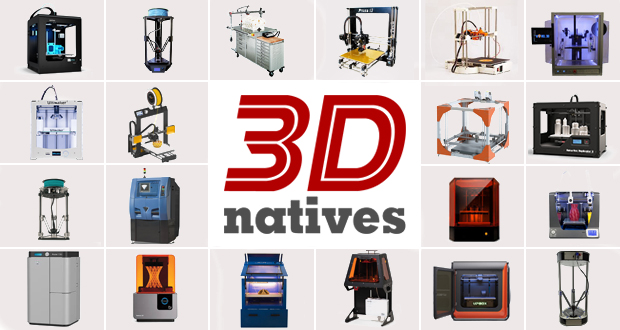 Printers3Dnatives report: The most popular 3D printersThe 3Dnatives Comparator lists hundreds of 3D printers that range from Desktop and RepRap/kit printers to professional and industrial ones. Our Comparator includes a range of models that are based on various processes such as filament filtration and powder sintering,…
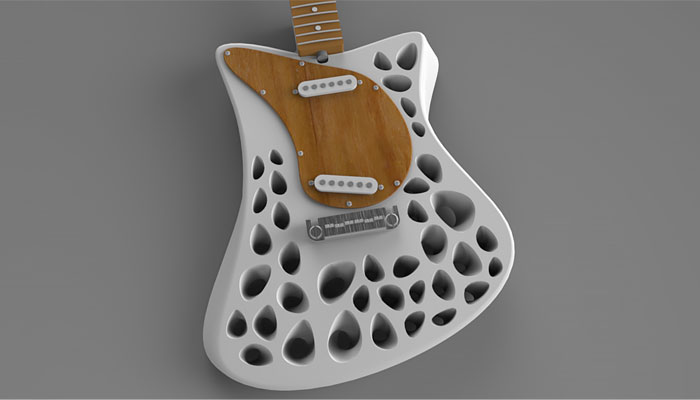 NewsFrancisco Bonansea and his use of 3D printing to create guitars at homeAdditive manufacturing is impacting all types of sectors, including music! We have witnessed the emergence of 3D printed instruments with the same sound capacity as a conventional musical instruments. This production method is becoming increasingly common among professional music
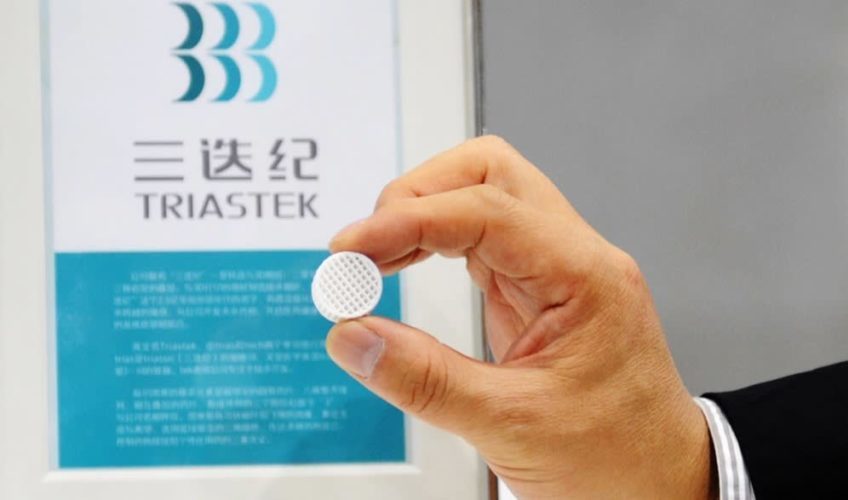 ApplicationsTriastek Raise $15 million to Develop 3D Printed PharmaceuticalsChinese startup, Triastek has just raised $15 million in series A funding for the research and development of 3D printed drugs. The company was established in Nanjing, China, in 2015 with the intention of improving healthcare using 3D technologies to…
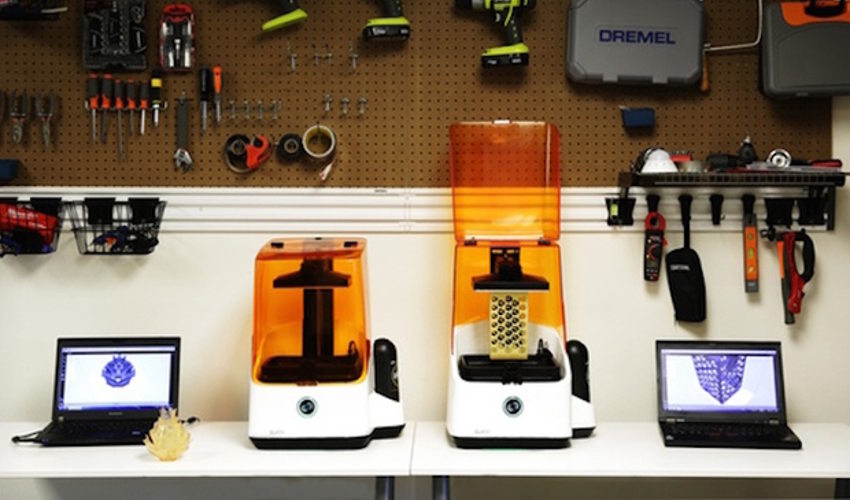 PrintersAre UniZ 3D Printers the Fastest 3D Printers Ever?UniZ are an American additive manufacturing startup from San Diego which opened its doors back in 2014. The starting team was composed of engineers, entrepreneurs, and designers. Since then, UniZ have released their currently available SLASH and SLASH+ UDP 3D…