Guides
3D Printing Personalized Medicines with goatAM
Reinventing 3D printing for the pharmaceutical sector — that’s the ambition behind goatAM. Drawing on their research expertise, the company’s founders are developing solutions for the production of personalized medicines, including 3D-printed pills. With this innovative approach,
- 3 min read
- Guides
- Six more stories
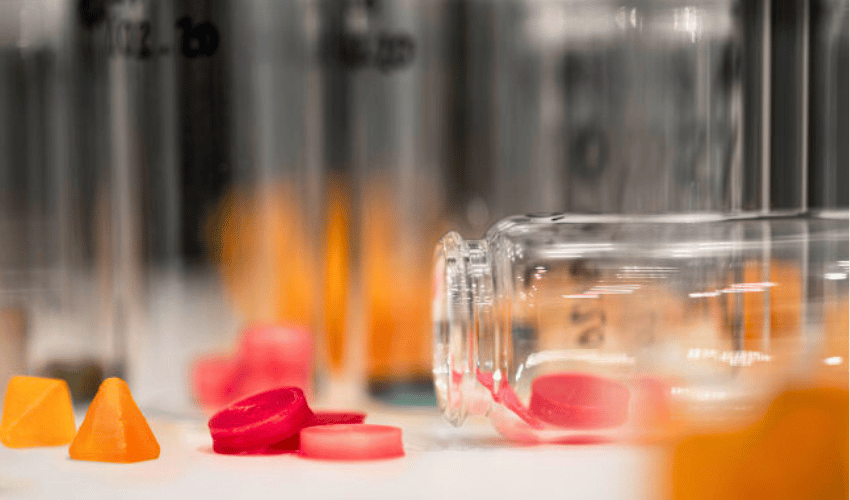
Reinventing 3D printing for the pharmaceutical sector — that’s the ambition behind goatAM. Drawing on their research expertise, the company’s founders are developing solutions for the production of personalized medicines, including 3D-printed pills. With this innovative approach, goatAM aims to transform access to tailored treatments, put patients at the center of care, and help democratize 3D printing. We spoke with the startup to learn more about its vision, technologies, and the challenges of 3D printing medicines.
3DN: Can you introduce yourselves and tell us about your journey into 3D printing and the creation of goatAM?
We are Tilmann Spitz (CEO and founder) and Fabian Loose (CTO and founder) of goatAM. Both mechanical engineers trained at the Technical University of Cologne, we carried out research within the university’s Production Systems Laboratory. It was there that we discovered 3D printing and began developing specialized systems and techniques, mainly for industrial applications. Our work included 6-axis 3D printers, large-format polymer foam printing, and AI-assisted analysis tools for plastics processing.

The goatAM team. Left: Fabian Loose; right: Tilmann Spitz. (Photo credit : goatAm)
goatAM was founded following the completion of several university projects. In 2018, Heinrich Heine University in Düsseldorf approached us to explore 3D printing for personalized medicines. Although our expertise at the time was rooted in mechanical engineering, we quickly became fascinated by the topic. Two projects emerged from this collaboration: one focused on 3D printing single-dose pills using a screw extruder for centralized production, and the other on an FDM-based approach for decentralized manufacturing in pharmacies. The success of the second project, carried out with Heinrich Heine University and Merck KGaA, attracted significant interest and ultimately led to the creation of goatAM and the commercialization of our technology.
More from the desk
Six other notes from the rest of the bench.
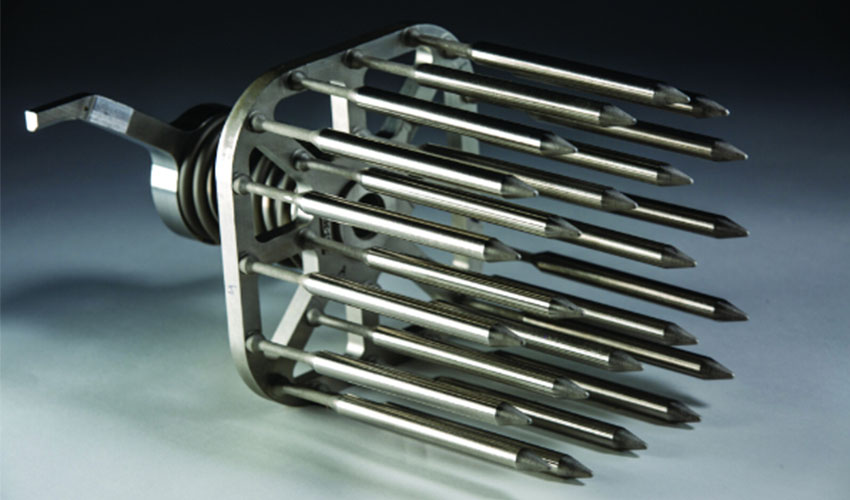 NewsFirst installation of a 3D printed thimble plugging device in nuclear plantThe American nuclear power company, Westinghouse Electric Company, announced it has successfully 3D printed a thimble plugging device for the nuclear industry. A thimble plugging device is used to hold nuclear fuel as it is lowered into the reactor core,…
 NewsBAE Systems and Renishaw partner to develop AM for aerospaceBAE Systems, a British specialist in the aerospace and defence sectors, has just signed a memorandum of understanding with the manufacturer Renishaw to design end-use parts for its fighter aircraft. The ultimate aim is to improve the entire production process,…
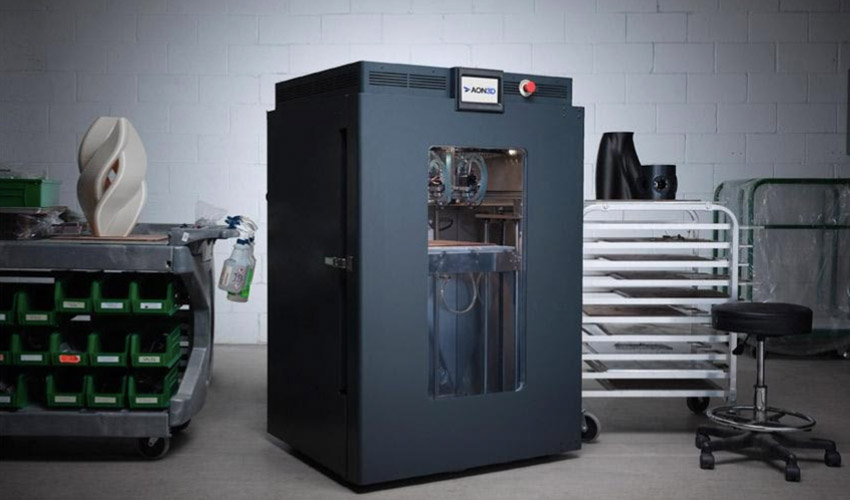 NewsAON-M2 2020, a high-temperature machine compatible with hundreds of materialsCanadian manufacturer AON3D has just launched a new industrial machine, AON-M2 2020, compatible with a wide range of thermoplastics including high performance materials such as PEEK, PEKK and ULTEM. Equipped with a fairly generous build volume of 454 x 454…
 NewsSaab Successfully Flies Gripen Fighter with External 3D Printed PartsOn Tuesday, Swedish aerospace and defense company Saab announced that it had successfully tested a Gripen fighter with 3D-printed parts on the exterior for the first time. The trial was conducted on Friday March 19th in Linköping, Sweden above Saab’s…
 Guides3D Alliances Talks IMPACT, the Revenue Accelerator Program for AM CompaniesYou have probably already heard of 3D Alliances. The 3D printing consulting company is dedicated to offering additive manufacturing companies different services for their businesses. Now, they have announced the launch of IMPACT, a program that aims to help companies…
 ApplicationsUrsa Major’s 3D Printed Hadley Engine Takes First FlightAdditive manufacturing is soaring higher and higher as it continues to cement its place in the space industry. Case in point, only two years since emerging on the Aerospace AM scene, Ursa Major has announced the first flight of its…