Applications
Recent Report Highlights the Continued Importance of 3D Printing in Dentistry
Dentistry is providing an ever-increasing market for 3D printing. According to a recent report from BlueWeave Consulting on the dental 3D printing market, it is projected to be worth $12.18 billion USD by 2028. The report highlights the needs of…
- 3 min read
- Applications
- Six more stories
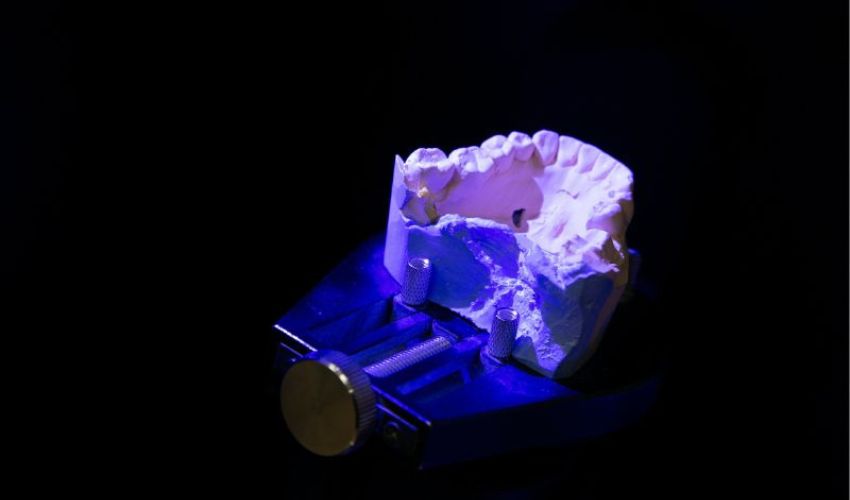
Dentistry is providing an ever-increasing market for 3D printing. According to a recent report from BlueWeave Consulting on the dental 3D printing market, it is projected to be worth $12.18 billion USD by 2028. The report highlights the needs of an aging population and rapid technological advancements. In short, patients need treatment- and 3D printing can supply it. However, demand is not solely for the treatment of debilitating conditions. It is important to recognize the growing demand for esthetic dental treatments to improve appearance.
First, one reason for this growth is the clear demand. Esthetics and dentistry are inextricably linked and it is difficult to separate purely esthetic from purely practical procedures. Indeed, according to one contributor to the British Dental Journal, ‘there is no such thing as a non-cosmetic dentist’. The effect of issues such as crooked, stained or broken teeth on self-esteem and confidence are well documented. Furthermore, visually imperfect teeth may have been acceptable years ago in the way they are sometimes not today. In the US, a myriad of people from Hollywood celebrities to the 77-year old serving president have had observable dental treatment, giving a youthful and healthy appearance. Increasingly, patients follow these examples and seek aesthetic solutions. As demand for dentistry increases, this is where 3D printing comes in.
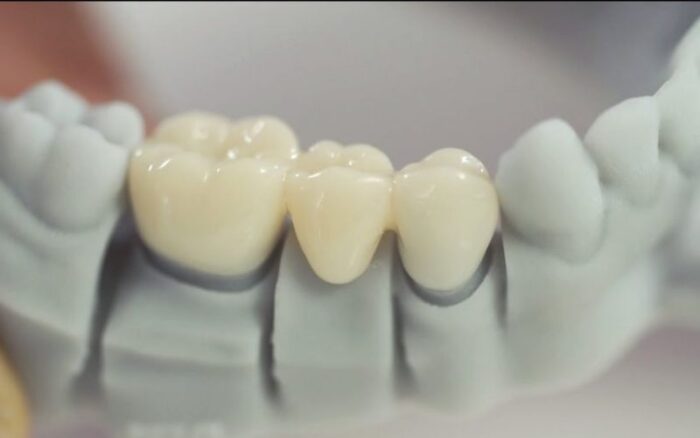
3D printed dental arch model. Photo credit: dentalnews.com
CAD and CAM were pioneered in dentistry by Dr François Duret. In 1980, he purchased his first patent for CadCam technology. In 1985 in Paris, he made the first crown using this method. CAD and CAM involves the collection of non-digital data, which is then converted into a digital format on a computer and used to manufacture a physical model. This is known as a digital workflow. 3D printing in dentistry has grown greatly from these beginnings and continues to serve many advantages when applied to the field.
More from the desk
Six other notes from the rest of the bench.
 NewsMiddle East Reverse Engineering & Additive Manufacturing Show 2024 to Open Its Doors TomorrowWhen the industry talks about regions that are a hotspot for additive manufacturing, often we mention the USA, Western Europe and, of course, China and India. But there is another part of the world that has become one of the…
 ApplicationsNew Research on 3D Printed Bioactive Bone Implants Reveals Promising PropertiesUsing 3D printing to create bone implants is beneficial in more ways than one. Beyond achieving geometries personalized to the patient’s anatomy, the technology is compatible with diverse materials that can achieve more desirable properties than traditional implants, often
  ApplicationsWith AML3D, the US Navy is Bringing Additive Manufacturing to SubmarinesThe defense sector, particularly in the U.S., has increasingly been adopting 3D printing for different applications. Moreover, though this is generally happening across all branches of the military, it is true that one of the areas where additive manufacturing is…
 ApplicationsCollins Aerospace Opens New Additive Manufacturing CenterAmerican company Collins Aerospace recently announced the opening of its new additive manufacturing center located in Monroe, North Carolina. The company, which is a subsidiary of the multinational Raytheon Technologies Corporation, opened the additional location for the expansio
 NewsTop 5 of the Week: A 3D printed robotic arm and much more!This week we found the top 5 videos about 3D printing and the way additive manufacturing is shaping our society. The technology has infiltrated many sectors, from medical to automotive! Check out our selection of the week to keep up with the innovations! This week we…
 GuidesThink big, print small: Nanofabrica on the benefits and applications of microscale 3D printingOne of the major benefits that additive manufacturing has over traditional manufacturing is its ability to be customized for individual use, no matter how big or small the part may be. Never is this more evident than with microscale 3D…