Applications
3D printing goes to space on Airbus’ Eurostar Neo satellites
3D printing is going back into space! Airbus has used Additive Layer Manufacturing (ALM) technology (otherwise known as 3D printing or additive manufacturing) for the creation of radio frequency (RF) components for two Eurostar Neo satellites which are planned to…
- 3 min read
- Applications
- Six more stories
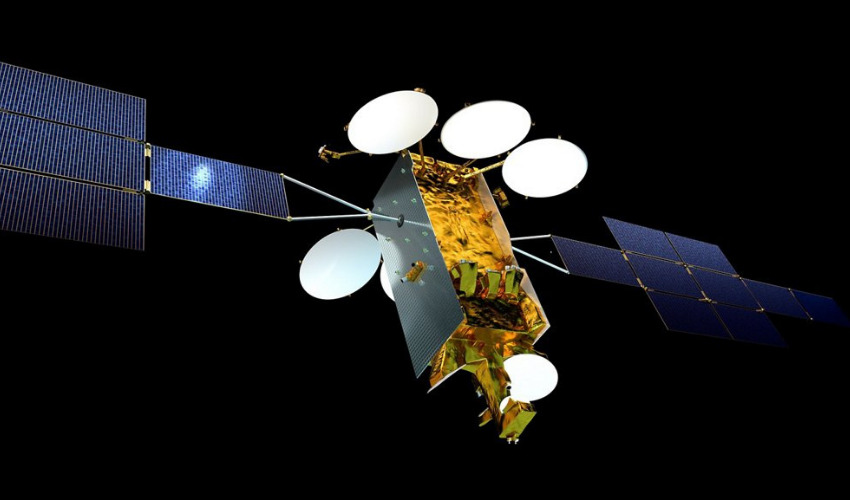
3D printing is going back into space! Airbus has used Additive Layer Manufacturing (ALM) technology (otherwise known as 3D printing or additive manufacturing) for the creation of radio frequency (RF) components for two Eurostar Neo satellites which are planned to join the in-orbit fleet of Eutelsat, a major communications provider in Europe. This is part of a growing trend, as many in the aerospace sector are turning to AM. This is because, they see it as a way to create parts that not only cost less, but which can be stronger and more efficient thanks to the flexibility offered by 3D printing when it comes to geometries and also types of available materials. The first satellite communications module is ready and will be sent to Airbus’ defence and space facility in France where the full build-up will be completed, while the second is expected to begin testing soon.
Additive manufacturing is expected to play a key role in the future of space exploration. This is due to a few reasons, including the ability to create more complex geometries with important materials. For example, in aerospace in particular, ceramic 3D printing and metal 3D printing are increasingly used for a number of applications, including as we see here the creation of final use parts. 3D printing allows a certain amount of flexibility in the creation of shapes, much more so than can be used with traditional manufacturing. Additionally, it is often cheaper, faster and less wasteful than other methods. Already, many companies have used AM in the creation of parts such as thrusters and rocket engines. 3D printing is also expected to potentially play a role in allowing for manufacturing in space itself, including the creation of housing on Mars and the Moon.
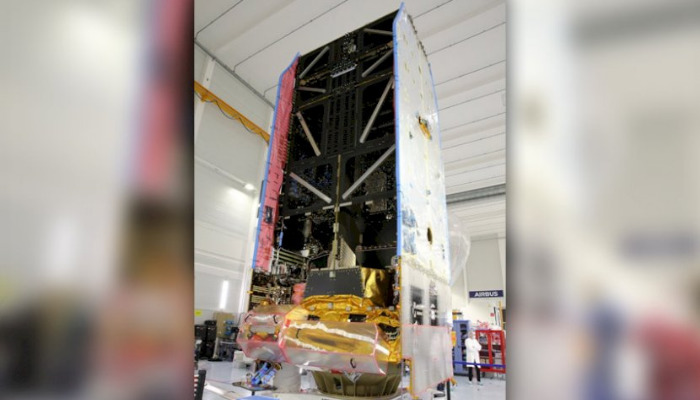
The Eurostar Neo HOTBIRD 13F (photo credits: Airbus)
3D printed satellite components
For this particular project, Airbus Defence and Space in Portsmouth, UK have 3D printed a total of 500 RF components, made out of multi-waveguide blocks and switch assembly networks. RF components in general are important as they are the basic components needed for proper functioning of any communication device. In this case, they will be used in the two satellites, called EUTELSAT HOTBIRD 13F and 13G. These satellites in turn will be used to reinforce and enhance Eutelsat’s TV broadcasting services over Europe, the Middle East, and North Africa.
More from the desk
Six other notes from the rest of the bench.
 PrintersHow to choose a 3D printer: Experts give their advice!There are now hundreds of 3D printer manufacturers vying for market share in the 3D printing industry. Many wish to occupy the lucrative rewards that 3D printing is poised to bring. Therefore, it is difficult for someone to choose which…
 NewsTop 5 Videos: Exploring 3D Print Farms and AutomationTop 5 Videos is back! This month, we’re starting with a 3DExplained on how (and why) you could automate your 3D print farms. Then, we shift our focus to design, with our second video spotlighting 3D printed outdoor furniture, and…
 NewsTop 5 Videos: 3D printed tires & Aortas!This week’s Top 5 Videos includes videos from a variety of sectors which 3D printing helps. These vary from tires, to racing cars, to parts of a human heart! Remember, a new Top 5 Videos is published every Sunday, so…
 NewsWhat Do We Know About the Desktop Metal Layoffs and Other Cost Optimization Measures?Desktop Metal has announced that, among other cost optimization measures, it will be reducing its global workforce by approximately 12%. These layoffs from Desktop Metal are a result of a need to cut costs after a number of acquisitions the…
 NewsIs 3D printing the future of construction for Dubai?The real estate development company, Emaar Properties announced the construction of its first 3D printed home in Dubai, in collaboration with an international 3D concrete printer manufacturer and a contractor from the United Arab Emirates. The project is still in…
 NewsUsing Coffee to Provide Sustainable 3D Printing MaterialsAs additive manufacturing has opened up new creative avenues, there are those who take an interest in setting an early precedent by producing environmentally friendly materials to lead the charge in sustainability. Creating such recycled filament and green materials is…