News
3D Printed Bug Project Raises Awareness of Biosecurity Threat in New Zealand
Students in Canterbury, New Zealand, have 3D printed a brown marmorated stink bug (Halyomorpha halys) in an effort to raise awareness of the biosecurity threat posed to the country by the bug. They worked together on a Summer Student Programme,…
- 3 min read
- News
- Six more stories
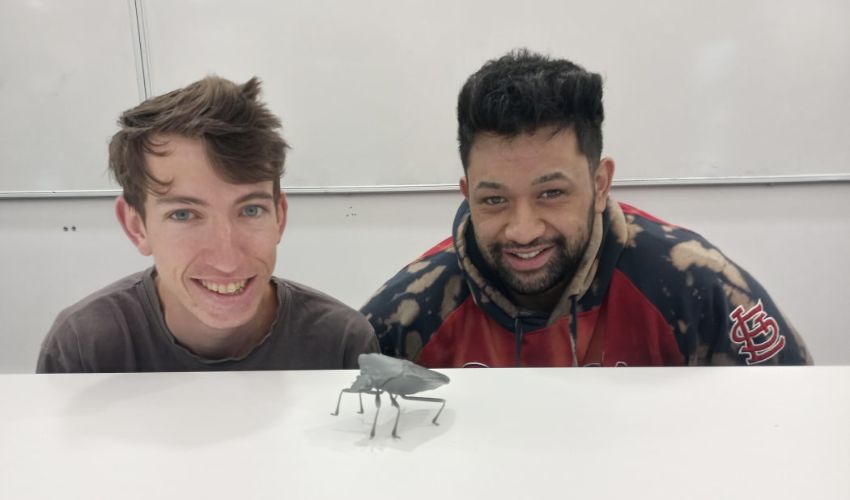
Students in Canterbury, New Zealand, have 3D printed a brown marmorated stink bug (Halyomorpha halys) in an effort to raise awareness of the biosecurity threat posed to the country by the bug. They worked together on a Summer Student Programme, the Better Border Biosecurity (B3) programme. B3 is a research collaboration involving Crown Research Institutes and other academic and governmental institutions.
Joel Tregurtha and Te Matau O Te Rangi Allen (Te Ati Haunui-a-Pāpārangi, Ngāti Rangi, Ngāti Tūwharetoa), both students at the University of Canterbury, designed and 3D printed the bug. Allen is completing a Bachelor of Engineering in Mechatronic, Robotics, and Automation Engineering, while Tregurtha is working towards a bachelor degree in Biological Sciences. According to Allen, they combined their disciplines to come up with innovative idea. He claims that the idea took many attempts to execute: the first bug did not print correctly, and the bug’s fragility made post-processing a challenge. However, the pair worked around it, having to glue the legs back on the bug of the first prototype. Not only is the bug correctly shaped, they also worked on the authenticity of the texture. According to Allen, they printed a layer in vinyl which was stuck onto the bug.

Biosecurity checks are an essential part of New Zealand’s border security (Photo credit: NZ Herald)
The main inspiration for the project was to raise awareness of biosecurity. The pair hope that members of the public may keep an eye out for this bug in the future. Not currently present in New Zealand, their existence could pose a serious threat. Indeed, according to the New Zealand government, the establishment of the stink bug in the country could cause ‘decimation’ of fruit and vegetable populations; they encourage the public to be aware of the bug and to contact the authorities in case of spotting one. Back to the potential of the stink bug project, Allen suggests that the bug could be rolled out in schools or in nature walks to help children and people of all ages to learn more about nature.
More from the desk
Six other notes from the rest of the bench.
 MaterialsSuprem on the Democratization of Continuous Fiber for Additive ManufacturingSuprem is a Swiss materials manufacturer that specializes in continuous fiber reinforced thermoplastics. Its solutions enable the machinery, medical, energy, sports and aeronautic industries to design strong, lightweight parts with high temperature resistance. Recently, the compa
 NewsRevenues Soar as Shipments Dip In Global 3D Printer LandscapeAccording to a study by CONTEXT, revolutionary shifts and fierce competition have set the stage for the global 3D printer industry as it experienced a mixed bag of results in their latest quarter analysis. While the allure of billion-dollar mergers…
 ApplicationsUrsa Major’s 3D Printed Hadley Engine Takes First FlightAdditive manufacturing is soaring higher and higher as it continues to cement its place in the space industry. Case in point, only two years since emerging on the Aerospace AM scene, Ursa Major has announced the first flight of its…
 NewsTop 5 Videos: 3D Technology Used in Food Production PlantsIn this weekly compilation of videos on 3D printing, we will focus on several industries that have adopted additive manufacturing methods. We will start with the food and beverage sector, as 3D technology is increasingly being implemented in food production…
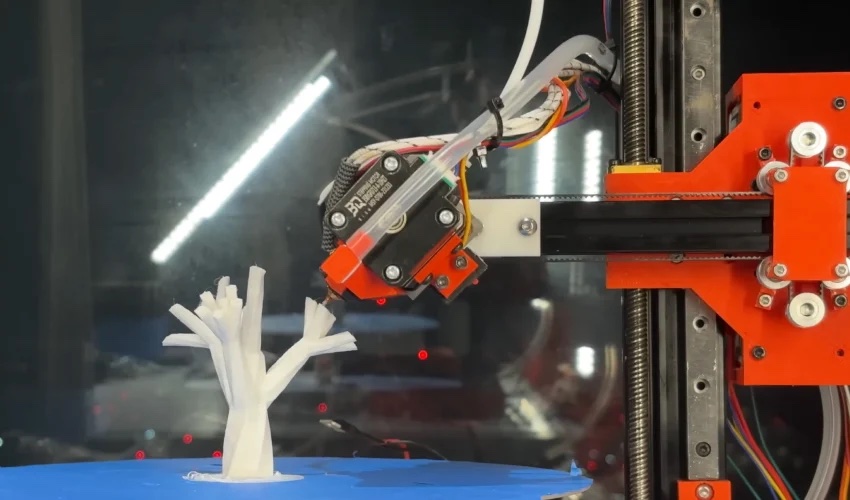 PrintersJoshua Bird’s “Core-RΘ” 4-Axis Polar 3D Printer Can Print Without Any SupportsIn the world of FDM 3D printing, dominated by classic Cartesian systems, some innovations are overturning established codes. Such is the case with the 4-axis core-RΘ 3D printer designed by Joshua Bird. This audacious maker has pushed back the boundaries…
 NewsTop 5 Videos: 3D Printing for the OlympicsWelcome back to another top five videos from this week in 3D printing! If you’ve been waiting for the moment to relax and osmose knowledge through the medium of YouTube, then you’ve come to the right place. This week we…