Applications
Custom 3D printed stents gain FDA approval
The FDA has just approved custom-made stents designed by Dr. Tom Gildea, a physician at the Cleveland Clinic. These devices, customized to the patient’s anatomy, are placed in an artery to facilitate breathing by keeping the airway open. The stents,…
- 3 min read
- Applications
- Six more stories
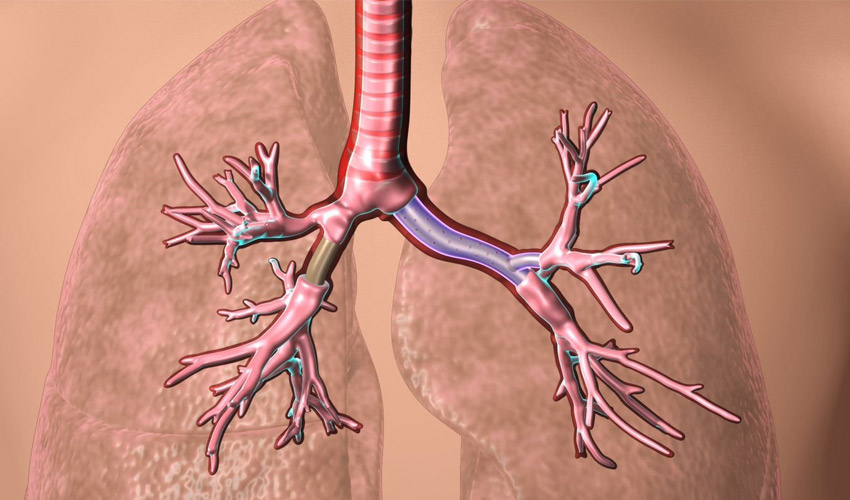
The FDA has just approved custom-made stents designed by Dr. Tom Gildea, a physician at the Cleveland Clinic. These devices, customized to the patient’s anatomy, are placed in an artery to facilitate breathing by keeping the airway open. The stents, which are made using 3D printing and silicone injection technology, could last longer than those traditionally manufactured and, more importantly, will be custom made to be suitable for every patient.
A stent may be necessary for many reasons, for example if the heart is less well irrigated than normal due to aging of the coronary arteries. A bypass could be performed but it is a heavy operation whereas a stent is easier to put in place, although it is often unsuitable for the patient’s morphology. However, a poorly fitted stent can lead to many problems: flexing of the device, death of certain tissues, mucus plugging, etc. This is where additive manufacturing has a card to play: from a CT scan, the doctor can model the stent very precisely, fully adapted to the patient’s artery. Dr. Tom Gildea has done just that.
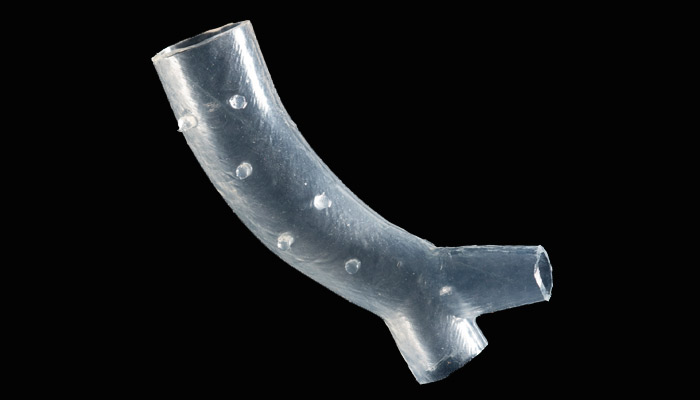
The stent was made using a 3D printed mold | Credits: Cleveland Clinic
The process of creating custom 3D printed stents
After collecting the data from the 3D scan, the doctor explains that he made a 3D printed mold in which he injected medical silicone to obtain a custom-made stent. He doesn’t specify which technology and machine he used, but it seems reasonable to assume that an FDM 3D printer was sufficient to create the mold. The doctor specifies that in addition to being better adjusted, the stent designed thanks to 3D printing is more durable: it could be changed only once a year whereas traditional stents generally have a life span of 90 days. In addition, studies have shown that custom-made silicone stents reduce procedure times and improve patient-reported symptoms. Ultimately, both patient and doctor are winners and breathing can be more natural.
More from the desk
Six other notes from the rest of the bench.
 MaterialsClosed-Loop Additive Manufacturing Could Be Possible Thanks to ORNL ResearchAs the climate crisis becomes more and more evident, sustainability has become a key driver of innovations in technologies. And additive manufacturing is certainly no different. Most recently, researchers at the Department of Energy’s Oak Ridge Laboratory have developed an&
 NewsTop 5 Videos: Using 3D scanners to restore Michigan Central StationThis week we found the top 5 videos about 3D printing and the way additive manufacturing is changing production. The technology has infiltrated many sectors, from medical to automotive – check our selection of the week to keep up with the innovations! If you enjoy these, you&hell
 News3D Printed Smart Glasses to Help Dyslexic ChildrenAbeye is a young French company supported by Atol Les Opticiens. The medtech startup manufactures electronic glasses intended to improve everyone’s well-being. After the success of its first pair, Spectalert, which detects falls in the elderly, Abeye is now launching&hellip
 ApplicationsParis Air Show 2019: additive manufacturing is taking offThe 53rd edition of the International Paris Air Show (SIAE 2019), held at Parc des Expositions du Bourget, came to an end yesterday. Since Monday 17th, it’s thousands of participants that were roaming the aisles of one of the world’s…
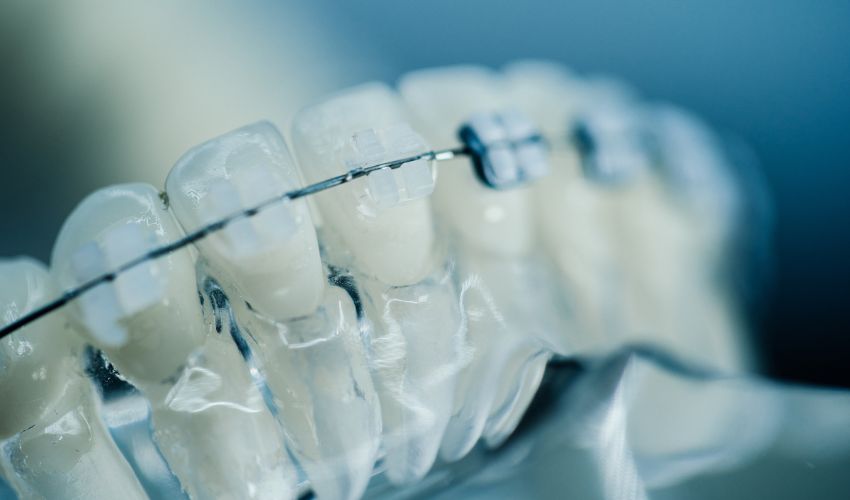 ApplicationsLightForce Orthodontics Gets $80M Funding for 3D Printed BracesOne of the sectors where 3D printing has truly become a key technology is undoubtedly dentistry. Indeed, in contrast to many other field where additive manufacturing is sometimes still in the early stages of adoption, 3D technologies have already been…
 ApplicationsUSAF Installs 3D Printed Drag Reducers on C-17, Helping to Save Over $14M AnnuallyDrag reduction is a priority for airplanes as it helps to reduce fuel consumption, increase operational range and increase the speed of the craft. Now it seems that additive manufacturing could play a role. The Air Force Operational Energy and…