News
3D Printed Smart Gel Adapts Colour and Shape with Light
A team of engineers at Rutgers University have developed a 3D printed smart gel that is able to sense and change according light exposure, becoming “artificial muscle”. The smart gel was inspired by the colour and texture changing mechanism of…
- 3 min read
- News
- Six more stories
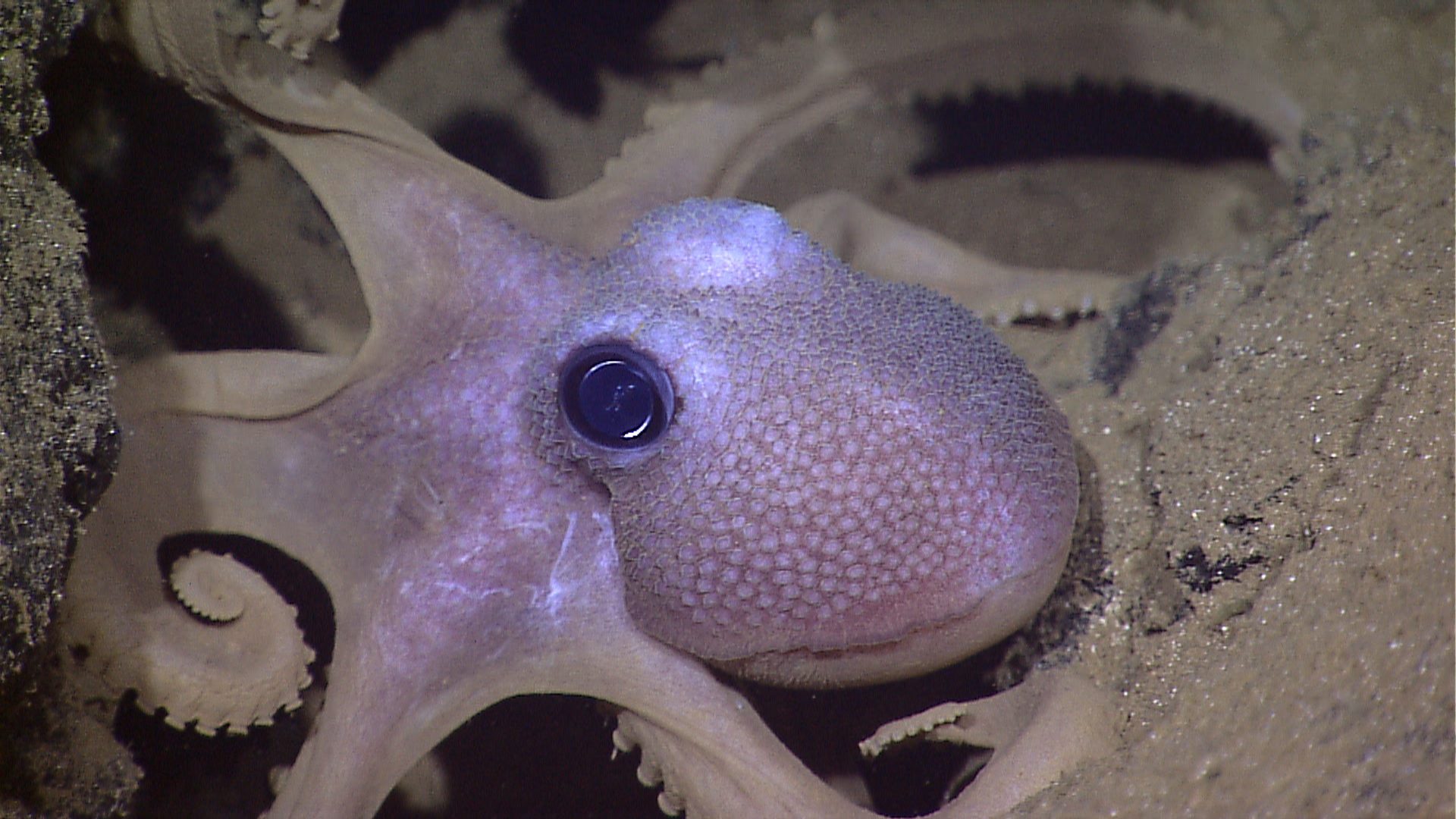
A team of engineers at Rutgers University have developed a 3D printed smart gel that is able to sense and change according light exposure, becoming “artificial muscle”. The smart gel was inspired by the colour and texture changing mechanism of cephalopods such as octopuses, cuttlefish and squid which possess colour changing cells called chromatophores in their skin. Using a variation of SLA technology called multimaterial projection microstereolithography, the researchers were able to transform hydrogel into a smart gel, by incorporating light-sensing nanomaterials. The team also developed a 3D printed stretchy material, which, when combined with their light-sensitive smart gel achieves a camouflage effect, adapting its colour according to change in light. This innovation has the potential to lead to new advances in military camouflage, soft robotics, targeted drug delivery, flexible displays and improved prosthetics.
In 2018, Rutgers engineers invented the “4D printing” method for their smart gel. The fourth dimension referring to the ability of the 3D printed object to change shape over time. This version of the gel altered its shape according to temperature change. The research demonstrated that the high-resolution, scalable, and efficient additive manufacturing of hydrogels was not only possible, but could be achieved without compromising their shape and solidity despite their high water volumes. A few months later the team made further advancements in their research, and developed a 3D-printed smart gel able to walk underwater and grab and moves objects in response to electrical stimulation. On the subject, Howon Lee, senior author of the study and an assistant professor in the Department of Mechanical and Aerospace Engineering said “Our 3D-printed smart gel has great potential in biomedical engineering because it resembles tissues in the human body that also contain lots of water and are very soft.”
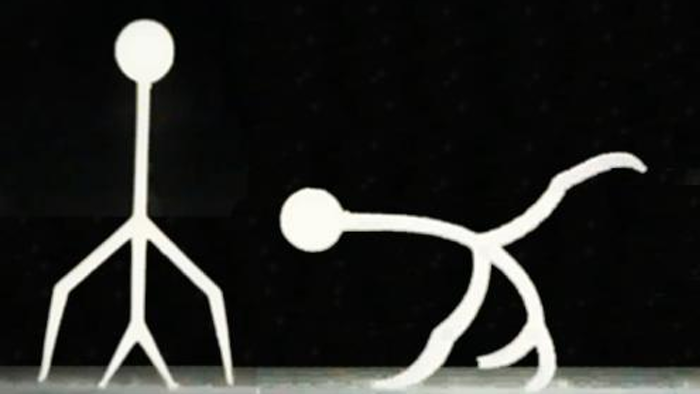
A human-like 3D-printed smart gel walks underwater. (Photo Credit: Daehoon Han/Rutgers University-New Brunswick)
Additively manufactured hydrogels, fundamental to the smart gel, are no longer a novelty in the medical sector, having already been the basis of several innovations including a life-sized anatomically accurate model of a human heart, contact lenses, a new method of administering cancer treatment, and brain implants, among others. Hydrogels are useful because they are able to contain water while still maintaining shape and solidity. While they exist naturally and can be found in the human body, hydrogels can also be produced by additively manufacturing highly hydrated polymer networks.
More from the desk
Six other notes from the rest of the bench.
 Applications3D Printed Spinal Implants Restore Mobility to Paralyzed PuppyIn an impressive feat of veterinary medicine and engineering in Chester, UK, a six-month-old Cockapoo named Arthur has made a full recovery from paralysis and regained his ability to walk thanks to advanced 3D printing technology. The once-paralyzed puppy’s recovery…
 NewsTop 5 Videos of the Week: 3D printed eyewear…This week we found the top 5 videos about 3D printing and the way additive manufacturing is shaping our society. The technology has infiltrated many sectors, from medical to automotive! Check out our selection of the week to keep up with the innovations! This week we…
 SoftwareOpenAI Announces Point-E System to Create 3D Models Using AIEvery day, there are more and more moments in our daily lives where Artificial Intelligence (AI) is helping us, often without us even realizing it. This type of software, which simulates human behavior and even thinking, finds solutions to certain…
 ApplicationsFleet Space Has Launched its Centauri 5 SatelliteYou may remember Fleet Space, the Australian company that plans to send fully 3D printed satellites, named Alpha, to the Centauri constellation. Though those satellites are not yet ready for launch, the company recently made a significant step forward. On…
 NewsUsed cooking oil from McDonald’s is transformed into 3D printing resinAt the University of Toronto, a team of researchers has recovered used cooking oil from a local McDonald’s and turned it into a high-resolution biodegradable 3D printing resin. For one litre of used oil, they obtained 420 mL (14 oz)…
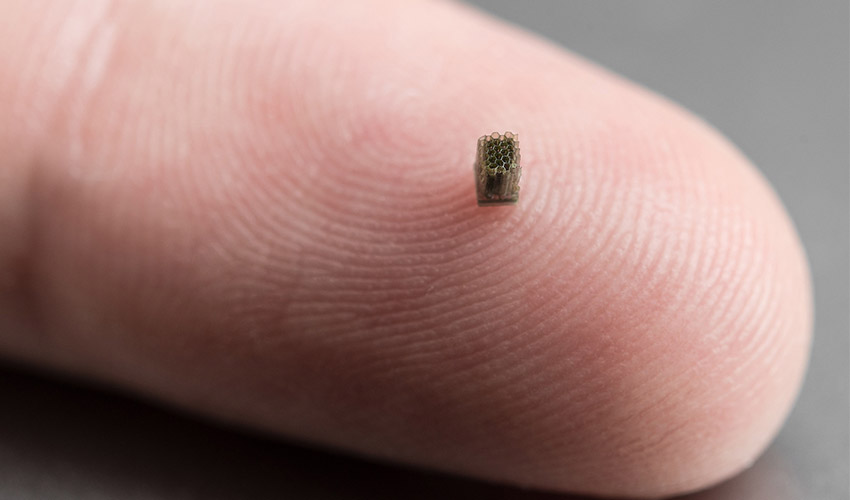 NewsNanofabrica announces commercial launch of micron resolution AM technologyNanofabrica, is an Israel-based additive manufacturing company for precision engineering that has just launched its micron-level resolution industrial 3D printers, the Workshop System and Industrial System. The following systems integrate Nanofabrica’s patented process, which is