News
3D Printed Sawdust Formwork Could Cut Construction Waste
As 3D printing continues to evolve, so too have the efforts to use the technology to build in an environmentally friendly way. Concepts like upcycling, using natural materials and even using wood as a 3D printable material have already been…
- 3 min read
- News
- Six more stories
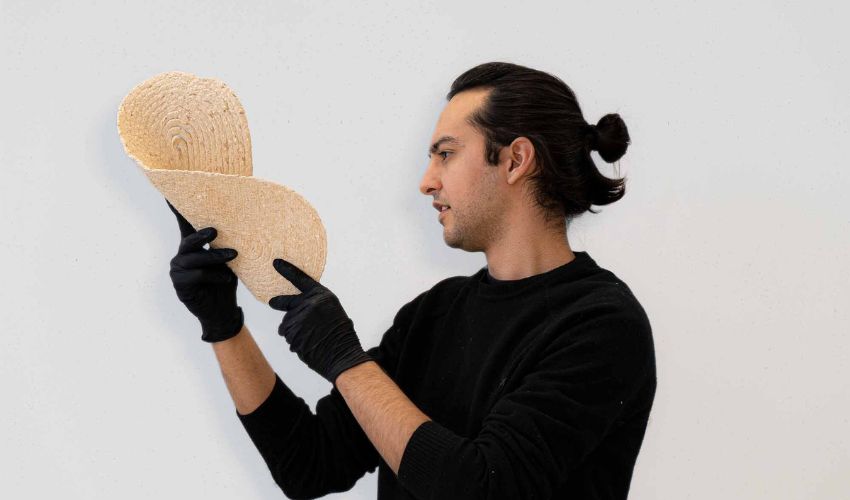
As 3D printing continues to evolve, so too have the efforts to use the technology to build in an environmentally friendly way. Concepts like upcycling, using natural materials and even using wood as a 3D printable material have already been implemented, but researchers have taken another step forward by combining all three of these elements into a new project. At the University of Michigan, a team known as BioMatters has created a solution that uses 3D printed, upcycled sawdust as an alternative to concrete formworks in the construction industry. Sawdust is popular in the sector, however much of the waste is dumped into landfills or burnt. The goal of this new project is to turn sawdust into a viable construction solution that is reusable, responsible, and inexpensive.
As mentioned, the readily available nature of sawdust makes it a perfect resource to use, but it is a hazard to environmental and personal health if left untouched. Adding to that, millions of tons of sawdust are generated every year as a byproduct of cutting down trees, lumber, and construction. In the United States alone, over 3 million tons of sawdust are sent to landfills annually. “When the sawdust decomposes, it is producing fatty acids, lignin, which causes toxicity in water. And once it starts contaminating water, it has its effects on smaller wildlife, microbes and a broad range of organisms. And with sawdust being extremely flammable, its potential contribution to wildfires is very high,” explains BioMatters team and Digital Architecture Research & Technology (DART) Laboratory researcher, Muhamad Dayyem Khan, “so rather than burning it up and generating more CO2 emissions, it is so much better that we make it into a material that is actually capable of being used again and again”.
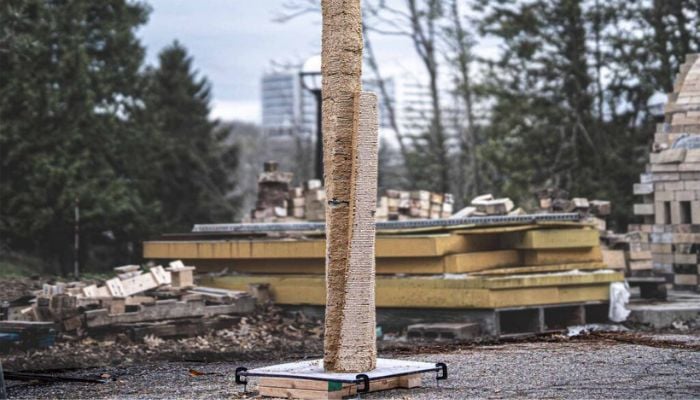
The 3D printed formwork could make use of waste lumber and sawdust left at construction sites (photo credits: Tharanesh Varadharajan, Zachary Keller, Muhammad Dayyem Khan)
The team’s solution addresses formworks in the construction industry, which are molds that are used to cast concrete on construction sites. Formworks currently utilize various materials such as plastics, metals or timber, and can make up to 40% of concrete construction expenses. In such an environment where sawdust is already plentiful, the hope is that this byproduct can continue to create a 3D printed alternative to traditional practices that can help reduce waste and resource consumption. In addition to sawdust, they mix their material with biopolymers to allow the mixture to be extruded via a 3D printer. Unlike raw sawdust, the material is entirely biodegradable and can be reused or recycled.
More from the desk
Six other notes from the rest of the bench.
 NewsCould Termites Make 3D Printed Buildings More Energy Efficient?Could it be possible to build more energy-efficient 3D-printed buildings using what we know about termites? Possibly, if researchers at Lund University in Sweden and Nottingham Trent University in England are to be believed. While studying the termite mounds of…
 NewsUS Air Force sponsors the development of a 3D printed runway matITAMCO (Indiana Technology and Manufacturing Companies) has been working with a Purdue University professor, Pablo Zavattieri, to develop a unique 3D printed runway mat for Expeditionary Airfields for US Air Force. Last year the team was competing in Phase 1 of SBIR…
 NewsMeet McLaren’s New Artura Hybrid Supercar with 3D Printed CoresA few days ago, luxury carmaker McLaren introduced its latest concept: its first high-performance hybrid supercar, the McLaren Artura. Engineered to combine technology, design and unmatched performance, the hybrid car is a compendium of innovation, and of course, additive manufac
 Printers3Dnatives Lab: Digitizer 3D Scanner by MakerBotToday, the 3Dnatives lab will be analyzing the Makerbot Digitizer 3D scanner to continue our series of tests on 3D scanners and printers! Don’t forget to check out all our scanner tests here, and to give us any comments, tips…
 NewsWhy Nano Dimension Is Selling Markforged and What Stratasys GainsThe additive manufacturing sector is once again making headlines with news that revives one of the market’s most active chapters. Nano Dimension has announced the signing of a definitive agreement to sell Markforged to Stratasys, in an all-cash transaction valued…
 NewsMore Cost-Effective 3D Printed Steel Without “Heating and Beating”Even as metal 3D printing grows in popularity, especially as a way to create complex metal shapes, there are still obstacles to overcome. One significant one, can be the high production costs, for example due to the need for significant…