Materials
3D Printed Rocket Nozzle to Propel NASA Space Exploration
While private aerospace companies have been utilizing 3D printing technology to further their own stellar aims, the National Aeronautics and Space Administration has not been neglecting the additive manufacturing trend either. In 2023 alone they have 3D printed moon rover…
- 3 min read
- Materials
- Six more stories
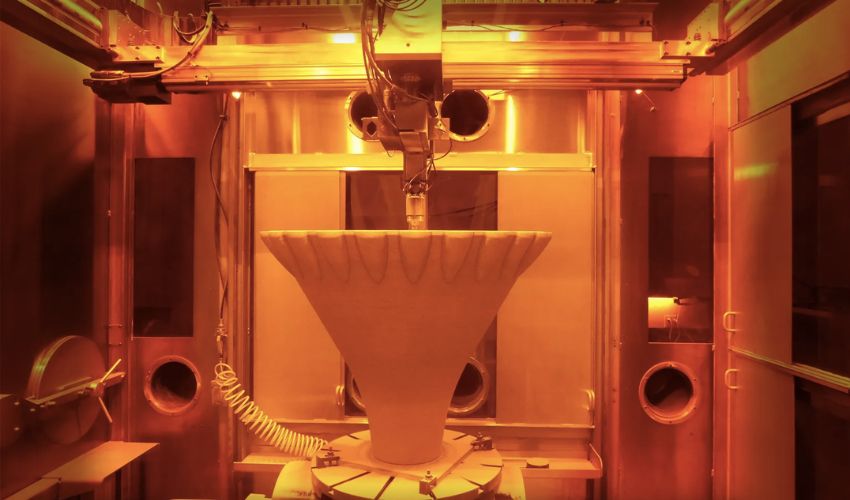
While private aerospace companies have been utilizing 3D printing technology to further their own stellar aims, the National Aeronautics and Space Administration has not been neglecting the additive manufacturing trend either. In 2023 alone they have 3D printed moon rover wheels, components for the International Space Station and utilized 3D printed circuitry aboard rockets, to name but a few projects which fall under NASA’s exceedingly concerted push to utilize additive manufacturing technologies for its rockets and space-bound initiatives. Most recently added to the list, NASA has successfully tested a 3D printed rocket engine nozzle made from aluminum, opening up new opportunities as the lightweight material allows for larger payloads to be sent into space.
The rocket engine nozzle was a cooperative effort between NASA engineers from the Marshall Space Flight Center and 3D printing company Elementum 3D based out of Erie, Colorado. The joint collaboration was to develop a new variant of aluminum which would be optimized for 3D printing rocket engine parts. Aluminum has been seen as a promising choice for additive manufacturing due to its high strength and low weight. Indeed, aluminum has already been used to 3D print various other mechanical parts in other sectors, such as gearbox and engine parts for automotive companies like BMW.
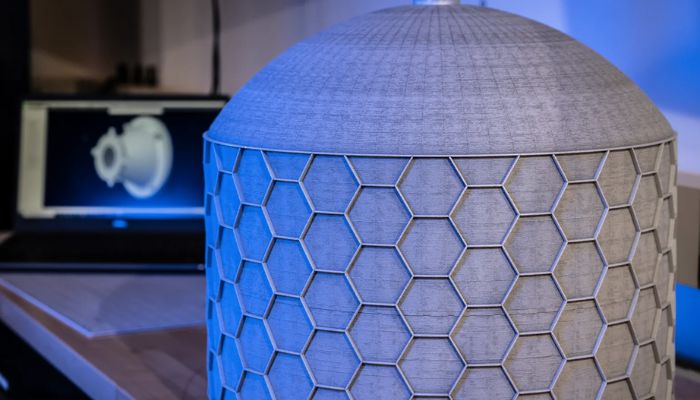
An image of the 3D printed nozzle on the laptop in the background and vacuum jacket manufacturing demonstrator tank used for cryogenic fluid application, made from the same aluminum material. (Photo credits: NASA)
But, when it comes to rocketry, the metal has not been used as often due to a low heat tolerance which leaves the metal vulnerable to cracking under the extreme heat of a rocket engine’s blast. However, under the NASA initiative known as Reactive Additive Manufacturing for the Fourth Industrial Revolution, or RAMFIRE, the team was able to engineer an innovative solution to overcome these previous obstacles, leaving aluminum with only its positive qualities.
More from the desk
Six other notes from the rest of the bench.
 GuidesStartup of the Month: AnatomikModelingThis week’s startup of the month is AnatomikModeling, a company focusing on using 3D tech to help improve various conditions such as for congenital thoracic pathologies. Despite only being started two years ago, AnatomikModeling is an exciting new company that…
 MaterialsSpectroplast receives €1.38 million to advance silicone 3D printingSpectroplast AG, the SLA silicone additive manufacturing service company just completed a €1.38 million funding round led by Munich-based investor, AM Ventures. We told you about Spectroplast in February in an interview with co-founder, Petar Stefanov. The startup spun out&hellip
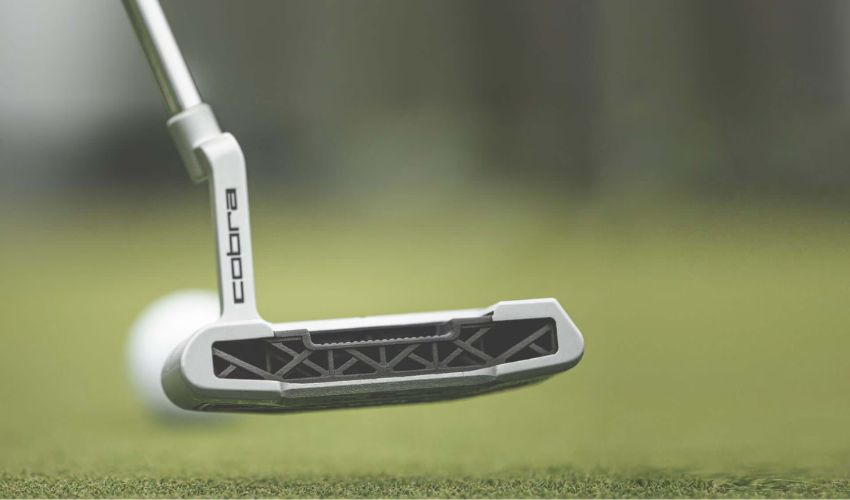 News3D Printing in Golf: Where Are We Now?Formula 1, basketball, hockey, American football…golf? What do these things have in common? They are all using additive manufacturing in some capacity. Golf especially has been adopting 3D printing in various ways in recent years. Golf may be one of…
 NewsAleph Objects and FluidForm announce exciting bioprinting collaborationAleph Objects Inc., based in Colorado and manufacturer of LulzBot 3D printers, known for being free to be copied, modified and converted by all users had an exciting announcement. Recently, they announced a new bioprinting hardware coming this summer with…
 NewsAmerica Makes announces AM education challengeThere is no doubt that 3D printing is a technology that we will continue to see grow into the future; But when we discuss the future, it is important to remember who our future is, and that would be kids.…
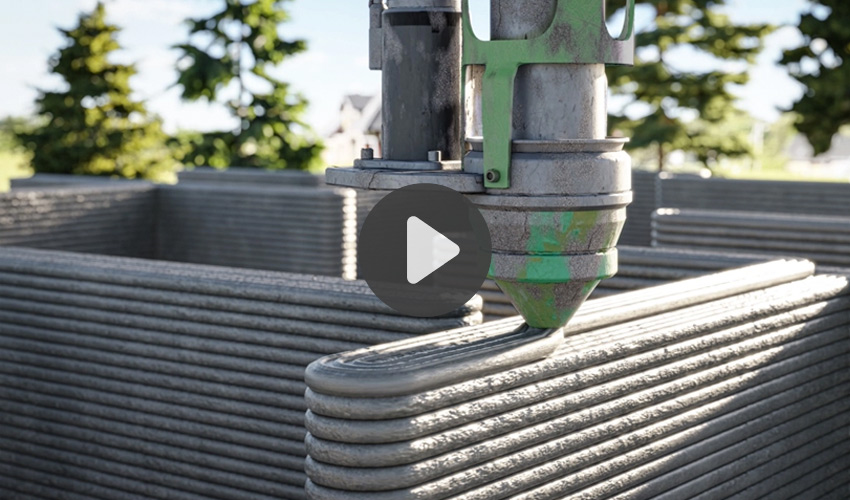 NewsTop 5: How Do Concrete 3D Printers Work?Now that another week has come to an end and the next one is starting, once again we want to showcase the best 3D printing videos that came out. This time, start with a 3Dnatives original as we take a…