News
Can 3D printing help rescue natural reefs?
Environmental issues are becoming more and more unavoidable and the degradation of natural reefs is one of them. Natural reefs are vital for the well-being of our planet for they are one of the most varied ecosystems on Earth. However,…
- 3 min read
- News
- Six more stories
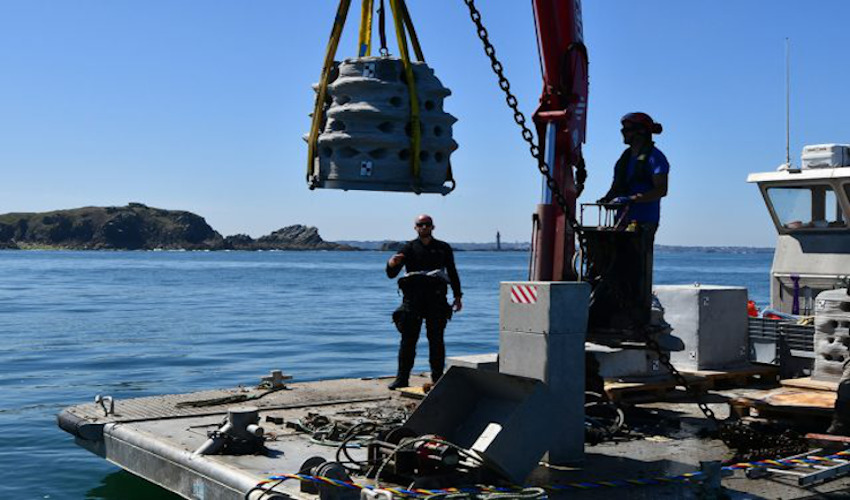
Environmental issues are becoming more and more unavoidable and the degradation of natural reefs is one of them. Natural reefs are vital for the well-being of our planet for they are one of the most varied ecosystems on Earth. However, they are quickly disappearing due to several factors that can be collectively called “environmental damage”. The answer to this problem seems to lie in additive manufacturing. According to the experts, 3D printed reefs could be the best short-term solution.
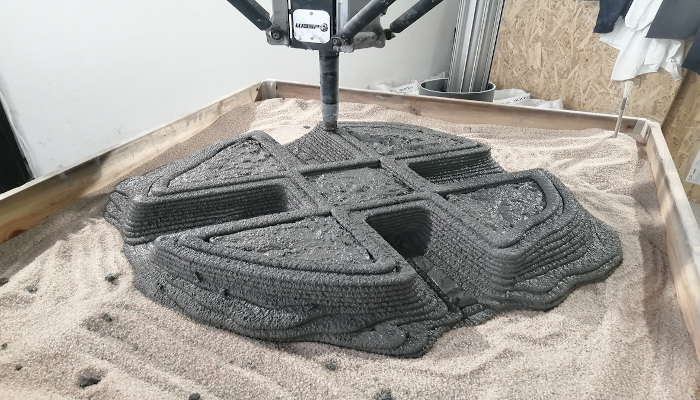
INTERREG Atlantic Area (European funding programme that promotes transnational cooperation among 36 Atlantic regions of five European countries) funded the 3DPARE project, which was born from the cooperation of several European research institutions – University of Cantabria (Spain), ESITC Caen Institute for Civil Engineering and Construction (France), University of Porto (Portugal) and Bournemouth University (the UK). The project is led by the University of Cantabria Department of Civil Engineering who specialize in 3D Printing. The 3DPARE’s goal is to deploy and then monitor the artificial reef blocks that they have been planting in the Atlantic Ocean. These reef blocks were designed and manufactured using innovative 3D printing technology and sustainable bio-receptive materials.
Credits: 3DPARE
For the sake of avoiding confusion it should be noted that artificial reefs had, in fact, been planted before. However, compared to those existing artificial reefs, whose design and structure are created from conventional materials such as concrete and steel, the solutions of 3DPARE are ecological, sustainable and specifically tailored for enhancing the biodiversity and the ecosystem in the marine environment. The optimized artificial reefs were shaped through large-scale 3D printing; the materials were developed from natural and renewable raw materials to stimulate the colonization in the marine habitat.
More from the desk
Six other notes from the rest of the bench.
 NewsHP will restrict ghost gun printing on its printersBack in July 2018 we covered the legalisation of 3D printed guns in the United-States. 3D printed gun files appeared as early as 2013. The technology initiated a long legal battle, finally won by Cody Wilson the creator of the…
 ApplicationsChina 3D Prints First PEEK Clavicle ImplantThe medical team at Kunming Medical University Hospital in China, in collaboration with the company IEMAI 3D successfully transplants the first clavicle printed in 3D with PEEK. What does this milestone mean for the medical sector? How important is the…
 News3DExpress: Shapeways Declares BankruptcyIt has been a particularly interesting week for additive manufacturing. Between the end of RAPID + TCT and the huge announcements that we saw (including Nano Dimension’s intention to acquire Desktop Metal in the coming months), there was so much…
 Materials2 creatures inspiring next-gen 3D printed body armorAnimals around us have been a source of inspiration in our books, films, other media for centuries. This trend continues today, showing no signs of stopping. Now, cutting edge technology is being used in conjunction with 3D printing and other…
 NewsCrack Detection in Concrete, 3D Printed Buildings Made Possible by Adding Graphene OxideEngineering students at the public research university Royal Melbourne Institute of Technology (RMIT) in the Australian state of Victoria have developed an approach to produce a conductive and more stable concrete for 3D printing buildings. As part of their study,…
 NewsMatt Harkness is Recycling PLA Waste Using TattoosThe 3D printing filament PLA is often advertised as environmentally friendly since polylactic acid is largely made from renewable raw materials such as corn starch. Thus, products made from PLA are able to be labeled “biodegradable.” This eco-stamp can therefore&helli