News
Crack Detection in Concrete, 3D Printed Buildings Made Possible by Adding Graphene Oxide
Engineering students at the public research university Royal Melbourne Institute of Technology (RMIT) in the Australian state of Victoria have developed an approach to produce a conductive and more stable concrete for 3D printing buildings. As part of their study,…
- 3 min read
- News
- Six more stories
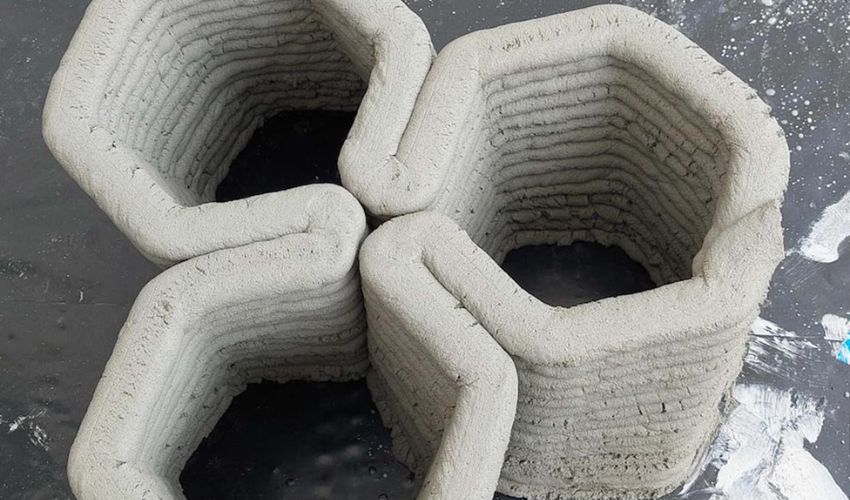
Engineering students at the public research university Royal Melbourne Institute of Technology (RMIT) in the Australian state of Victoria have developed an approach to produce a conductive and more stable concrete for 3D printing buildings. As part of their study, the scientists investigated how the addition of graphene oxide to concrete affects its printability in additive manufacturing. The study carried out by the scientists is the first of its kind and highlights the immense potential of concrete 3D printing in the construction sector.
The study by the Australian scientists from RMIT was recently published in the journal “Additive Manufacturing Letters”. In it, they detailed their observation that the electrical conductivity of concrete in additive manufacturing is improved by adding graphene oxide to the cement. Graphene oxide is a nanomaterial that is often used in electronic devices and batteries.
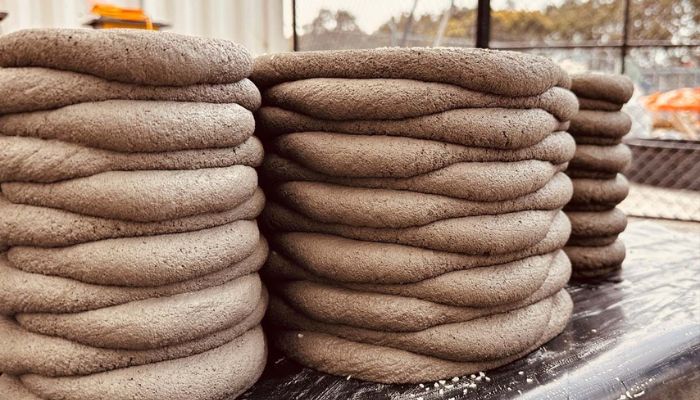
3D-printed concrete with added graphene oxide (photo credits: Jonathan Tran)
According to research leader and RMIT Associate Professor Jonathan Tran, the results of their investigations open up possibilities for the development of “smart” buildings, where in the future walls could act like sensors to detect and monitor small cracks as early as possible. Graphene oxide as an ingredient in the concrete mix enables an electrical circuit in concrete structures that can detect a wide range of environmental factors, such as temperature changes.
More from the desk
Six other notes from the rest of the bench.
 NewsAmerica Makes announces AM education challengeThere is no doubt that 3D printing is a technology that we will continue to see grow into the future; But when we discuss the future, it is important to remember who our future is, and that would be kids.…
 Software#3DStartup: Could nureo’s Automated Engineering Software Eliminate Manual CAD?The promise of additive manufacturing has always been design freedom, yet engineers frequently face complex, manual design processes to turn a concept into a manufacturable part. The Zurich-based software startup nureo is changing this by bridging the gap between advanced…
 NewsTop 5 Videos of the week: helping dogs run again, the Mooz, & more!This week’s Top 5 videos demonstrate some amazing technology, and some emotional victories. These vary from 3D printing helping blind children write their name, dogs being able to run again, and a printer that triples up as an engraver and…
 ApplicationsRicoh and SimBioSys Partner on AI-Powered 3D Models for Personalized Breast Cancer TreatmentRicoh USA, known for its expertise in custom medical device design through Ricoh 3D for Healthcare, is teaming up with SimBioSys, a tech company focused on AI integration and computational modeling. Together, the two companies recently announced a collaboration focused…
 SoftwareFrom Engineers to Operators: Bringing Tooling Design to the Factory Floor with AM SoftwareAdditive manufacturing is increasingly being used by manufacturers to improve agility on the factory floor, but many still face bottlenecks caused by fragmented software workflows and the need for skilled engineering labor. To address this challenge, Stratasys has integrated fixt
 ApplicationsPARI Researchers Use 3D Printed Dark Ceramics to Advance Hypersonic ManufacturingHypersonic manufacturing is one of the most challenging areas of research in modern aerospace applications. Vehicles traveling at more than five times the speed of sound have to withstand extreme conditions, including temperatures of more than 2000°C and enormous mechanical&helli