News
3D printed Proximity Dress for social distancing
In a future where electronics are predicted to be embedded in everyday objects, what kind of clothes will we wear? How will we socialize in our world when we are supervised by technology? These are the questions Dutch-based high-tech fashion…
- 3 min read
- News
- Six more stories

In a future where electronics are predicted to be embedded in everyday objects, what kind of clothes will we wear? How will we socialize in our world when we are supervised by technology? These are the questions Dutch-based high-tech fashion designer Anouk Wipprecht asks us to reflect on as we move towards a world that is increasingly connected. Anouk Wipprecht is working in the emerging field of FashionTech, which combines fashion design with engineering, science and user experience design. Several years ago, Anouk explored the idea of personal space with her Spider Dress. Today, the designer is presenting an evolution of that earlier work with her Proximity Dress – very fitting in the current context of social distancing!
Using 3D printing technologies, Anouk designed a dress, called the Proximity Dress, that creates physical barriers when a person is detected in the immediate surroundings of the wearer. To create this barrier, the dress integrates sensors that are capable of detecting movement around the wearer. Therefore, as it detects movement, using a robotic 3D printed hip mechanism, built into the dress, and a resin 3D printed transparent collar with integrated sensors, the dress extends to create a barrier. The hip mechanisms that are holding the servos to the mechanic hip parts are 3D printed using Selective Laser Sintering (SLS). The material used is Nylon PA-11 as it can endure more stress. The 3D printed transparent collar made from VeroClear material, has a more aesthetic use, and was 3D printed using a PolyJet machine from Stratasys.
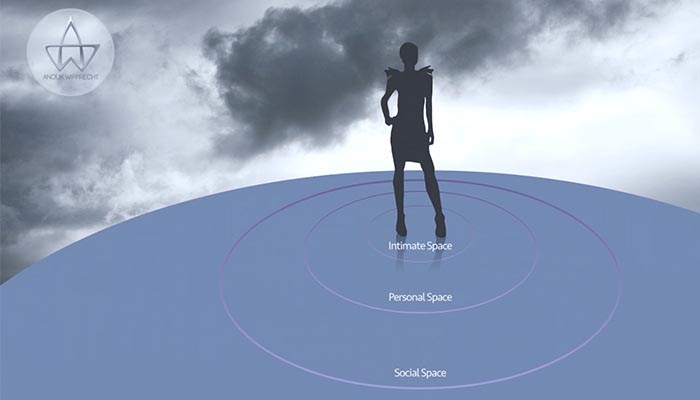
Anouk explains in more detail where the idea of the dress comes from: “As with my earlier robotic Spider Dress and Smoke Dress, my designs are based on the Proxemics Theory of Edward T. Hall. This defines four spaces around the body, each with their own characteristic distances. Whereas Hall had to measure the space between people using a wooden stick, I have been working since 2007 to translate these concepts into the digital domain, in order to measure the spaces between people up to a range of 25 feet.”
More from the desk
Six other notes from the rest of the bench.
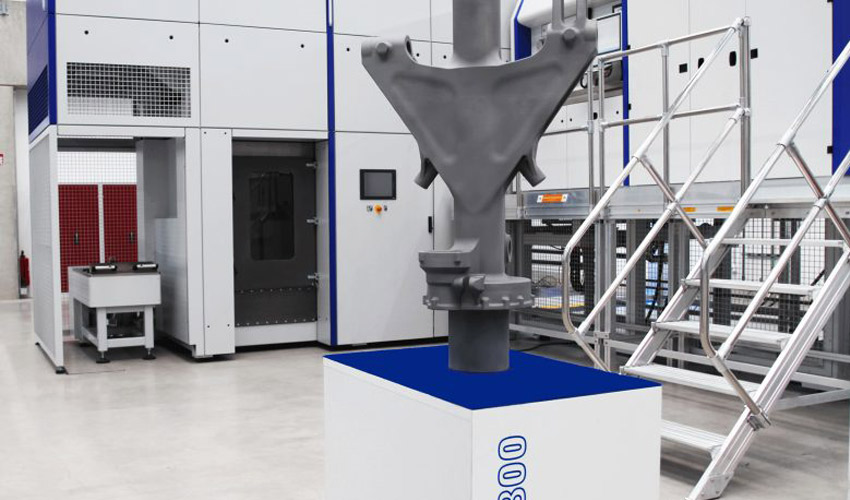 ApplicationsSafran 3D Prints a Titanium Nose Landing Gear Component For a Business JetThe French industrial group Safran, and more specifically the Safran Landing Systems branch, has used SLM Solutions‘ Selective Laser Melting (SLM) technology to produce a component of a business jet’s nose landing gear. More concretely, they have used metal additive&h
 ApplicationsNASA’s 3D Printed Circuits Reach New Heights in Space ExplorationIn recent years, the field of additive manufacturing, also known as 3D printing, has been rapidly gaining popularity across various industries. Its ability to offer customization, innovative design, and improved performance has led to its widespread adoption in diverse fields. Am
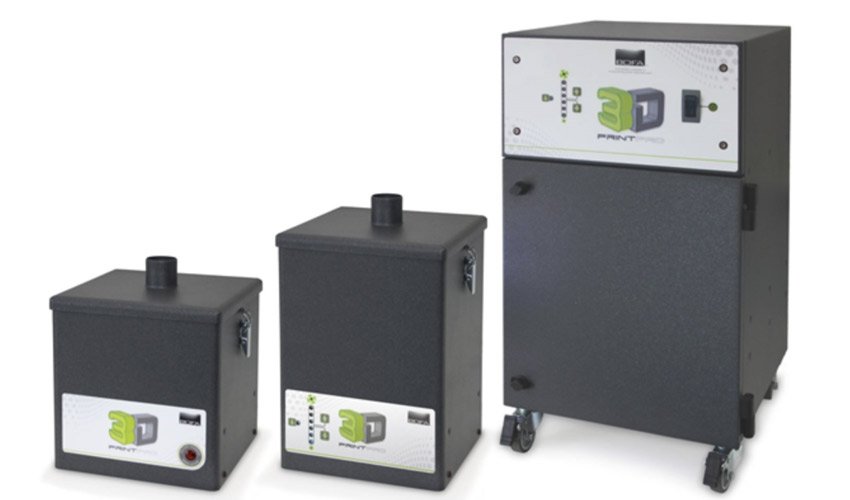 NewsBOFA, Air Extractors Compatible With All 3D Printing TechnologiesWhether it is FDM, SLA, DLP, MJF, SLS or any other printing process, fine particles are emitted during the additive manufacturing process. Studies conducted by the Georgia Institute of Technology and Fraunhofer WKI have shown that more than 200 types…
 NewsRestoring coral reefs with 3D printingWhile 3D printing construction projects continue to develop, it seems that there is also plans to play on more aquatic terrain. 3D technologies may well be a solution to preserve the oceans, fish, and corals. That’s why Emerging Objects worked…
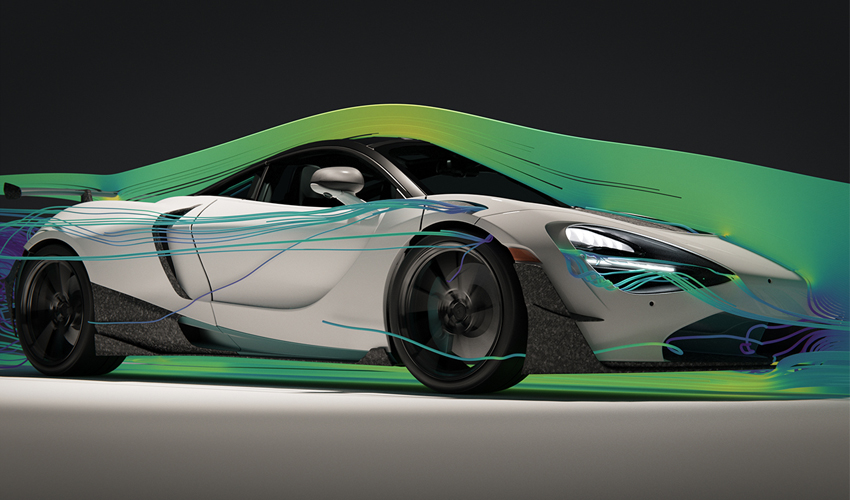 NewsThe new McLaren 720S includes 3D printed partsOne of the greatest advances we have seen in the additive manufacturing industry is the variety of applications it finds in the automotive industry. The customization of high-end vehicles is very important to many potential buyers in order to acquire…
 MaterialsComposite AM Market to Grow by 21% in 2023Last week, VoxelMatters Research published its market report on composite additive manufacturing in 2023. The market research and consultancy arm aims, with its regularly published reports, to provide important insights into additive manufacturing and identify industry trends. Fo