News
Restoring coral reefs with 3D printing
While 3D printing construction projects continue to develop, it seems that there is also plans to play on more aquatic terrain. 3D technologies may well be a solution to preserve the oceans, fish, and corals. That’s why Emerging Objects worked…
- 3 min read
- News
- Six more stories
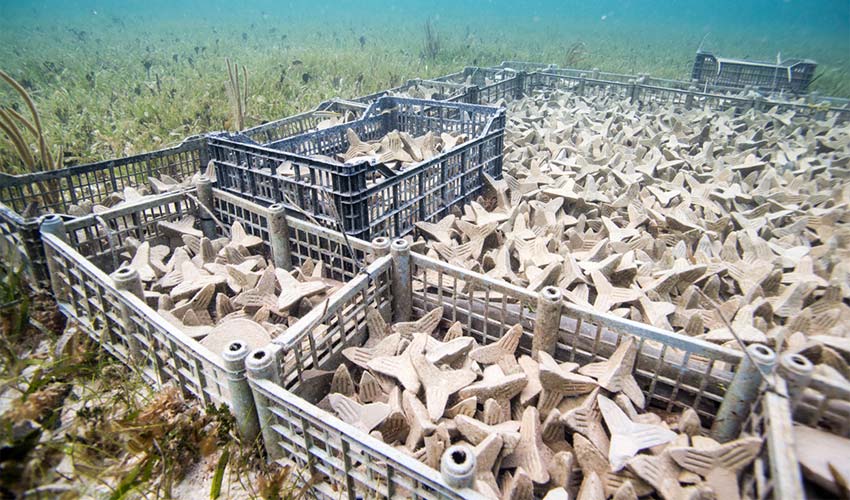
While 3D printing construction projects continue to develop, it seems that there is also plans to play on more aquatic terrain. 3D technologies may well be a solution to preserve the oceans, fish, and corals. That’s why Emerging Objects worked with Boston Ceramics and SECORE (Sexual Coral Restoration); Together, they created a whole population of 3D printed substrates to attract coral larvae to the reefs and encourage their reproduction.
Preserving the ocean ecosystem with 3D technologies is not a fundamentally new initiative; we have seen several projects develop in this sense such as Coralise or that of D-Shape. By reproducing coral reefs with 3D printing, habitats for marine species are recreated, providing additional protection. This time, the three partners focused more on the natural reproduction habits of the coral.
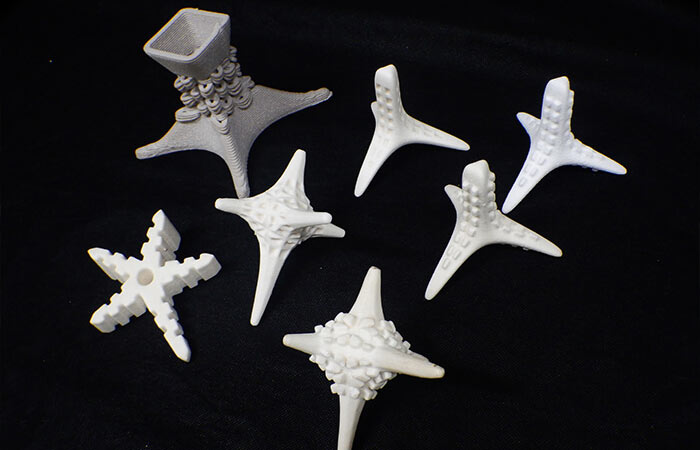
3D printed substrates (photo credits: Valérie Chamberland)
3D printing to restore the reefs
Some species of corals naturally emit ova and spermatozoa, which are collected by SECORE, fertilized, and then raised in tanks until they become free-swimming larvae. These larvae are then be introduced into “carrier units” that have been 3D printed; these attract the coral, which then attaches to it. Once the corals are encrusted, the units are planted in reef areas requiring restoration. It is an effective solution that is costly and quite time-consuming.
More from the desk
Six other notes from the rest of the bench.
 GuidesUpprinting Food, Using Food Waste to 3D Print Sustainable MealsUpprinting Food is a startup that was developed in the Netherlands. Its main objective is to create 3D printed dishes from all kinds of food waste. Elzelinde van Doleweerd and Vita Broeken are behind this circular economy project that aims…
 Printers#3DStartup: TRIDITIVE facilitates mass production with 3D printingTRIDITIVE, based in Spain and founded in 2013 is an additive manufacturing center for serial mass production in metal and technical materials. In its beginnings, the company focused mainly on training related to FFF technologies and the development of DIY…
 NewsTop 5 Videos: 3D Printed Homes in Texas, Coral Reefs and More!In this week’s selection of top 5 videos about 3D printing, a look behind the scenes of 3D printing company Icon’s project to build four 3D printed homes in Texas. Next, an update on the terracotta 3D printed coral reef…
 NewsA 3D printed bicycle with a futuristic lookFor some time we have been clear that 3D technologies could also impact the cycling industry. Whether manufacturing puncture proof tires or lighter structures. But the design of Steve Jenkins went further this time by proposing a futuristic bicycle completely 3D printed. It gives
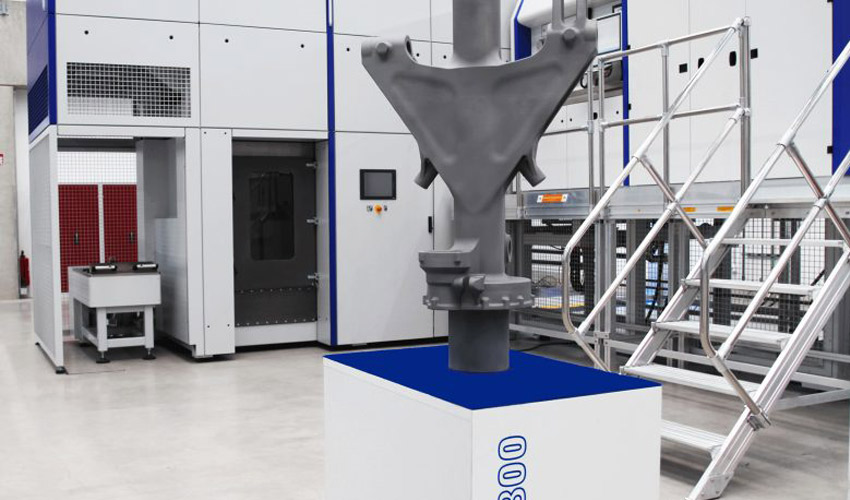 ApplicationsSafran 3D Prints a Titanium Nose Landing Gear Component For a Business JetThe French industrial group Safran, and more specifically the Safran Landing Systems branch, has used SLM Solutions‘ Selective Laser Melting (SLM) technology to produce a component of a business jet’s nose landing gear. More concretely, they have used metal additive&h
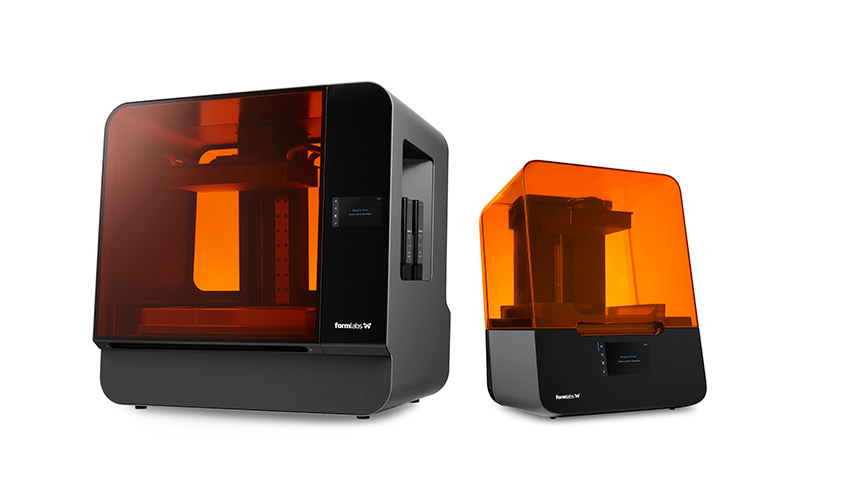 PrintersForm 3 and Form 3L, the new SLA 3D printers from FormlabsWith more than 50,000 units sold of its Form 2 3D printer, the American manufacturer Formlabs is the market leader in SLA desktop 3D printing. At the Hannover Messe event, the manufacturer took the opportunity to unveil its latest generation of…