Applications
COVID-19: scaling up production of 3D printed medical equipment
Ventilators are pieces of equipment that are designed to breathe for somebody that isn’t able to breathe on their own. Modern ventilators consist of a pump machine and a tube that healthcare professionals slide into the patient’s windpipe to control…
- 3 min read
- Applications
- Six more stories
Ventilators are pieces of equipment that are designed to breathe for somebody that isn’t able to breathe on their own. Modern ventilators consist of a pump machine and a tube that healthcare professionals slide into the patient’s windpipe to control airflow. In critical cases, COVID-19 patients will need such devices to keep breathing, putting great pressure on hospitals that are currently overflowing with demand. In the US, it’s estimated that there are around 170,000 ventilators available. However, the American Hospital Association estimates that the number of COVID-19 patients that will need intensive treatment will rise to 960,000. Slowing down the spread of the virus is essential to ensure that not all patients seek medical treatment at the same time. Nevertheless, upping the production of ventilators is becoming a necessity as recent events show that containing the virus is harder than expected. Can the production of 3D printed medical equipment be scaled up?
The 3D printing community has heard the call for help from the medical sector and is mobilizing to offer solutions. Ventilators are not the only equipment in shortage, masks, and protective gear are also missing in many hospitals, putting medical professionals at great risk. As a matter of fact, 3D printing a ventilator is a much harder process than goggles or a mask. In Spain, the first 3D printed emergency ventilator was developed and approved by medical experts in order to support hospitals and intensive care units in the face of the current health crisis. As explained by Leitat Technology Centre, which developed the design of the ventilator: “This is an emergency ventilator, for an emergency situation, designed with 3D technologies and incorporating other parts found on the market. Assembly is very fast, so we can produce about 100 of them per day, and I hope many more in the days to come.”

Cristian Fracassi, CEO of the Italian company that created the 3D printed valves
Scaling up production of 3D printed medical equipment
This is the main strength of 3D printing technologies in the current situation. In a matter of hours, companies are able to produce equipment that is needed urgently. However, scaling up production is harder. In Italy, a few companies mobilised to 3D print a dozen valves for respiratory intensive care units. The valves are a key component connecting ventilators to the oxygen mask. Cristian Fracassi, CEO of the Italian design company that created the digital files of the valves explained: “If we acted quickly, it’s only because with 3D printers, you can quickly test a small production that would be impossible on an industrial scale. We just want one thing to remain from this story: the community, consisting of a hospital, a newspaper, and a team of professionals, ran a race against time and saved lives. That is all.”
More from the desk
Six other notes from the rest of the bench.
 NewsEssentium Survey shows that investments in AM are paying offIn early February, Essentium, Inc announced the results of the second in a series of findings from independent global research on the current and future use of industrial 3D printing. We previously covered the first survey published in 2019, which…
 NewsTop 5 Videos of the Week: 3D printed Star Wars HelmetThis week’s Top 5 Videos on Christmas Eve is one of the most varied we’ve had. This ranking ranges from 3D printing in the Star Wars games, to 3D printed planes, and 3D printed military drones! Remember, a new Top…
 ApplicationsSingapore Launches 3D Printed Component Into Space for the First TimeWe often hear of the major 3D printing projects in space from companies like SpaceX and NASA, but the space race does not just include the USA. Singapore has proved itself part of the industry, with the launch of its…
 ApplicationsHoneywell 3D prints a critical engine part, the first one to receive FAA certificationToday, a large number of manufacturers involved in the aerospace sector try to actively incorporate 3D printing technologies into their production processes. From BAE Systems collaborating with Stratasys, to Lufthansa opening a dedicated AM center, to US Air Force working with GE
 NewsMaterialise weighs in on 3D printing trends for 2021We told you last week about the 3D printing trends that shaped the industry in 2020. As we mark entry into the 4th decade of 3D printing in 2021, major trends that have been forming will take shape and come…
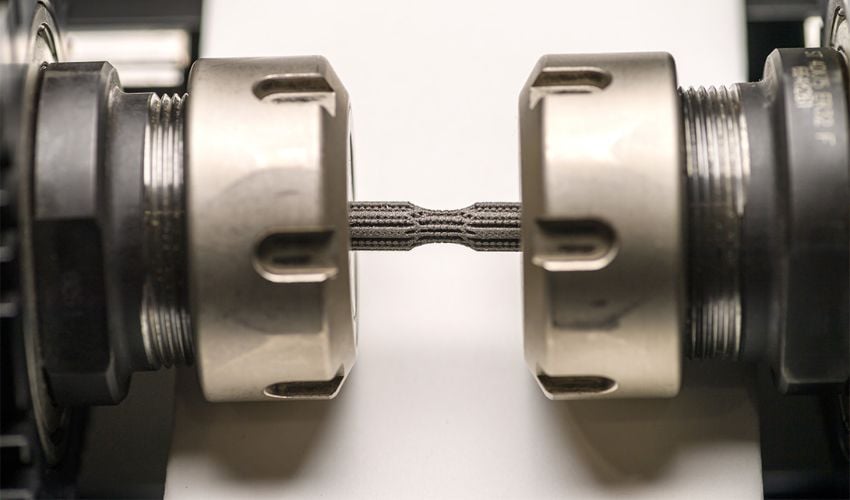 ApplicationsAntibacterial, 3D Printed Metal Under Development for Surgical ImplantsWithin the realm of medical 3D printing, we often discuss the value of plastic filaments, photopolymer resins, and silicone technologies that can assist with the comfort and rehabilitation of patients receiving treatment. However, one material that must not be overlooked…