Materials
3D-Printed Hybrid Foam Absorbs 10 Times More Energy
At Texas A&M University, researchers have created a superfoam using additive manufacturing. The composite is capable of absorbing up to 10 times more energy than conventional foam. This 3D-printed material could have a significant impact on the defense sector and…
- 3 min read
- Materials
- Six more stories
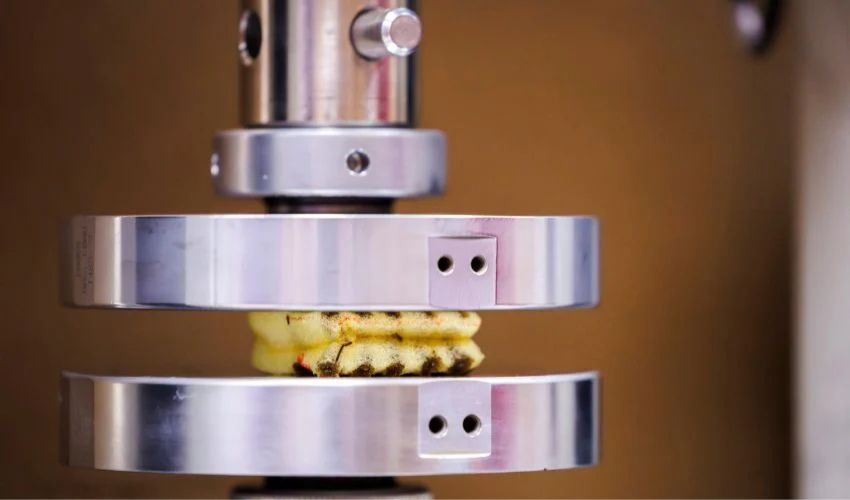
At Texas A&M University, researchers have created a superfoam using additive manufacturing. The composite is capable of absorbing up to 10 times more energy than conventional foam. This 3D-printed material could have a significant impact on the defense sector and potentially save lives.
One of the challenges associated with the conventional manufacturing of these foams lies in their internal structure. Manufacturers must typically choose between a random pattern, which limits energy absorption, or more technical materials and lattice structures that are more expensive and difficult to produce at scale. In other words, it is often a trade-off between precision and cost.
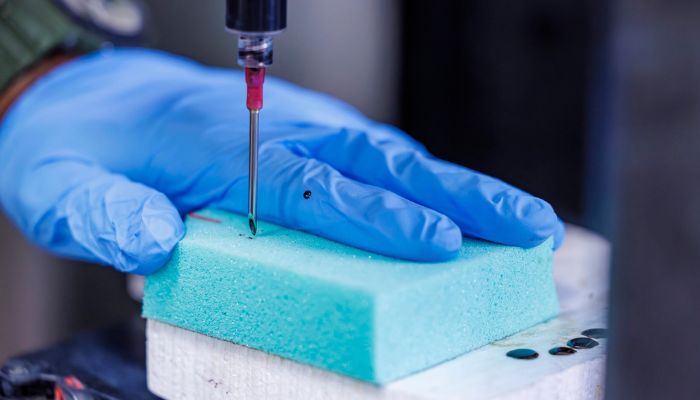
The team places 3D-printed struts inside the foam.
Foam and 3D Printing: How Does It Work?
But this could change thanks to 3D printing. The team has developed a technique called In-Foam Additive Manufacturing (IFAM) that enables the creation of a 3D network of plastic struts within a block of foam. Combining the two materials allows the structure to better withstand applied pressure. These plastic struts are placed exactly where needed, directly inside the foam. In this way, the 3D-printed structure becomes integrated into the foam.
More from the desk
Six other notes from the rest of the bench.
 ApplicationsPersonalized Medicine Thanks to Volumetric 3D Printing and Semi-Solid Extrusion3D printing is transforming drug manufacturing, offering customized solutions that improve treatments and the patient experience. Traditionally, bespoke medicines have been prepared using magistral preparations, a manual, laborious and error-prone process. However, 3D printing is
 NewsWEBINAR: How is AM Revolutionizing Industry in the Balkans?Though the use of metal in additive manufacturing (AM) is traditionally associated with lasers (such as in laser powder bed fusion), new metal printing solutions are continuously being developed. These new technologies can produce parts that are 30-50% lighter and…
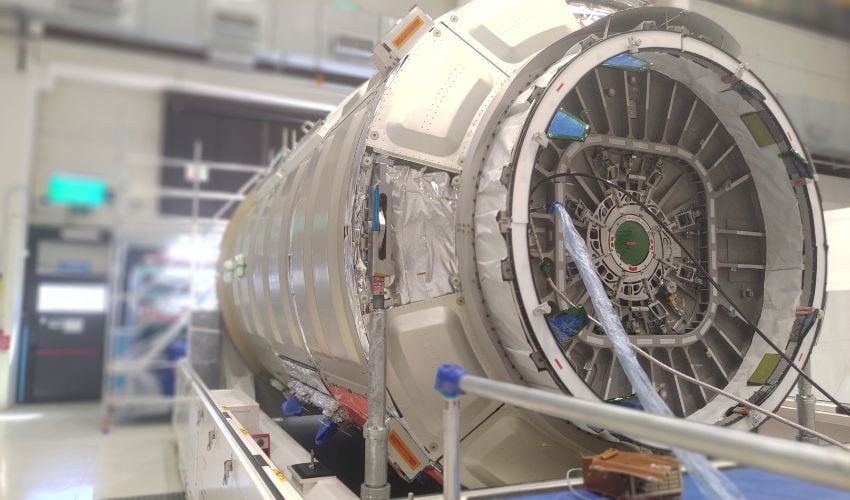 ApplicationsBEAMIT Has Produced Parts Using Additive Manufacturing for NASA’s Cygnus ProgramItalian company BEAMIT, a leading Italian service bureau and supplier of Metal Additive Manufacturing solutions, has announced that it will supply NASA-qualified AlSi7Mg 3D printed parts for the International Space Station (ISS). More specifically, the company will participate in
 Applications3DExpress: World’s First 3D Printed Femur Transplant for Child With Bone CancerThis week’s 3DExpress is full of exciting developments. First, we cover the world’s first femur transplant that succeeded with the help of a 3D printed femur. Then, we take a look at new collaborations: Women in 3D Printing is joining…
 ApplicationsHow Can 3D Technologies Save Time and Costs in the Orthopedic Sector?The medical sector has been greatly benefiting from the use of 3D technologies in recent years. One such example can be seen through one of the Chinese leaders in the field of orthopedics, Wuhan Biying Biotechnology Co., Ltd. Together with…
 GuidesTop 10 3D Printing Models of 20263D print models are ready-to-print digital files, usually STL or 3MF, that you download and send straight to your printer. There are many websites where you can find STL files to print, with new models added all the time. However,…