News
3D Printed Fish Tissue Successfully Created in China
Consuming fish, whether sourced through fishing or aquaculture, comes with environmental drawbacks. However, it doesn’t look like fish are leaving our diets anytime soon. According to the Food and Agriculture Organization of the United Nations, 140 million tons of fish…
- 3 min read
- News
- Six more stories
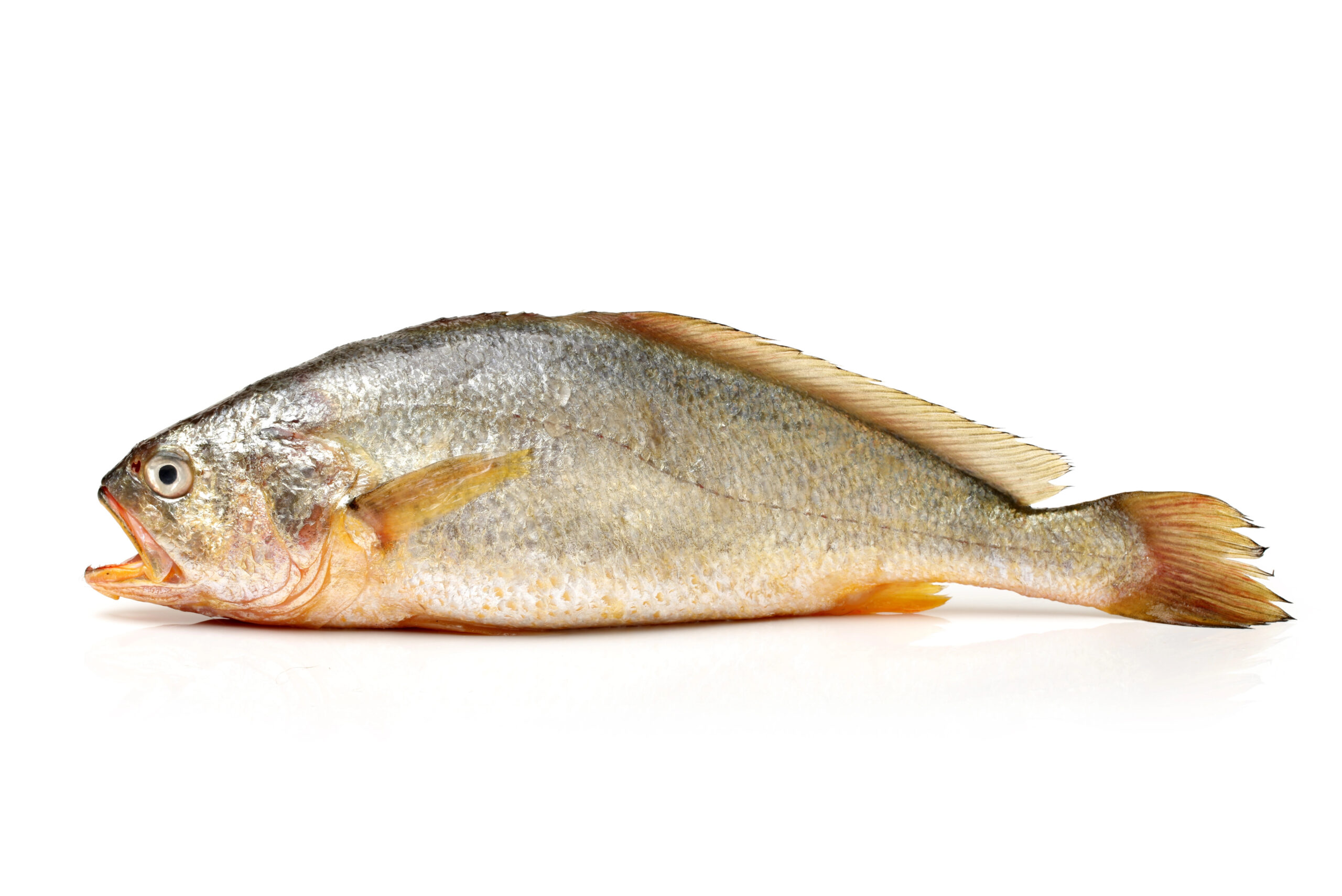
Consuming fish, whether sourced through fishing or aquaculture, comes with environmental drawbacks. However, it doesn’t look like fish are leaving our diets anytime soon. According to the Food and Agriculture Organization of the United Nations, 140 million tons of fish will be consumed worldwide by 2050. To address the demand for fish as well as the environmental costs of acquiring them, many different companies and researchers have invested their time into 3D printed fish solutions. Most recently, a team in China successfully printed plant-based simulated yellow croaker meat tissues this September.
To face this problem, the researchers sampled parts of the dorsal, abdominal, and tail of yellow croaker fish. These samples were then processed, immersed in iodine solutions, and subject to micro-CT scans that allowed them to differentiate between muscle and fat. Subsequently, they created 3D models of the micro-CT scan data and used CAD software to complete the simulation.
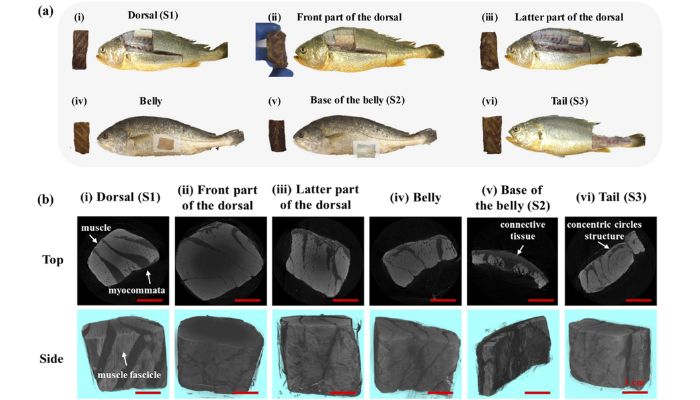
Micro-CT scanning of different parts of yellow croaker fish muscle tissue
The team used a 3D printer with two nozzles, one for simulated muscle ink, and one for simulated fat ink. The muscle ink was composed of soy protein isolate-xanthan gum-starch complex, and the fat ink was made of nanostarch-carrageenan emulsion gel. For the project, they used a multi-functional extrusion-based 3D bioprinter from China-based Engineering For Life, or EFL Tech Co. The study’s lead author, Jie Li, explained how they optimized the printing process “by controlling the dual-nozzle printing process parameters, including manual calibration of the dual-nozzle offset, layer height, fill rate, printing speed, air pressure, etc.” As a result, more than 90% of the structure’s composite was accurate.
More from the desk
Six other notes from the rest of the bench.
 News#TOP5 Videos: cat can walk again thanks to 3D printing, 3D printed collarbone and more!We found the TOP 5 videos of the week about 3D printing and the way additive manufacturing is shaping and changing our society. This week we touch on Carly, the cat that can walk again thanks to 3D printing, 3D printed…
 NewsIris van Herpen Brings 140 Haute Couture Pieces to New YorkIris van Herpen’s retrospective exhibition arrives in New York after stops in Paris, Brisbane, Singapore, and Rotterdam, marking its first visit to North America. From May 16 through December 6, 2026, the Brooklyn Museum will host “Iris van Herpen: Sculpting…
 NewsTCT Asia 2025: China Consolidates Its Position in the Additive Manufacturing MarketOn March 19, the eleventh edition of TCT Asia 2025 closed its doors at the National Exhibition and Convention Center in Shanghai. With more than 450 exhibitors and after three days of intense activity in halls 7.1 and 8.1, the…
 PrintersFirst Ever 3D Printed Shark Fins Help Combat Illegal Wildlife TradeOnce again, 3D printing will be used to help in wildlife conservation efforts. TRAFFIC, a leading non-government organization (NGO) working to fight against illegal wildlife trade, has announced that they have been using the world’s first-ever 3D printed shark fins…
 NewsAmazon HQ2 Integrated a 3D Printed Ceramic WallAmazon’s new HQ2 in Arlington, Virginia is filled with custom artwork, from sculpture gardens to wall art to murals. Notable among these works, however, is a 3D printed ceramic wall completed by Brian Peters. The wall, located in the primary…
 ApplicationsOrgan transplant facilitated using 3D technologiesSurgeons at Guy’s and St Thomas’ NHS Foundation Trust in London have used 3D printing to increase the success rate of complex organ transplants in young children. They have recently completed a complex operation with a 2-year-old boy named Dexter…