Applications
Organ transplant facilitated using 3D technologies
Surgeons at Guy’s and St Thomas’ NHS Foundation Trust in London have used 3D printing to increase the success rate of complex organ transplants in young children. They have recently completed a complex operation with a 2-year-old boy named Dexter…
- 3 min read
- Applications
- Six more stories
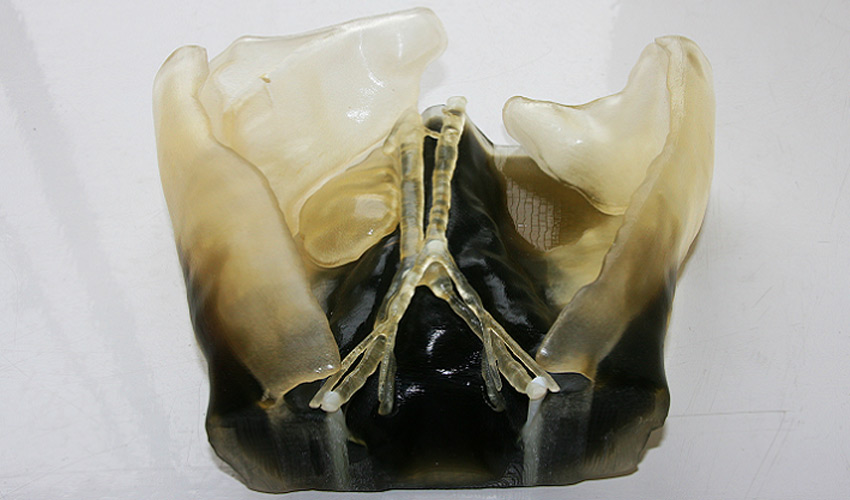
Surgeons at Guy’s and St Thomas’ NHS Foundation Trust in London have used 3D printing to increase the success rate of complex organ transplants in young children. They have recently completed a complex operation with a 2-year-old boy named Dexter Clark who had been suffering from a kidney problem since birth. It was his father, Brendan Clark, who gave him a kidney. In order to better prepare for this operation, doctors printed two 3D models, one of a kidney and the other an abdomen, from a 3D scan.
The use of 3D technologies in the medical field is becoming more common, offering the possibility of creating fully customized devices but also to design more realistic post-operative models adapted to the training of surgeons. The French Startup BIOMODEX has made it the heart of their business: they manufacture 3D printed, anatomical models to better train doctors before an operation, thus reducing the number of medical errors that could be potentially fatal. 3D technologies are also facilitating organ transplants by providing a better simulation and anticipation for what the surgeons can expect during the real surgery.
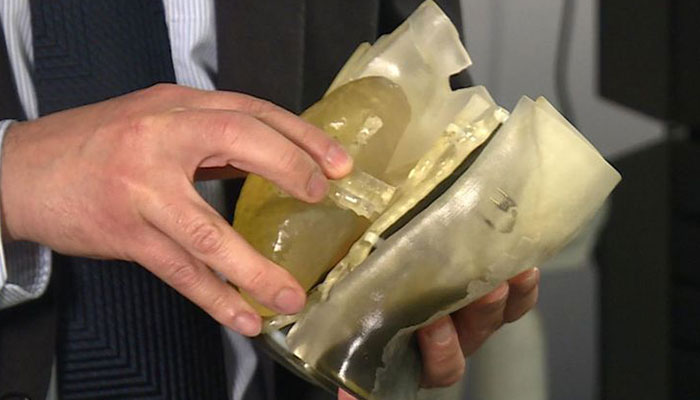
The 3D printed kidney and abdomen models
A complex kidney transplant
Dexter was born with a kidney problem that forced him to be fed using a gastric tube. Ultimately needing another kidney, his father wanted to give him one of his kidneys, but as he was much taller than the average adult, it was too wide for a 2-year-old. The surgeons were therefore quite worried about the possibility of implanting this kidney in Dexter’s abdomen safely.
More from the desk
Six other notes from the rest of the bench.
 NewsWEBINAR: Mass Production in Additive ManufacturingAdditive manufacturing applications are rapidly evolving. Manufacturers are moving from rapid prototyping to small or even large series production. Their objective is to leverage the benefits of additive manufacturing such as the ability to design custom-made, complex and durable
 NewsThe First Industrial Automation System for Customized 3D Printing, Roboze AutomateRoboze, an Italian-American manufacturer of industrial 3D printing technology, announced the launch of Roboze Automate earlier this week. Claimed to be the first industrial automation system bring customized 3D printing with super polymers and composites into the production workf
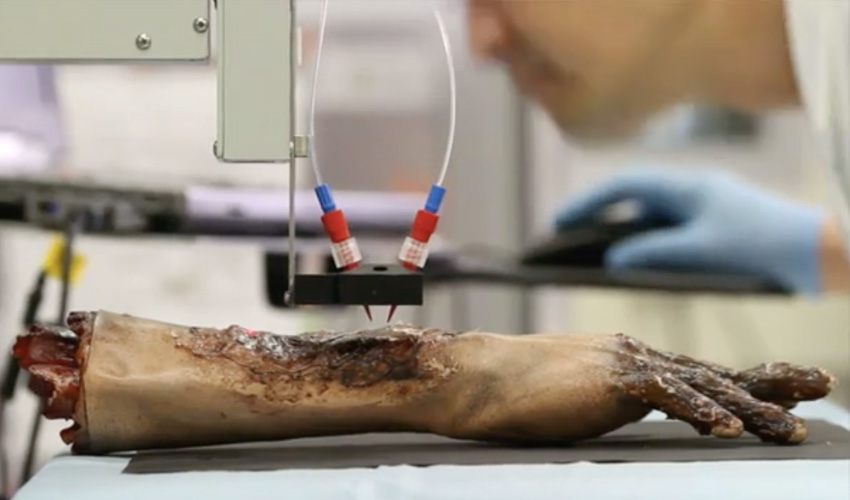 ApplicationsWake Forest Institute for Regenerative Medicine develops mobile 3D bio-printer to heal extensive woundsA team of scientists from the Wake Forest Institute for Regenerative Medicine (WFIRM) claims that it has developed a mobile 3D bio-printer capable of printing skin directly onto large wounds. As explained in the paper, the early treatment and rapid…
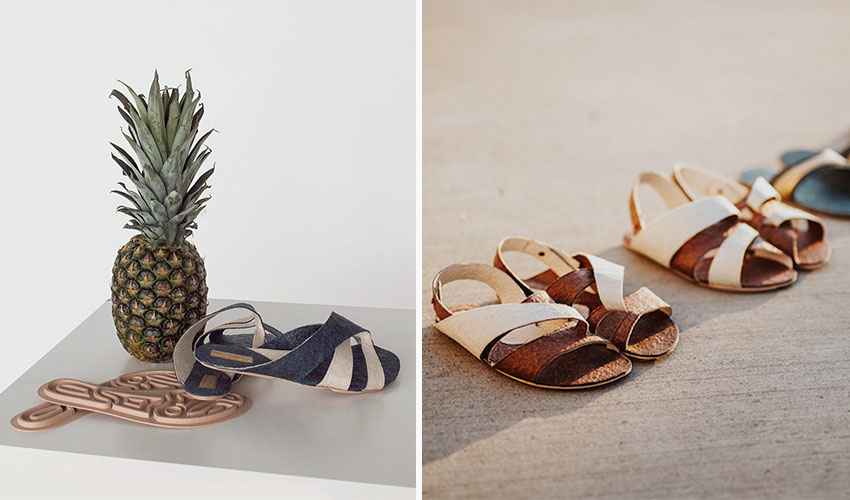 MaterialsAn Organic 3D Printed Shoe CollectionThe ORGANIC shoe collection is a collaboration between Lucie Trejtnarová, a postgraduate student at Tomas Bata University in Zlin, Czech Republic, materials manufacturer, Fillamentum and the design studio, Malai Design & Materials. As its name suggests, this shoe collection i
 NewsTop 5 Videos: Bugatti, 3D Printed Violins, and More!This week’s Top 5 Videos includes videos ranging from a variety of sectors. These include the music and arts, the supercar industry, and even how 3D printing is helping wounded refugees. Remember, a new Top 5 Videos is posted every…
 NewsADDITIV digital World is starting tomorrow, are you ready to take part?Every year, key events in the sector are at the centre stage of big developments and advancements in additive manufacturing. Active players and users of 3D printing technologies come together to discover the latest solutions from manufacturers, experience first-hand the…