Applications
New 3D Printed Chip Could Help Prevent Spread of Foodborne Illnesses
Who has never seen the dreaded public health announcement from the USDA, “food recalled due to pathogens”? Whether E.coli, Salmonella, Listeria, Norovirus or any of the at least 31 pathogens known to cause foodborne illnesses, tracking and ensuring that these…
- 3 min read
- Applications
- Six more stories
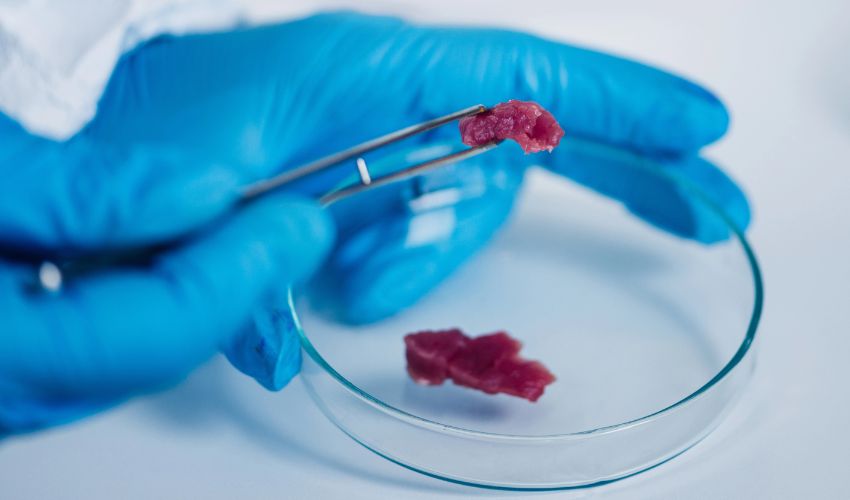
Who has never seen the dreaded public health announcement from the USDA, “food recalled due to pathogens”? Whether E.coli, Salmonella, Listeria, Norovirus or any of the at least 31 pathogens known to cause foodborne illnesses, tracking and ensuring that these do not end up in the public’s food is one of the government’s most important roles. However, as we have seen over the years, they are not infallible. Now, a new 3D printed chip may be what helps to make the difference.
Although it may seem like a rare occurrence, foodborne illnesses are widespread. In the United States alone, the CDC estimates that about 48 million people get sick, 128,000 are hospitalized and 3,000 die every year due to foodborne diseases each year. An astonishing statistic that only gets larger when applied to the entire world. For example, the WHO claims that ‘unsafe’ food causes 600 million cases and 420,000 deaths annually, with at least a third occurring in children under 5 years of age. Pregnant women and older adults also extremely susceptible to serious consequences.

Foodborne pathogens like E.coli (pictured) can have devastating effects on public health
This is exactly what the researchers from Guangdong University of Technology and Pudong New District People’s Hospital are hoping to attack with this new solution. By developing a faster, cheaper and more effective method for screening foods, they hope that they can help keep contaminated food out of the hands of consumers. And, of course, 3D printing has an important role to play.
More from the desk
Six other notes from the rest of the bench.
 Software#Startup3D: SAMGEN Unveils Its AI-Based Predictive Maintenance Software for Additive ManufacturingThe importance of artificial intelligence to optimize processes in Industry 5.0 is becoming increasingly evident. Even in the field of additive manufacturing (AM), we have seen a number of applications for AI, especially in software enhancement. From design to manufacturing,&hell
 Applications3D Bioprinting in space could accelerate cancer researchAt the University of Colorado in Boulder, a research center affiliated with NASA is using 3D bioprinting to develop more realistic cancer cell structures aboard the International Space Station. Under a research project called Magnetic 3D Cell Culturing, Their hopes…
 NewsA Spherical Home Was 3D Printed in Less than 24 HoursA house built in less than 24 hours and for less than $25,500: fiction or reality? That was the crazy challenge taken up by the company Serendix, which 3D printed this small spherical structure in precisely 23 hours and 12…
 News7 Reasons Why 3D Printing Is Opening New Doors for the Food Industry3D food printing began in 2006 with the Fab@Home, a printer developed by Cornell University that could only work with chocolate, cookie dough, and cheese. Since then, the technology has evolved into a digital production method applied to issues as…
 NewsTop 5 Videos: What It Takes to 3D Print an Adaptive Bike SaddleIn this week’s Top 5, the focus seems to be on applications. First, we feature an in-depth video on an adaptive 3D printed bike saddle from Fizik, distributed by New Era Cycle. The video dives into every stage of production…
 NewsGE’s education program invests AM into educationAs part of GE’s Additive Education Program, GE Additive will offer 3D printers to more than 400 schools, reaching more than 180,000 students across the world. An initiative that will help streamline the use this technology in education. General Electric…