News
3D Printed 3-Layer Bike Seat to Maximize Rider Comfort
One of the most important elements for a cyclist is undoubtedly the bike saddle. As you can imagine, it must be as comfortable as possible to allow for maximum ride performance. And it seems that optimal comfort has been found…
- 3 min read
- News
- Six more stories
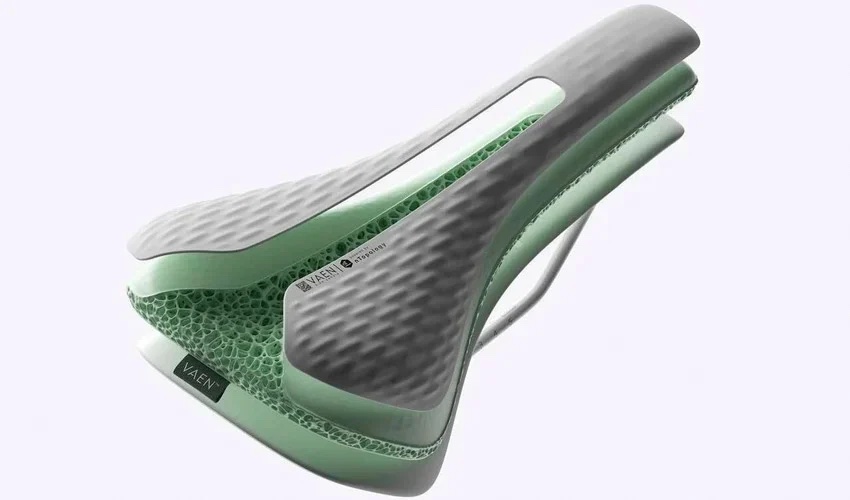
One of the most important elements for a cyclist is undoubtedly the bike saddle. As you can imagine, it must be as comfortable as possible to allow for maximum ride performance. And it seems that optimal comfort has been found thanks to designer Vasi Ganea. He has imagined the VAEN bike seat whose structure was 3D printed. Its design is quite original, with an organic lattice foam reminiscent of a Voronoi diagram. Composed of several layers, it is customizable, available in several colors and guarantees maximum comfort while reducing pressure peaks.
The use of additive manufacturing in cycling seems to be one of the trends of this year with innovative projects multiplying every week. While we were talking about this all-wheel drive bike earlier this week, this time we come back to one of the key components of a bike, the saddle. This is not the first time that this part has been 3D printed; as we know, thanks to 3D printing, we can design a product optimized in terms of materials, weight, with the key, more lightness and better performance. The company Specialized comes to mind, which has made this a flagship activity. The initiative of the Spanish designer Vasi Ganhi is very promising, as the saddle is adjustable according to the cyclist’s needs.
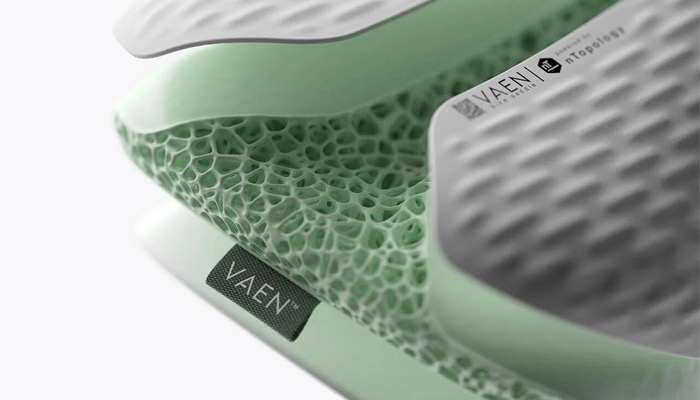
The middle layer has been topologically optimized (photo credits: Vasi Ganea)
The designer drew inspiration from nature and sought to reproduce organic shapes, hence the lattice foam. The saddle is composed of three distinct layers, made of different materials to provide distinct levels of performance for each area. The outer layer, which can be injected, cut or 3D printed, addresses friction, comfort and breathability needs. The middle layer is capable of absorbing shock. It was 3D printed from a flexible material and topologically optimized, resulting in a lattice structure. Finally, the third layer is a hard base that can be injected or 3D printed from carbon fiber reinforced materials. The objective here is to have a very strong layer.
More from the desk
Six other notes from the rest of the bench.
 Applications#3DExpress: FAA Certifies GE Aerospace Engine Made Using 3D PrintingThis week’s #3DExpress is full of exciting aerospace news! First, the FAA has certified an innovative engine from GE Aerospace that was made using additive manufacturing. Next, the United States Air Force is calling for 3D printing vendors who can…
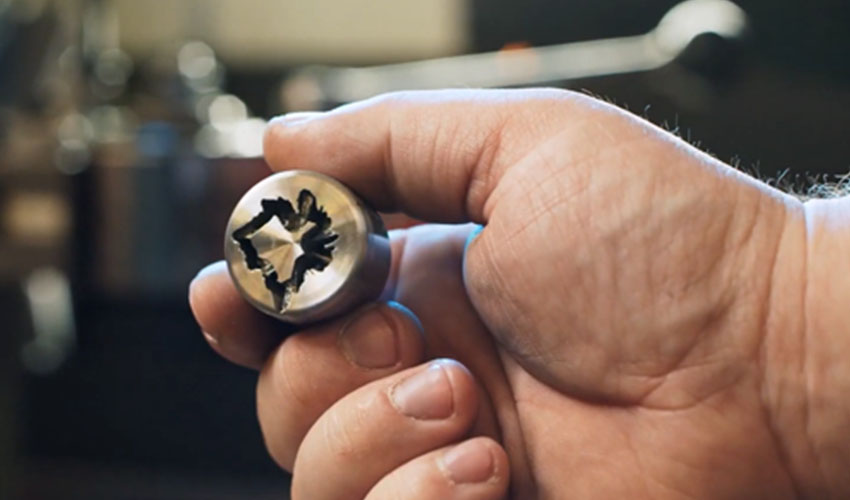 NewsFord and EOS develop high security 3D printed locking wheel nutsAbout a year ago, Ford had produced what they claim to be the largest automotive 3D printed part in history. Their additively manufactured aluminium intake manifold was installed in the Hoonitruck, a 1977 Ford F-150 with a twin-turbo 3.5-litre V6…
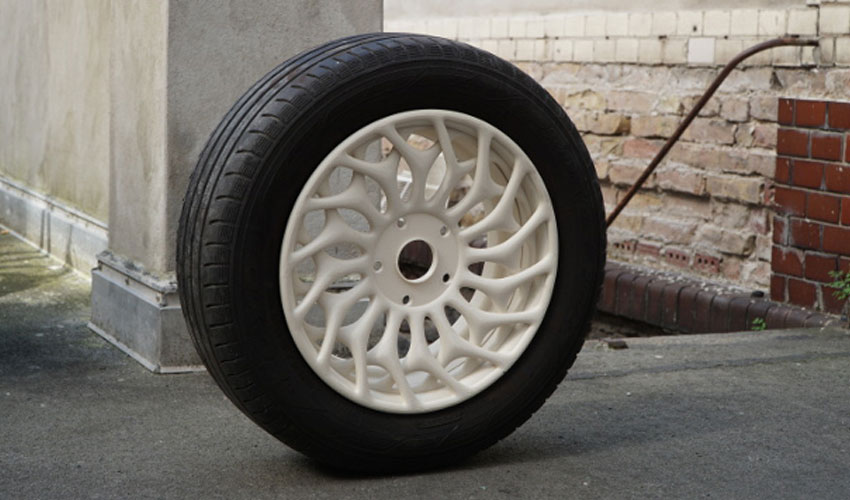 NewsBigRep 3D prints a wheel rim with a unique designGerman 3D printer manufacturer, BigRep, recently unveiled a 3D printed prototype of a completely original wheel rim. One of their designers, Marco Mattia Cristofori, wanted to show how large format additive manufacturing could be beneficial for the industry while offering…
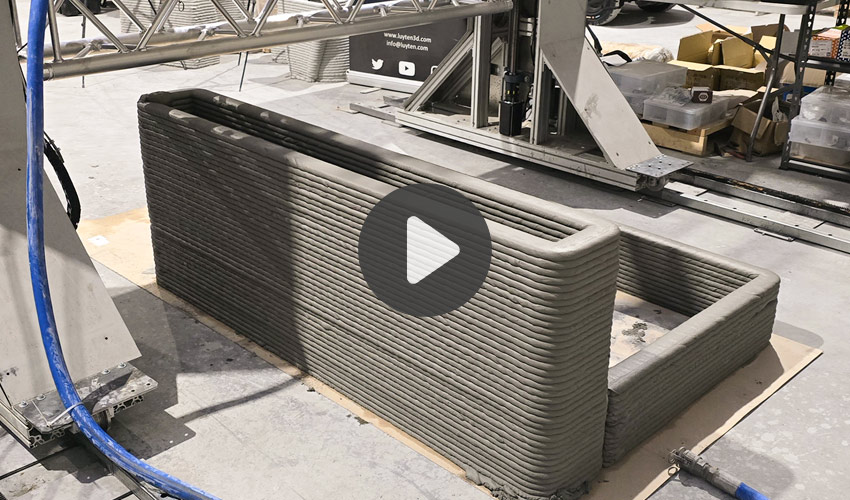 NewsTop 5 Videos: How is 3D Printing Done in Space?For this week’s installment of Top 5, we’re including our #3DInterview with Ahmed Mahil, CEO and Global President of the 3D printing company Luyten. He dives into how 3D printing is done in space, the origins of his company’s name,…
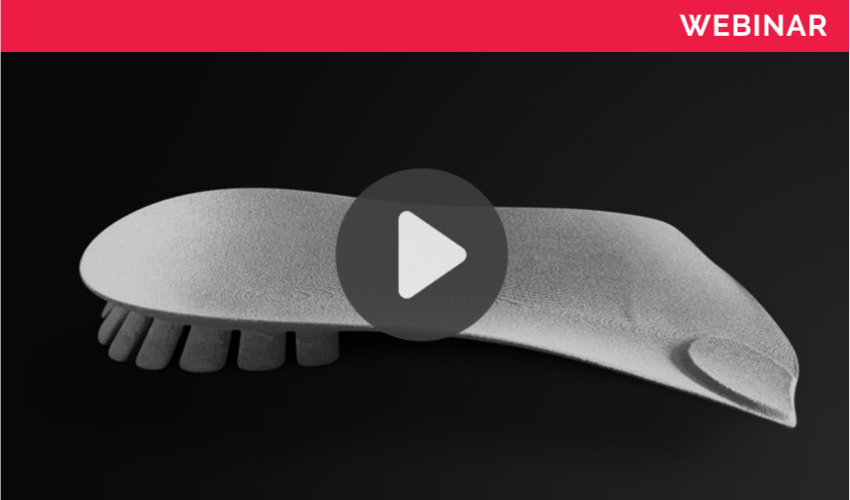 NewsWEBINAR: Sustainable and Custom Series Manufacturing with AMAdditive manufacturing is often seen as an environmentally friendlier production method to conventional manufacturing because of its potential for local production and because it can allow for zero-waste manufacturing. It is also seen as one of the manufacturing technologies enab
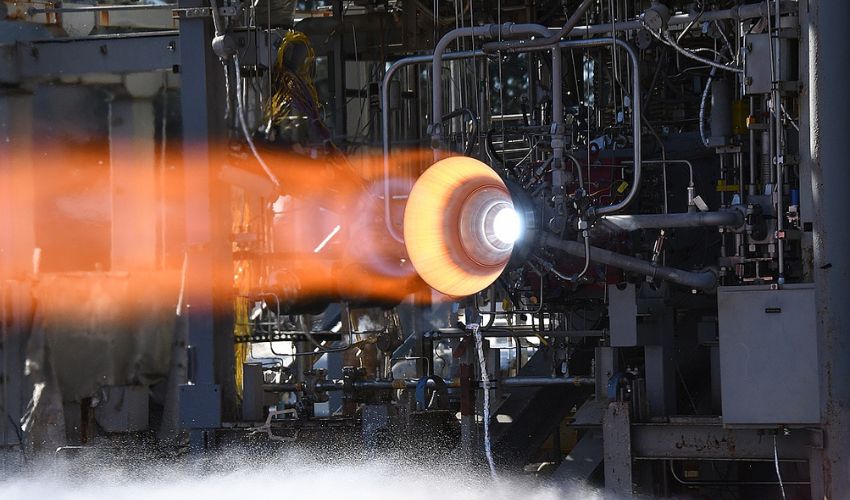 GuidesNASA Engineers on the Importance of Metal Additive Manufacturing for PropulsionFor some time now, NASA has been using 3D printing for everything from prototyping to end-use parts. In fact, it’s use has become so widespread, that the organization is becoming one of the leaders in research into the use of…