News
10 Reasons to Adopt 3D Printing
Today, many companies in the manufacturing industry still use traditional production methods. That being said, what is known as the fourth industrial revolution is becoming more and more of a reality, leading to the adoption of new methods of creation…
- 3 min read
- News
- Six more stories
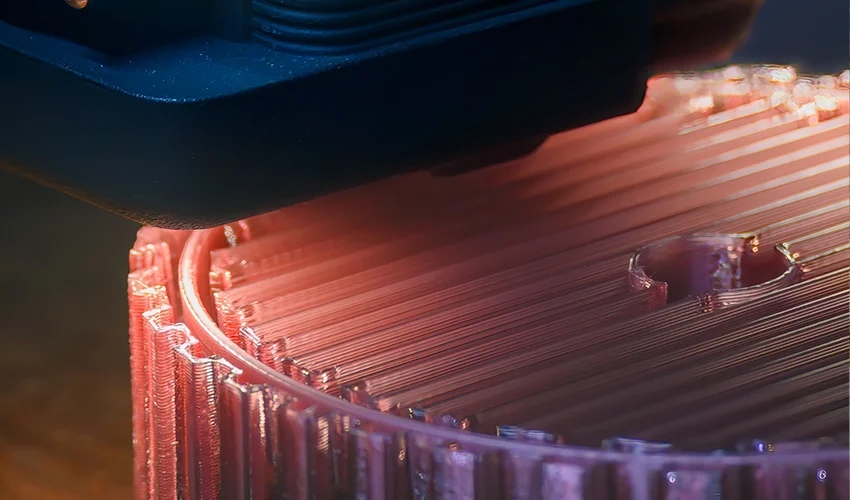
Today, many companies in the manufacturing industry still use traditional production methods. That being said, what is known as the fourth industrial revolution is becoming more and more of a reality, leading to the adoption of new methods of creation and manufacturing. These innovative advances in Industry 4.0 include artificial intelligence, virtual and augmented reality, big data and 3D printing. The latter has had a significant impact on the manufacturing processes of many industries, and is set for much greater growth in the coming years. To ensure that these organizations aren’t left behind and can make the leap into new technologies, and additive manufacturing in particular, we’re bringing you a new editorial format today. In this article, we’ve listed no fewer than 10 reasons why a user or company should consider adopting 3D printing into their business.
#1: Waste reduction
Additive manufacturing, as the name suggests, produces a part by adding material, layer by layer. It therefore uses only the material required. Unlike subtractive production methods, which waste large quantities of raw materials, the use of 3D printing significantly reduces waste. This is good for the environment, because no materials are thrown away unnecessarily. And if we go a step further, in powder-bed processes, unsintered or fused materials can be reused in future prints, provided they are mixed with new powder (depending on the technology, the recycling rate will be higher or lower). Additionally, Plastic objects can often be recycled into 3D-printable filaments or granules to create new parts. This is a key reason for many industrials to adopt 3D printing into their activities.
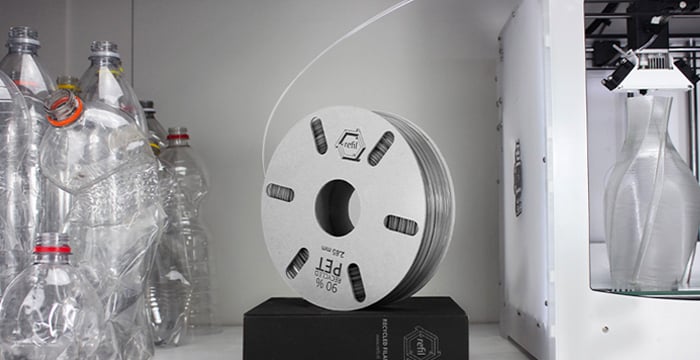
3D printing is characterized by the fact that only the material required to create the parts is used
#2: A Wide Variety of Technologies and Materials
The world of additive manufacturing is vast when it comes to technologies and compatible materials. There are seven families of 3D printing technologies, encompassing many different methods. From extrusion processes to resin, powder bed or material jet systems. There is also a wide range of materials compatible with these technologies. The most common are polymers, metals and ceramics, among others. However, the versatility of 3D printing means that structures can be created using truly astonishing materials, such as concrete, food, wood or even stem cells.
More from the desk
Six other notes from the rest of the bench.
 PrintersCES 2018: 3D Printing Innovations Round-UpThis year, CES ran from the 9th-12th January 2018 and the world’s most innovative companies flew out to show their new products. These new inventions included various 3D printing companies who came to Vegas to show the world why their…
 NewsICON Announces First 3D Printed Multi-Home Project in TexasNow a major figure in the 3D printing construction sector, American start-up ICON has unveiled its next project. In partnership with the Kansas City developer 3Strands and Logan Architecture, ICON plans to to build four houses for their 3D printed…
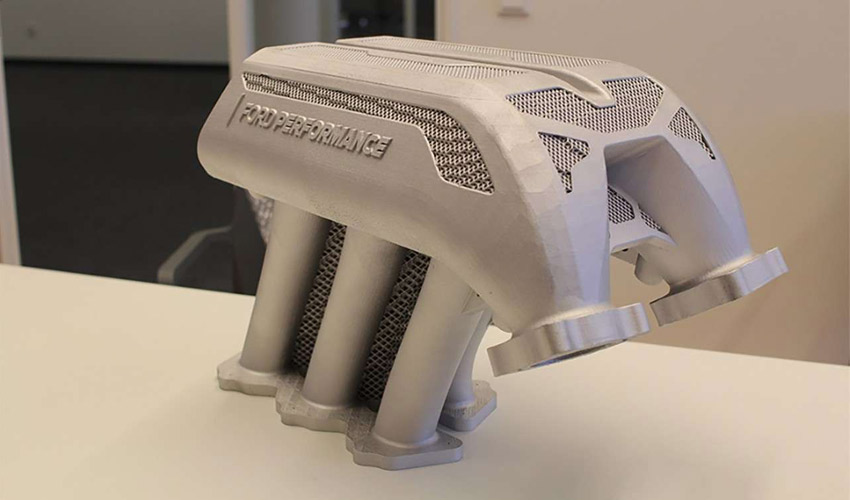 MaterialsFord produces the largest ever 3D printed metal automotive partLargest 3D Printed Metal Automotive Part in History Ford Performance, the high-performance division of Ford Motor Company, 3D printed what they claim to be the largest metal automotive part for a working vehicle in automotive history. The metal part was…
 NewsMX3D’s 3D Printed Metal Bridge Has Officially Been Installed in the Center of AmsterdamOn July 15, the Queen of the Netherlands, Máxima Zorreguieta Cerruti, inaugurated the 3D-printed metal bridge installed in the city center of Amsterdam, right in the Red Light District. It took 6 years for the Dutch company MX3D to allow…
 NewsDynamic 3D Printing Method Achieves Unmatched Speed and AccuracyRelying on the speed of light, researchers at Northwestern University have developed a remarkably faster photopolymerization-based 3D printer. The researchers claim to be able to deposit 4,000 layers in just 2 minutes! But that’s not all: this 3D printer, equipped…
 NewsAdditive Manufacturing Plays A Growing Role in the Jewelry IndustrySmarTech Analysis has published a new study dedicated to the additive manufacturing market, this time focusing on the jewelry sector. According to the report, the 3D printed jewelry market is expected to reach a value of $989 million by 2031,…