
Revolutionizing Energy Storage: 3D Printed Carbon Micro Lattice Electrodes for Sustainable Batteries
In a significant leap forward for energy storage technology, researchers at Tohoku University in Sendai, Japan, have unveiled a groundbreaking new procedure. This innovative method involves the 3D printing of high-performance carbon micro lattice electrodes, promising a future of more efficient, cost-effective, and environmentally sustainable batteries. Published as a comprehensive research article in the esteemed science journal, Small, this discovery is poised to fundamentally alter the landscape of battery production. It offers a viable alternative to conventional manufacturing techniques, addressing long-standing challenges related to both performance and ecological impact. The team’s pioneering work not only aims to enhance battery capabilities but also to significantly mitigate the environmental footprint associated with their creation and subsequent disposal, moving us closer to a truly green energy future.
For many years, the shift from fossil fuel-powered machines and vehicles to electric alternatives powered by batteries was hailed as a panacea for environmental woes. The public perception often gravitated towards an unqualified embrace of batteries as an inherently environmentally friendly solution. This perspective, while understandable given the immediate comparison to combustion engines, largely overlooked the complex lifecycle of batteries themselves. It wasn’t long, however, before scientific scrutiny revealed a more nuanced reality: the “simple alternative” was not as green as it initially appeared, prompting a deeper examination of the entire battery value chain from raw material extraction to end-of-life management.
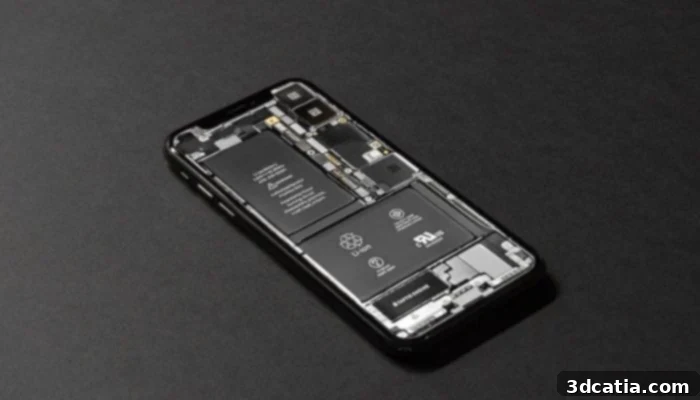
The widespread adoption of electronic devices and electric vehicles is leading to an increasing demand for batteries (Photo Credits: Tyler Lastovich)
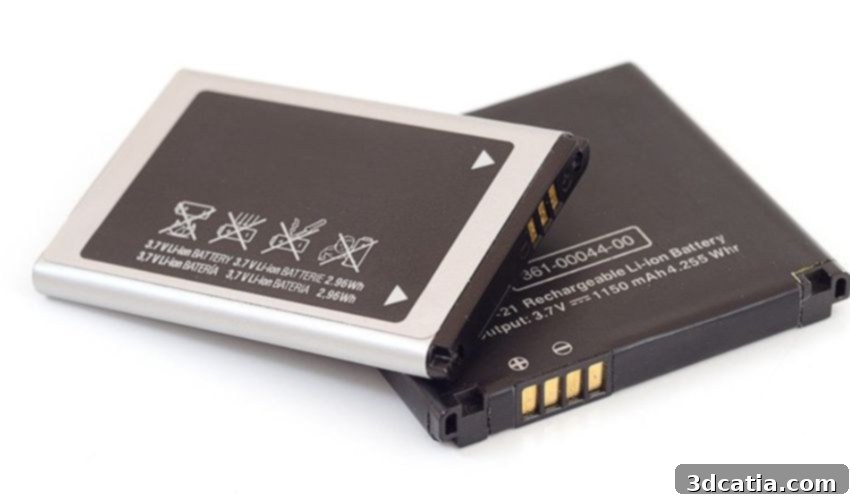
While the operation of devices powered by batteries emits no harmful greenhouse gases, making them a cleaner choice at the point of use, the broader environmental picture reveals significant challenges. The production and disposal processes of these ubiquitous power sources, unfortunately, carry a heavy ecological burden. Battery manufacturing often involves the extraction and processing of hazardous chemicals, including heavy metals like cobalt, nickel, and lithium, which can lead to habitat destruction, water pollution, and human health risks. Furthermore, the dangerous battery acid and other toxic components found in spent batteries pose a severe environmental threat if not managed properly through specialized recycling programs. In an era where electronic devices are more prevalent than ever before, and the global push towards electric vehicles accelerates, this growing threat becomes a pressing cause for concern. Banning batteries is clearly not a viable option given our reliance on them for modern living and our pursuit of decarbonization. Therefore, the most pragmatic and impactful approach to making batteries more ecological lies in enhancing their performance and longevity, thereby reducing the overall volume of batteries that need to be produced and subsequently disposed of. This very principle underpins the recent groundbreaking discovery by Japanese researchers, who are paving the way for a new generation of high-efficiency, lower-impact batteries. Their work underscores a crucial paradigm shift: innovation in battery design and manufacturing is key to unlocking truly sustainable energy solutions.
Unlocking Higher Performance and Efficiency in Battery Design
Tohoku University materials scientist Akira Kudo, alongside his dedicated team, has introduced a revolutionary procedure that could be the definitive answer to the persistent challenges of battery performance and sustainability. By leveraging the power of 3D printing to create intricate carbon micro lattice electrodes, they are engineering a new class of high-performance, low-cost batteries. The core objective of this novel approach is to significantly increase the loading of active materials within a single battery cell, meticulously maximizing their inherent potential and capability. This desired increase in active materials concurrently reduces the proportion of inactive materials, which traditionally serve to bind multiple cells together or provide structural support. While inactive materials are essential in conventional designs, their presence reduces the overall energy density of the battery.
The innovative aspect of Kudo’s method lies in overcoming a critical trade-off: simply reducing inactive materials would typically necessitate thicker electrodes to maintain structural integrity, which in turn severely restricts the movement of ions. Impeded ion movement directly translates to a lower electrical charge and reduced power output. Conventional battery design often struggles to balance high energy density (more active material) with high power density (fast ion movement). Thicker electrodes might hold more charge, but ions take longer to traverse them, slowing down charging and discharging rates. The genius of the carbon micro lattice structure is its ability to offer a robust framework that supports a high loading of active material while simultaneously providing an optimized, open architecture for rapid ion transport. This allows for both increased energy density and improved power characteristics, pushing the boundaries of what was previously thought possible in battery chemistry and engineering. The precise control offered by 3D printing enables the creation of these complex, three-dimensional structures that are impossible to achieve with traditional manufacturing techniques, marking a paradigm shift in electrode design.

Examples of the intricate 3D printed micro lattice structures developed by Tohoku University (photo credits: Tohoku University)
In their pioneering endeavor, Akira Kudo and his dedicated team have skillfully employed Stereolithography (SLA) 3D printing technology to fabricate highly precise micro lattice structures. This process begins with a specialized resin, which is selectively cured by a UV laser, layer by layer, to form the desired intricate 3D pattern. Once the resin lattice structures are formed, they undergo a transformative process called pyrolysis. Pyrolysis is a thermochemical decomposition of organic material at elevated temperatures in the absence of oxygen. During this process, the resin structures are heated to high temperatures, causing the non-carbon elements to be driven off, while the carbon backbone remains and densifies. This results in a remarkable shrinkage of the structures and their conversion into hard carbon anodes. These hard carbon anodes are the cornerstone of the innovation, possessing superior properties crucial for advanced battery performance. Their finely tuned lattice structure significantly increases the surface area available for electrochemical reactions and, critically, enables the faster transport of energy-generating ions within the battery. This enhanced ion mobility directly translates to improved charging and discharging rates, alongside an overall boost in the anode’s performance and the battery’s efficiency.
The potential implications of this research extend far beyond current battery technologies. Kudo himself expresses a visionary outlook, stating that “As 3D printers gain increasing resolution, sodium-ion batteries could eventually outperform lithium-ion ones.” This bold assertion highlights the critical role of additive manufacturing in unlocking the full potential of next-generation battery chemistries. While lithium-ion batteries currently dominate the market, they face challenges related to the scarcity and cost of lithium, as well as environmental concerns associated with its extraction. Sodium-ion batteries, conversely, offer a compelling alternative due to the abundance and lower cost of sodium. However, they have historically lagged behind lithium-ion in terms of energy density and cycle life. Kudo’s research provides a pathway to overcome these limitations. By precisely engineering anode structures at the micro-scale through high-resolution 3D printing, it becomes possible to optimize ion diffusion pathways and maximize active material utilization in sodium-ion cells, potentially allowing them to surpass the performance benchmarks currently set by lithium-ion counterparts. Although this new discovery represents a major breakthrough for Kudo and his team, their journey is far from over. The scientists are diligently working towards their ultimate goal: to further refine and develop this advanced manufacturing process. Their vision is to soon utilize these finely architected, 3D printed electrodes to create high-performing, cost-effective, and truly sustainable sodium-ion batteries, ushering in a new era of energy storage. This could have profound impacts across various sectors, from electric vehicles and portable electronics to large-scale grid energy storage solutions, marking a significant step towards a more sustainable and electrified future.
What are your thoughts on this innovative effort by Akira Kudo and his team at Tohoku University? Do you believe 3D printing is the key to truly sustainable battery technology? We invite you to share your insights and comments below, or engage with us on our LinkedIn, Facebook, and Twitter pages! To stay updated with the very latest in 3D printing news and advancements, don’t forget to sign up for our free weekly Newsletter here, delivered straight to your inbox. You can also explore all our fascinating videos and interviews on our YouTube channel.
*Cover Photo Credits: Tohoku University