
Revolutionizing Diabetes Foot Care: QUT Pioneers 3D Printed Insoles for Remote Communities
Diabetes-related foot disease represents a significant global health challenge, frequently leading to debilitating complications, including ulcers and amputations. In a groundbreaking initiative poised to transform patient care, researchers at the Queensland University of Technology (QUT) Centre for Biomedical Technologies have been awarded a substantial $810,000 AUD Medical Research Future Fund Primary Health Care Digital Innovations Grant. This funding will enable the development of low-cost, personalized, pressure off-loading insoles utilizing advanced 3D printing technology. The primary objective is to enhance care for individuals living with diabetes-related foot disease in remote areas of Australia, where access to specialized medical services is often limited. This crucial project aims to intervene at a critical juncture in diabetes management, proactively preventing the formation of diabetes-related foot ulcers (DFUs) and significantly aiding in their effective treatment. The importance of this endeavor cannot be overstated, as these very ulcers are notorious contributors to the alarmingly high risk of lower-limb amputation in diabetic patients worldwide.
The global prevalence of diabetes continues its relentless ascent, posing an immense burden on healthcare systems and individual lives. According to the IDF Diabetes Atlas, a staggering 537 million adults were living with diabetes in 2021. What’s more, a disproportionate majority of these individuals—approximately three out of four adults with diabetes—reside in low- and middle-income countries, highlighting a pervasive disparity in healthcare access and outcomes. Compounding this challenge, reports indicate a troubling trend of increasing amputations over the years, with health organizations like the Office of Disease Prevention and Health Promotion actively seeking a reduction in these incidents. The urgent need to mitigate amputations is underscored by stark statistics: USA Vascular Centers report that approximately 20% of amputee patients succumb within a year following an amputation, and a shocking 44.1% pass away within five years after a minor lower extremity amputation. This grim reality translates to an overall mortality rate of around 60% within five years, underscoring the severe and life-threatening consequences of diabetes-related foot complications. Consequently, there is an unequivocal demand for more effective, accessible, and easily implementable treatments. The QUT project, leveraging 3D printing for personalized and cost-effective solutions, represents a beacon of hope in this critical area, offering a pathway to better health outcomes and an improved quality of life for millions.
The Devastating Impact of Diabetes-Related Foot Disease and the Need for Innovation
Diabetes-related foot disease (DRFD) encompasses a spectrum of conditions, from peripheral neuropathy and peripheral artery disease to foot deformities and, most critically, foot ulcers. These ulcers are not merely superficial wounds; they are complex, chronic lesions often exacerbated by poor circulation, nerve damage that reduces sensation (leading to undetected injuries), and compromised immune function. Without prompt and appropriate care, these ulcers can rapidly progress, leading to deep tissue infections, osteomyelitis (bone infection), and ultimately, gangrene, necessitating amputation. The journey from a minor foot lesion to a life-altering amputation is tragically swift for many, underscoring the need for preventative measures and early, effective intervention.
Beyond the grim mortality rates, amputations profoundly impact a patient’s quality of life, leading to decreased mobility, independence, and mental health challenges. The economic burden is equally staggering, encompassing costs associated with prolonged hospital stays, surgical procedures, rehabilitation, and long-term care. For healthcare systems already stretched thin, particularly in remote and underserved areas, managing the cascade of complications from DRFD is a formidable task. This is where the QUT project steps in, offering a proactive, personalized, and scalable solution designed to circumvent the progression of DRFD before it reaches its most severe stages. By focusing on prevention and early treatment through customized insoles, the research aims to drastically reduce the incidence of ulcers and, consequently, amputations, thereby alleviating immense suffering and economic strain.
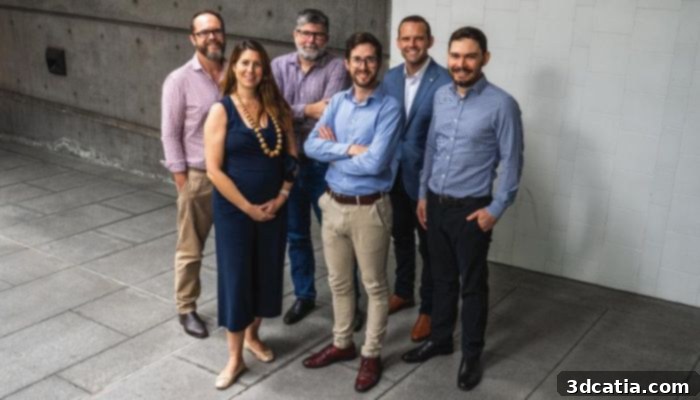
Pictured from back left: Associate Professor Peter Lazzarini, Professor Mia Woodruff, Dr Sean Powell, Dr Edmund Pickering, Associate Professor David Holmes, Alex Terrill (photo credits: QUT)
Bridging the Distance: 3D Printing and Telehealth for Remote Healthcare
The unique challenge of delivering specialized healthcare to Australia’s vast and sparsely populated remote and regional areas is central to the QUT project. Individuals in these communities often face significant barriers, including extensive travel distances to reach podiatry services, prohibitive costs associated with transportation and accommodation, and a severe shortage of specialized healthcare professionals. These factors contribute to delayed diagnoses, insufficient monitoring, and suboptimal treatment outcomes for diabetes-related foot disease. The QUT team’s innovative approach directly addresses these disparities by leveraging digital health solutions and advanced manufacturing.
Treating Diabetes With Personalized 3D Printed Insoles
While 3D printing has previously been explored for various applications in diabetes treatment, such as pancreatic tissue engineering, the distinctive focus of this research lies in its potential to extend critical aid to those in geographically isolated regions. The core of this initiative involves the development and rigorous evaluation of innovative, low-cost foot scanning technologies. These scanning solutions will be seamlessly integrated with 3D printing capabilities to produce the custom therapeutic insoles. Professor Mia Woodruff, a distinguished leader of the project research team and a driving force behind this innovation, elaborates on the integrated methodology:
“Our research team will develop and evaluate low-cost foot scanning technologies, developed in partnership with Aptium3D within an established digital framework. These technologies will be integrated in the allied healthcare organisation, Healthia’s, diabetes-related foot ulcer (DFU) monitoring, diagnosis and treatment pipeline for use in regional communities. Our innovative 3D dynamic foot scanner will be used by expert podiatrists as a telehealth device for remote monitoring and diagnosis. It will be coupled with advanced, flexible, metamaterial 3D-printing technologies to create personalized insoles to help protect the feet from injury and ulceration.”
The Power of Additive Manufacturing in Medical Devices
The strategic choice of additive manufacturing (3D printing) for this project is unequivocally justified by its inherent advantages, particularly within the medical field. While the specific 3D printing technology for these insoles (e.g., FDM, SLS, SLA) is not detailed in the press release, the overarching benefits of additive manufacturing are clear. Firstly, 3D printing excels at customization. Unlike mass-produced insoles, which offer a limited range of sizes and shapes, 3D printing allows for the creation of devices perfectly tailored to the unique biomechanics and pathology of each patient’s foot. This level of personalization is paramount for pressure off-loading insoles, as precise fit and targeted pressure redistribution are critical for preventing ulcer formation and promoting healing.
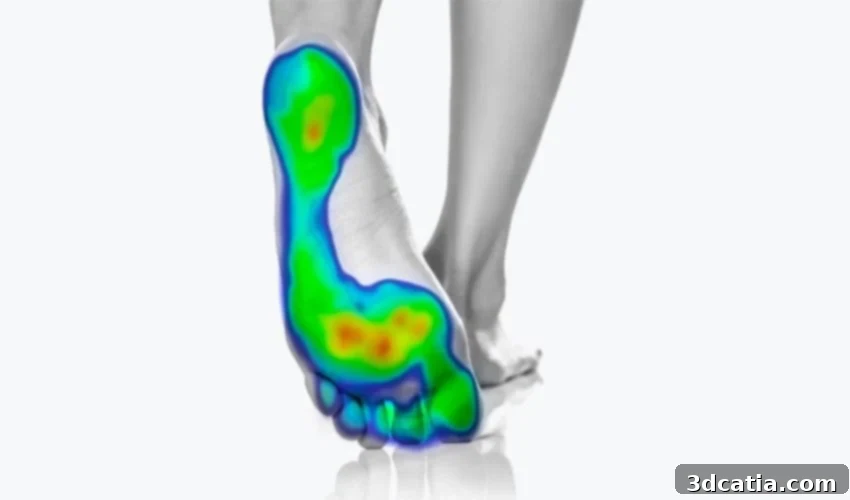
The process typically involves a detailed 3D scan of the patient’s foot, capturing its exact geometry, including deformities or areas of high pressure. This digital data is then used to design an insole that precisely cradles the foot, distributing weight evenly and relieving pressure from vulnerable regions. This bespoke approach dramatically improves therapeutic efficacy, comfort, and patient compliance, factors often lacking with generic footwear solutions. Furthermore, the use of advanced, flexible “metamaterial” 3D-printing technologies, as mentioned by Professor Woodruff, suggests the use of engineered materials or structures that exhibit unique properties not found in conventional materials. These could include superior shock absorption, enhanced durability, breathability, and tunable stiffness, all vital for an effective therapeutic insole. Such innovation allows for materials that are both supportive and comfortable, crucial for daily wear by diabetic patients.
Secondly, the cost-effectiveness of 3D printing, especially when scaled, is a significant driving factor for a project focused on remote and lower-income areas. Traditional custom orthotics can be expensive and require specialized workshops, often centralized in urban areas. By integrating low-cost foot scanning with localized 3D printing capabilities, the QUT team aims to decentralize production, making personalized care more accessible and affordable. This model not only reduces the financial burden on patients and healthcare systems but also minimizes the logistical complexities of transporting custom devices across vast distances. The ability to produce medical devices on-demand, closer to the point of care, is a paradigm shift for remote healthcare delivery.
The combination of precise 3D scanning and highly customizable 3D printing thus offers an unparalleled opportunity to improve the standard of care for diabetes-related foot disease. It represents a technological leap that empowers healthcare providers to deliver personalized, preventative, and therapeutic solutions efficiently and affordably, particularly to those who need it most in underserved communities. This project exemplifies how additive manufacturing is not just a tool for industrial innovation but a powerful enabler for advancements in public health and equitable access to medical care.
A Collaborative Vision for a Healthier Future
The success of this ambitious project hinges on strong collaboration and a holistic digital framework. The partnership between QUT’s Centre for Biomedical Technologies, Aptium3D (likely contributing expertise in 3D scanning and design software), and Healthia (a prominent allied healthcare organization) ensures that the developed technologies are both cutting-edge and practically integrated into existing healthcare pipelines. Healthia’s involvement in the diabetes-related foot ulcer (DFU) monitoring, diagnosis, and treatment pipeline ensures that the 3D printed insoles and associated scanning technologies are deployed where they can have the most immediate and profound impact within regional communities.
The concept of expert podiatrists utilizing the 3D dynamic foot scanner as a telehealth device for remote monitoring and diagnosis is particularly transformative. It means that patients in remote areas can receive specialist consultation and device prescription without needing to travel, overcoming one of the most significant barriers to care. This telehealth model extends the reach of highly skilled podiatrists, enabling them to assess foot health, identify risks, and prescribe custom insoles from a distance. This not only optimizes resource allocation but also ensures consistent, high-quality care, irrespective of geographical location. The digital nature of the framework also facilitates data collection and analysis, allowing for continuous improvement of the scanning and printing technologies and a deeper understanding of patient outcomes.
Paving the Way for Proactive Diabetes Care
In conclusion, the QUT-led initiative to develop 3D printed, personalized pressure off-loading insoles for individuals with diabetes-related foot disease in remote Australia is a testament to the power of interdisciplinary research and technological innovation. By addressing critical gaps in healthcare access and leveraging the unique capabilities of 3D scanning and additive manufacturing, this project promises to significantly reduce the incidence of diabetes-related foot ulcers and subsequent amputations. The emphasis on low-cost, personalized solutions delivered through a telehealth model offers a sustainable and scalable pathway to improved patient outcomes and enhanced quality of life. This research not only represents a significant advancement in diabetes care within Australia but also sets a precedent for how advanced manufacturing can democratize access to specialized medical devices globally, offering a tangible solution to a pervasive health crisis.
What do you think of this initiative to create 3D printed insoles to help treat patients with diabetes? Let us know in a comment below or on ourLinkedIn,Facebook, andTwitter pages! Don’t forget to sign up for our free weeklyNewsletter here, the latest 3D printing news straight to your inbox! You can also find all our videos on ourYouTube channel.
*Cover: 3D scanning will be used for this project. In this example from Materialise, dynamic gait analysis using footscan pressure plate and software was used. The combined visualization of 2D dynamic pressure data and 3D volumetric data (obtained through 3D scanning) is ideal to objectively diagnose and tailor patient treatment (photo credits: Materialise)