
Redefining Urban Spaces: XtreeE and Studio 7.5 Pioneer 3D Printed Concrete Street Furniture
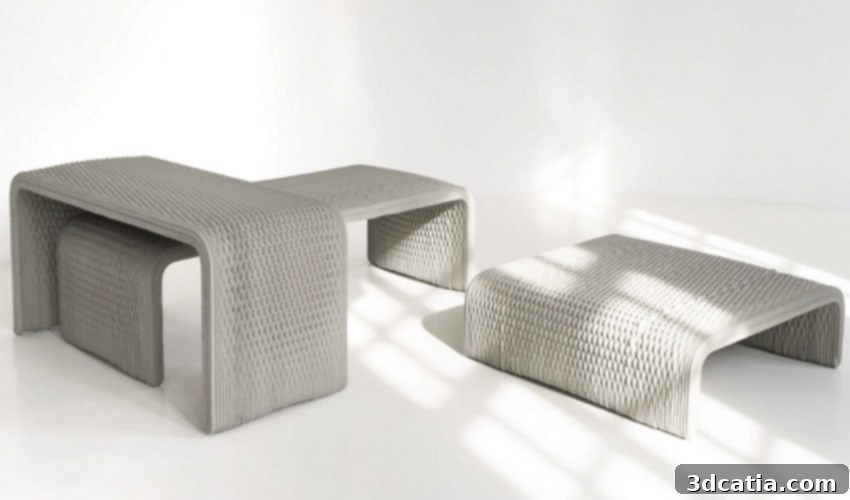
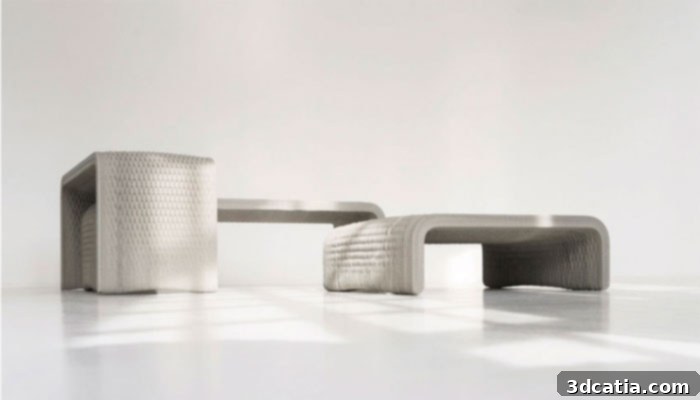
In a groundbreaking collaboration that pushes the boundaries of urban design and construction, French startup XtreeE, a leading specialist in 3D concrete printing, has partnered with Studio 7.5, an acclaimed German design firm. Their joint endeavor has resulted in the creation of three innovative 3D printed concrete benches, each featuring a strikingly intricate woven pattern. These remarkable benches are set to become a cornerstone of Studio 7.5’s bespoke street furniture collection, showcasing the immense potential of additive manufacturing in transforming our public spaces.
This project perfectly exemplifies the diverse and expanding applications of 3D concrete printing. From rapidly constructing houses designed with advanced 3D technologies, such as those seen in Nantes, to creating sophisticated furniture pieces, this revolutionary technology is poised to profoundly disrupt the traditional construction market. A growing number of manufacturers and innovators, including XtreeE, are actively exploring this niche. XtreeE, in particular, has developed a sophisticated 6-axis robotic system capable of precisely extruding its proprietary concrete mix, enabling unprecedented levels of design freedom and structural integrity in its creations.
Unlocking New Possibilities with 3D Concrete Printing in Construction
3D concrete printing offers more opportunities for the construction sector
The advanced 6-axis robot at the core of XtreeE’s technology was instrumental in bringing these three concrete benches to life. This sophisticated machine meticulously deposits layers of specially formulated material, executing movements with extreme precision according to a predefined digital model. This precise, robotic movement is the key to achieving the distinctive woven pattern that defines the benches’ aesthetic. According to the visionary designers at Studio 7.5, such an intricate motif would be exceptionally challenging, if not prohibitively expensive, to produce using conventional molding techniques. Traditional methods would require complex and costly molds, limiting design flexibility and increasing production time. Concrete additive manufacturing, however, grants designers unparalleled freedom, allowing for the realization of complex geometries that were once confined to the imagination, while also offering significant profitability benefits through material efficiency and reduced labor.
Beyond aesthetic advantages, the construction of these benches highlights the inherent sustainability benefits of 3D concrete printing. They were built using a significantly minimal amount of concrete compared to the volume typically required with traditional molding processes. This material optimization directly translates to a substantial reduction in the carbon emissions generated during concrete production, a critical step towards more environmentally responsible construction practices. Furthermore, the collaborative team emphasizes that these 3D printed benches are notably lighter than their traditionally manufactured counterparts, yet possess an extraordinary aesthetic originality. Their unique forms and textures evoke the groundbreaking 3D printed street furniture installations found in Amsterdam, despite utilizing a completely different base material. The designs achieved here are truly unprecedented and could only have been conceptualized and realized through the capabilities offered by 3D printing technology.
The ability of 3D concrete printing to create such complex and material-efficient designs is a game-changer for the construction industry. It eliminates the need for expensive and labor-intensive formwork, streamlines the construction process, and opens up new avenues for architectural expression. By allowing for the creation of optimized internal geometries, such as hollow structures, the technology can reduce material usage by 30-70% compared to conventional methods, without compromising structural integrity. This not only makes projects more sustainable but also more economical in the long run. The precision of robotic extrusion ensures consistency and quality, while also enabling rapid prototyping and iteration of designs, accelerating the development cycle for new architectural and urban elements.
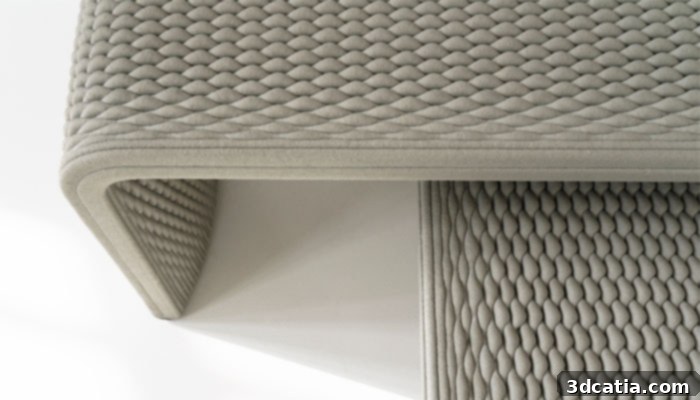
The design of the benches could not have been conceived other than by 3D printing
XtreeE: Driving Innovation in Concrete Additive Manufacturing
XtreeE has established itself as a pioneer in the field of large-scale 3D printing for construction. Their core philosophy revolves around integrating digital design with robotic fabrication to revolutionize how structures and objects are built. Their proprietary 6-axis robot, more than just a machine, is a sophisticated manufacturing platform that allows for unparalleled freedom in form-finding and structural optimization. This robotic arm, combined with specially developed concrete mixes that are engineered for extrudability and rapid hardening, enables the creation of complex, load-bearing structures with precision. XtreeE’s expertise extends beyond simple extrusion; they actively engage in research and development to refine material properties, improve printing speeds, and expand the range of applications for 3D printed concrete, from bespoke furniture to intricate architectural facades and even disaster relief housing.
Studio 7.5: Visionary Design Meets Advanced Fabrication
Studio 7.5, renowned for its innovative approach to product and industrial design, sees 3D printing as a crucial tool for future urban development. Their collaboration with XtreeE on these concrete benches signifies a strategic expansion into materials beyond plastic, demonstrating their commitment to exploring cutting-edge manufacturing processes. These three benches will proudly join Studio 7.5’s growing collection of 3D printed objects, which exemplifies their ongoing dedication to pushing the boundaries of what is possible in design and manufacturing. The German firm has a history of embracing advanced technologies, notably through their Metaform Portfolio project, a collection of 3D printed office accessories crafted from plastic materials, developed in partnership with Herman Miller. This previous experience with additive manufacturing, though in a different material, underscores their expertise and vision in leveraging digital fabrication for creating highly functional and aesthetically distinct products. Their current venture into concrete printing highlights a forward-thinking strategy to enhance the functionality and visual appeal of urban environments through sustainable and innovative means.
The aesthetic appeal and functional advantages of these 3D printed concrete benches extend far beyond simple seating. They represent a paradigm shift in how urban furniture is conceived and produced. By allowing for bespoke, organic, and complex forms, these benches become sculptural elements that enhance the visual richness of public spaces. They invite interaction, provide unique focal points, and contribute to a city’s identity. This approach contrasts sharply with the mass-produced, often generic street furniture that pervades many urban landscapes. The ability to customize each piece for its specific environment—considering factors like pedestrian flow, architectural context, and local climate—ushers in an era of truly integrated and thoughtfully designed urban infrastructure.
The Future of Sustainable Urban Development
The collaboration between XtreeE and Studio 7.5 is more than just a design project; it’s a testament to the future of sustainable urban development. By minimizing concrete usage and enabling complex, optimized designs, 3D concrete printing offers a path towards significantly reducing the environmental footprint of construction. This includes not only lower carbon emissions from cement production but also reduced transportation costs due to localized manufacturing capabilities and less waste generated on-site. The ability to create durable, long-lasting products with unique aesthetics ensures that urban infrastructure is not only functional but also contributes positively to the quality of life and cultural identity of a city. As technology continues to advance, we can anticipate even more sophisticated and sustainable solutions emerging from the convergence of advanced design and additive manufacturing, ultimately leading to more resilient, beautiful, and eco-friendly urban environments for generations to come.
What are your thoughts on these innovative 3D printed concrete benches and the broader implications for urban design? We invite you to share your insights in a comment below or join the conversation on our Facebook and Twitter pages! Don’t forget to sign up for our free weekly Newsletter to receive all the latest news on progress, research, and inspiring entrepreneurs in the world of 3D printing, delivered directly to your inbox!