
Unlocking the Future of Manufacturing: Top 3D Printing Innovations from IMTS 2024 and Beyond
As the landscape of modern manufacturing continues to evolve at an unprecedented pace, additive manufacturing, commonly known as 3D printing, remains at the forefront of innovation. Each week brings new advancements, groundbreaking applications, and insightful discussions that redefine what’s possible in various industries. In our latest roundup, we delve into the most captivating 3D printing videos and highlights, showcasing pivotal moments from IMTS 2024, revolutionary hybrid manufacturing solutions, and crucial developments in material and process qualification. From the bustling halls of North America’s premier manufacturing exhibition to in-depth interviews with industry leaders, this week’s selection offers a comprehensive look at the technologies shaping our future. Get ready to explore the exciting intersection of digital design and physical production, providing valuable insights for enthusiasts and professionals alike. Let’s dive into these must-watch features that promise to inspire and inform, ensuring you stay ahead in the dynamic world of additive manufacturing.
1. Additive Manufacturing Takes Center Stage at IMTS 2024: A Comprehensive Recap
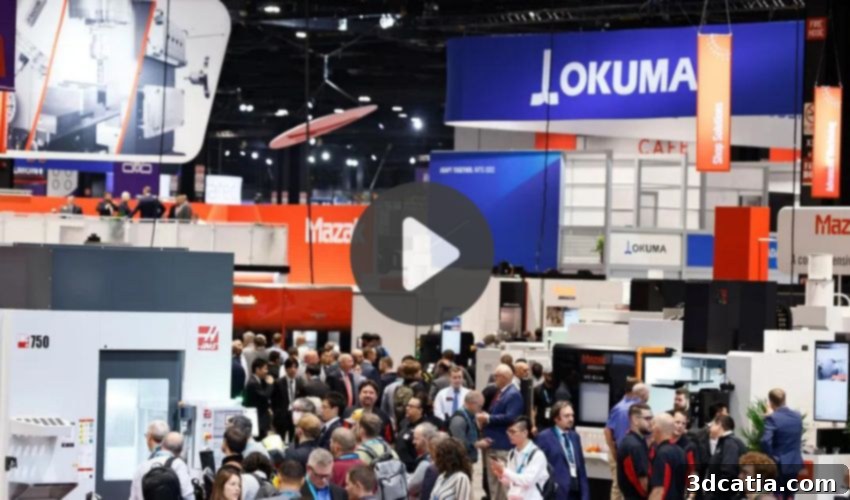
IMTS, the International Manufacturing Technology Show, stands as one of the most significant and influential manufacturing events in North America, drawing tens of thousands of professionals every two years. Its expansive showcase covers every facet of industrial production, and in recent editions, additive manufacturing has increasingly asserted its critical role. IMTS 2024 was no exception, marking a significant milestone for 3D printing technologies within the broader manufacturing ecosystem. This year, an impressive contingent of approximately 80 exhibitors from the 3D printing sector demonstrated their latest innovations, solutions, and advancements. Their prominent presence underscored the technology’s maturation and its growing integration into mainstream industrial processes.
For those who had the privilege of attending, the energy and innovation around additive manufacturing were palpable. For those who couldn’t make it to Chicago, or simply wish to relive the excitement, the official IMTS highlight reel offers an invaluable opportunity. This specially curated video beautifully captures the essence of the event, with additive manufacturing featuring prominently as a key driver of modern production. It’s a fantastic way to grasp the scale of the show, witness the cutting-edge developments firsthand, and understand why 3D printing is no longer a niche technology but a foundational pillar of future manufacturing strategies. The recap provides a concise yet comprehensive overview of the trends, partnerships, and breakthroughs that defined AM at IMTS 2024, making it an essential watch for anyone interested in the future of industrial production.
2. The Best of Both Worlds: A Deep Dive into the Mazak Hybrid Manufacturing Solution at IMTS
The concept of hybrid manufacturing represents a transformative leap in industrial production, seamlessly integrating additive and subtractive processes within a single machine platform. At IMTS 2024, Mazak, a globally renowned leader in machine tool manufacturing, showcased its state-of-the-art hybrid manufacturing machine, captivating attendees with its unparalleled capabilities. This innovative solution masterfully combines high-precision 5-axis machining with advanced additive technology, allowing manufacturers to deposit material and then precisely machine it, all within the same work envelope. The synergy between these two processes offers significant advantages, enabling the creation of highly complex geometries, internal features, and functional prototypes that would be impossible or exceedingly difficult to achieve with either method alone.
The ability to ‘add’ material through laser metal deposition or other additive techniques, and then ‘subtract’ with milling or turning operations, opens up a world of possibilities for design and production. This integrated approach not only streamlines workflows and reduces setup times but also enhances manufacturing flexibility, allowing for rapid iteration and optimization of parts. It’s particularly beneficial for repair applications, where new material can be added to worn components before being machined back to original specifications, extending the lifespan of valuable industrial assets. Furthermore, hybrid manufacturing facilitates the production of parts with varying material properties, combining different alloys or even functionally graded materials within a single component. The insightful interview from IMTS delves deeper into the technological nuances of Mazak’s hybrid system, explaining its operational benefits, potential applications across diverse industries like aerospace, medical, and tooling, and how it addresses some of the longstanding challenges in advanced manufacturing. This video is a must-watch for anyone interested in pushing the boundaries of what’s possible in precision manufacturing.
3. FLSUN Unleashed: A Head-to-Head Comparison of the T1, S1, and V400 3D Printers
FLSUN, a prominent Chinese manufacturer, has carved out a significant niche in the global 3D printing market with its diverse range of printers, each meticulously designed to cater to varying user needs and applications. From hobbyists seeking high-speed performance to small businesses requiring versatile production tools, FLSUN offers solutions that combine affordability with advanced features. In this illuminating video, Gloria takes us on a detailed journey, conducting a comprehensive head-to-head showdown between three of FLSUN’s most popular and distinct models: the FLSUN T1, S1, and V400. This comparison is invaluable for anyone looking to understand the nuances and differentiators within FLSUN’s product lineup, aiding in informed purchasing decisions.
The video meticulously examines crucial aspects such as print speed, build volume, and the unique features that set each 3D printer apart. The FLSUN V400, for instance, is renowned for its blazing fast print speeds, often achieved through its delta kinematics and advanced firmware, making it a favorite for users prioritizing rapid prototyping. The T1 and S1, while also performance-oriented, might offer different advantages in terms of build stability, material compatibility, or specific user interface enhancements. Understanding these differences—whether it’s the mechanical design contributing to speed, the precision of movements, the user-friendliness of the interface, or the types of filaments each machine handles best—is key to matching a printer to specific project requirements. This comparison goes beyond mere specifications, delving into the practical implications of each feature, and providing real-world insights into how these printers perform. Whether you’re a seasoned maker or new to the world of 3D printing, this detailed analysis of FLSUN’s range is an essential resource for optimizing your additive manufacturing workflow and achieving your desired results.
4. Redefining Metal 3D Printing: An Exclusive Interview with SPEE3D on Cold Spray Technology
SPEE3D, an innovative Australian manufacturer, has rapidly distinguished itself as a trailblazer in the field of metal additive manufacturing. Their proprietary cold spray additive manufacturing technology represents a significant departure from traditional high-temperature metal 3D printing processes, offering unique advantages that are transforming industrial applications. Cold spray technology involves accelerating metal powders to supersonic speeds and impacting them onto a substrate, where kinetic energy causes plastic deformation and metallurgical bonding. Unlike fusion-based methods, this process avoids melting the metal, thereby minimizing issues such as thermal distortion, residual stress, and changes in material microstructure, preserving the inherent properties of the feedstock material.
In this insightful interview, Byron from SPEE3D provides a comprehensive overview of not only the underlying principles of their technology but also its profound impact across various demanding industries. He elaborates on how cold spray enables the rapid production of dense, high-quality metal parts, often on-site and in challenging environments. The ability to print rapidly, often within minutes or hours, for parts that might otherwise take days or weeks through conventional supply chains, is a game-changer for applications requiring immediate solutions. Byron highlights key applications in sectors such as defense, where the technology is used for critical spare parts fabrication in remote locations; mining, for robust and wear-resistant components; and oil & gas, for repairing and manufacturing parts exposed to harsh operating conditions. A particular emphasis is placed on the technology’s remarkable ability to operate effectively in extreme conditions, making it invaluable for field deployments where traditional manufacturing infrastructure is unavailable. This interview offers a compelling vision of how SPEE3D is empowering industries to achieve unprecedented levels of agility, resilience, and operational efficiency through advanced cold spray metal 3D printing.
5. Paving the Way for Industrial Adoption: Certification of a 3D Printed Pressure Vessel
One of the most significant hurdles limiting the widespread adoption of 3D printed parts, particularly in highly regulated and safety-critical industries, is the complex process of certification and qualification. Ensuring that additively manufactured components meet stringent industry standards for performance, reliability, and safety is paramount. However, this video presents a compelling case study that demonstrates precisely how these obstacles can be overcome. Fronius Additive, a leader in welding and additive solutions, showcases a groundbreaking project involving the sample qualification of an additively manufactured pressure vessel—a component that demands exceptionally high standards of structural integrity and safety.
This pivotal video sheds light on a collaborative joint project that brought together the expertise of Fronius, Linde Engineering (a global leader in industrial gases and engineering), and TÜV Süd (one of the world’s leading technical service organizations). Together, these industry titans embarked on a mission to assess the applicability of the draft standard prEN 13445-14 for components of unfired pressure vessels produced via additive manufacturing. The standard prEN 13445-14 is critical for ensuring the safety and performance of pressure vessels, and adapting it for AM parts is a monumental step. The video details the rigorous testing protocols, comprehensive material characterization, and advanced simulation techniques employed to evaluate the performance of the 3D printed vessel. It highlights how the project meticulously addressed concerns regarding material consistency, porosity, surface finish, mechanical properties under various loads, and long-term durability. By successfully demonstrating that an additively manufactured pressure vessel can achieve the necessary certification, this project not only validates the robustness and reliability of industrial 3D printing but also provides a vital blueprint for future qualification efforts across other critical applications. This achievement signifies a major leap forward, inspiring confidence in additive manufacturing for the most demanding industrial environments and accelerating its integration into mainstream production processes for certified, high-performance components.
The continuous evolution of additive manufacturing, as highlighted by these compelling videos, truly underscores its transformative potential for the global industrial landscape. From its growing prominence at major events like IMTS 2024 to the development of sophisticated hybrid manufacturing systems and groundbreaking cold spray technologies, 3D printing is rapidly moving beyond prototyping into mainstream, high-value production. Perhaps most significantly, the successful certification of complex components like pressure vessels marks a crucial turning point, dismantling barriers to adoption in the most demanding sectors. These advancements collectively pave the way for more resilient supply chains, innovative product designs, and unprecedented manufacturing efficiency. We are witnessing a revolution, one print at a time.
What are your thoughts on these latest developments in additive manufacturing, particularly the impressive presence at IMTS 2024 and the significant strides in certification? We’d love to hear your insights! Share your comments below or engage with us on our LinkedIn, Facebook, and Twitter pages. To ensure you never miss out on the cutting-edge news and analyses from the world of 3D printing, remember to sign up for our free weekly newsletter here, delivered straight to your inbox. You can also explore our extensive library of videos and tutorials on our dedicated YouTube channel, where new content is regularly added to keep you informed and inspired!