
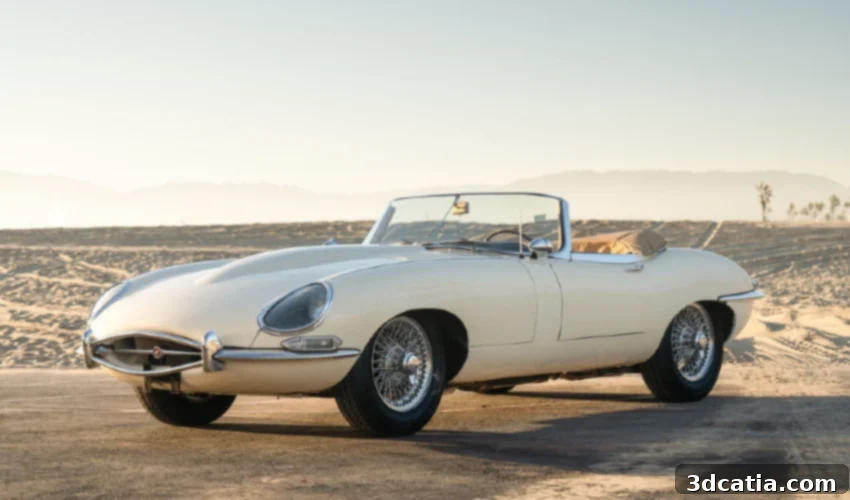
Revolutionizing Automotive Heritage: How 3D Printing is Breathing New Life into Classic Jaguar E-Types
The automotive industry stands as a pioneering sector in the adoption and integration of additive manufacturing technologies. From the meticulous engineering of high-performance modern vehicles to the delicate art of restoring automotive legends, 3D printing has proven its unparalleled versatility and efficiency. Renowned manufacturers like Porsche have leveraged this technology to produce critical engine components, such as pistons for its iconic 911 GT2 RS model, pushing the boundaries of performance and innovation. Similarly, Lamborghini embraced 3D printing for bespoke parts like the intricate air vents in its Sian Roadster, demonstrating the design freedom and customization capabilities. Even BMW has made significant commitments, establishing a dedicated additive manufacturing campus equipped with approximately 50 industrial 3D printers, underscoring the strategic importance of this technology. These instances clearly illustrate that additive manufacturing is not merely a transient trend but a fundamental shift that is rapidly expanding its footprint across various facets of the automotive world. The latest testament to this revolution, however, delves into the realm of timeless classics: the meticulous restoration of the revered Jaguar E-Type, a vehicle that ceased production decades ago, now benefiting from the precision of HP Jet Fusion 4200 technology.
Preserving Automotive Excellence: The Legacy of Eagle and the Jaguar E-Type
Nestled in the UK, Eagle is a distinguished company renowned for its exemplary work in restoring luxury Jaguar E-Type automobiles since its inception in 1984. The Jaguar E-Type, an undeniable automotive icon, captivated the world during its production run from 1961 to 1975, earning accolades for its breathtaking design, revolutionary performance, and enduring elegance. Eagle’s mission is not simply to restore these vintage masterpieces but to meticulously re-manufacture them to meet and even exceed modern standards of quality, safety, and performance, all while retaining their original soul and character. This intricate process demands an extraordinary level of craftsmanship and dedication, often requiring upwards of 4,000 hours to completely restore a single E-Type car. Such is the company’s commitment to perfection and its unparalleled reputation that its work has garnered widespread acclaim, perhaps best encapsulated by Jeremy Clarkson’s profound observation on BBC Top Gear: “I think this, by a long way, is the most beautiful car I have ever seen. It might actually be the most beautiful thing I have ever seen.” This sentiment perfectly articulates the profound impact of the E-Type and the exceptional quality of Eagle’s restorations.
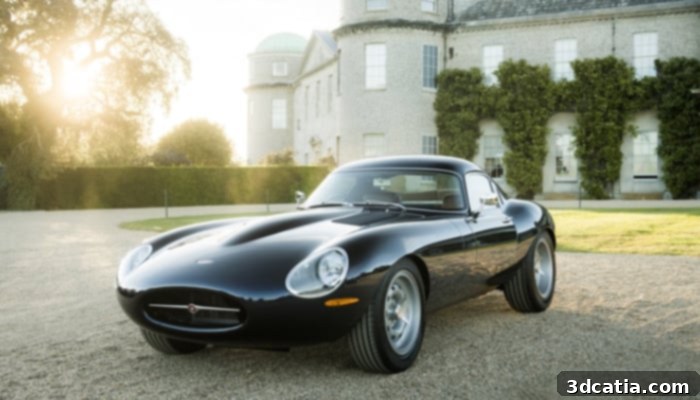
Image credits: Eagle
Modern Methods for Timeless Machines: Eagle Embraces 3D Printing
While the cars Eagle restores are quintessential classics, the manufacturing methodologies employed by the company are anything but traditional. Recognizing the inherent challenges and limitations of conventional production techniques for bespoke vintage car parts, Eagle embarked on a journey into the world of 3D printing technologies four years ago. This strategic shift has allowed them to overcome obstacles such as the prohibitive costs and lengthy lead times associated with creating molds for low-volume, specialized components. For much of this period, Eagle has maintained a productive collaboration with Graphite Additive Manufacturing Ltd., a respected 3D printing service provider based in the UK, leveraging their expertise to bring complex designs to life. However, a significant evolution in their additive manufacturing strategy occurred recently with their decision to integrate HP’s cutting-edge technology, specifically the HP Jet Fusion 4200 system, into their workflow.
The Power of HP Jet Fusion: Tailored Solutions for Bespoke Parts
Graphite Additive Manufacturing, in partnership with Eagle, harnesses the advanced capabilities of HP’s Multi Jet Fusion (MJF) 3D printing technology to produce custom, one-off, or small batch parts essential for the intricate restoration of the vintage Jaguar E-Types. Components such as air conditioning and heating air ducts, which are often complex in geometry and critical for both function and aesthetics, are ideal candidates for this manufacturing approach. Given that Eagle typically re-manufactures only between four to five of these exquisite cars annually, the demand for bespoke parts is inherently low volume. In such scenarios, traditional manufacturing methods, which often necessitate the creation of expensive and time-consuming designated molds, would represent an enormous waste of resources – both financial and temporal. Additive manufacturing, in contrast, perfectly aligns with these low production requirements, offering a highly agile and cost-effective solution. This makes AM an economically viable and superior production method for Eagle, ensuring that each restored Jaguar E-Type receives components crafted with precision and efficiency without incurring exorbitant costs associated with conventional tooling.
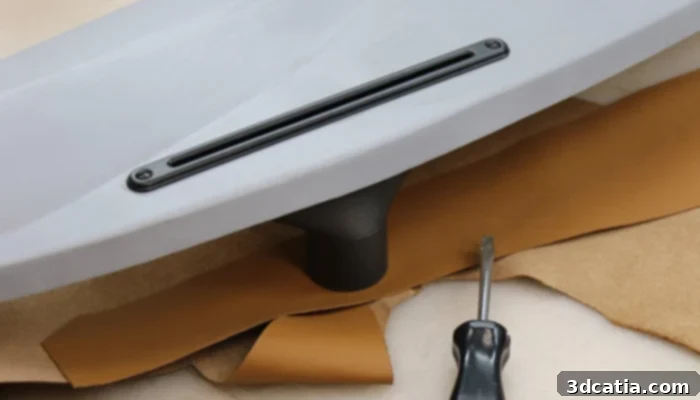
Image credits: Eagle/ HP
Enhanced Aesthetics, Durability, and Design Freedom
Paul Brace, the esteemed director at Eagle, elaborated on the transformative impact of this technological adoption. He stated, “Since we began using HP’s 3D printing technology for production, we’ve been impressed by the improvement in how these parts look as well as their durability. HP’s 3D platform consistently delivers the desired finish which is very important to our process. The heating ducts need to be attractive enough to sit on the dashboard, and these parts match the exceptional quality of our classic cars. Additional benefits we’ve seen include the wider scope for shapes that we can now create using 3D printing, and the weight reduction in materials on offer. This adds value for customers who are keen to keep parts as lightweight as possible.”
Brace’s comments highlight several key advantages. The superior surface finish offered by HP’s Multi Jet Fusion technology ensures that even functional components like heating ducts, which are visible within the car’s cabin, possess an aesthetic quality commensurate with a luxury classic vehicle. Durability is paramount for components in a vehicle intended for many more years of service, and 3D printed parts meet these rigorous standards. Furthermore, the inherent design freedom of additive manufacturing allows Eagle to create complex geometries and intricate designs that would be impossible or prohibitively expensive with traditional methods. This capability not only facilitates the faithful recreation of original components but also opens avenues for subtle enhancements or customized modifications that seamlessly blend with the E-Type’s vintage aesthetic. The ability to achieve significant weight reduction, without compromising structural integrity or performance, is another substantial benefit, appealing directly to discerning customers who value every aspect of their vehicle’s engineering and performance. This flexibility allows for optimizations that were unimaginable with original manufacturing techniques.
Echoing this enthusiasm for innovation, George Brasher, UK & Ireland Managing Director at HP, added, “It’s exciting to see Eagle’s commitment to innovation as they take advantage of the efficient, flexible design and customization enabled by HP 3D solutions for its market leading bespoke vehicles.” This sentiment underscores the strategic partnership between HP and Eagle, recognizing how advanced additive manufacturing solutions empower companies like Eagle to maintain their position at the forefront of specialized, high-quality bespoke vehicle restoration. The collaboration is a perfect synergy where cutting-edge technology meets timeless craftsmanship, ensuring that iconic vehicles like the Jaguar E-Type continue to grace our roads for generations to come, improved and preserved through modern ingenuity.
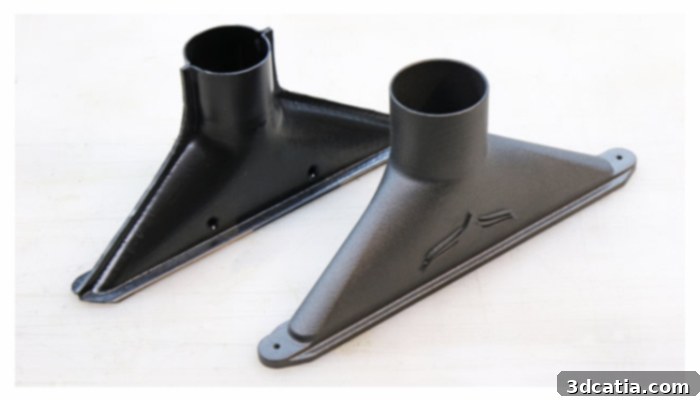
Image credits: Eagle/ HP
The Broader Impact: Additive Manufacturing and the Future of Classic Car Restoration
The pioneering work undertaken by Eagle, in collaboration with Graphite Additive Manufacturing and HP, offers a compelling glimpse into the future of classic car restoration. This application of 3D printing transcends mere parts replacement; it represents a paradigm shift in how automotive heritage is preserved and enhanced. For decades, the greatest challenge for owners and restorers of vintage vehicles has been the scarcity and eventual obsolescence of original parts. As these cars age, finding authentic components becomes increasingly difficult, often necessitating costly and time-consuming bespoke fabrication using outdated methods, or relying on deteriorating salvaged parts. Additive manufacturing directly addresses this critical issue by providing a digital manufacturing solution. Once a part is digitally scanned or designed, it can be produced on demand, anywhere in the world, ensuring that even the rarest components can be faithfully recreated.
Beyond simply replicating parts, 3D printing offers significant opportunities for engineering improvements. While maintaining historical accuracy is paramount for many restorers, the ability to print parts with optimized designs – perhaps subtly reinforcing weak points or integrating modern material properties for enhanced durability and performance without altering the external appearance – provides a valuable avenue for extending the life and enjoyment of these classic machines. This could mean components that are lighter, stronger, or more resistant to environmental degradation than their original counterparts, all while perfectly fitting into the existing structure. Moreover, the environmental benefits are noteworthy; on-demand manufacturing reduces waste associated with mass production and inventory, contributing to a more sustainable approach to vehicle maintenance and preservation. This innovative approach ensures that the cherished legacy of cars like the Jaguar E-Type is not only sustained but also future-proofed against the ravages of time and wear, allowing enthusiasts to experience these magnificent vehicles for many generations to come.
Conclusion: A New Era for Vintage Automotive Preservation
The story of the Jaguar E-Type’s restoration with HP Jet Fusion 4200 is a powerful illustration of additive manufacturing’s transformative potential. It underscores how cutting-edge technology can seamlessly integrate with the venerable world of classic automobiles, not just to repair, but to genuinely rejuvenate and enhance these masterpieces. Eagle’s commitment to innovation, coupled with the advanced capabilities of HP’s 3D printing solutions, has set a new benchmark in vintage car restoration, demonstrating that preserving automotive history can go hand-in-hand with embracing the future of manufacturing. This exciting development ensures that the timeless elegance and engineering marvel of cars like the E-Type will continue to captivate enthusiasts and inspire future generations, all thanks to the precision and flexibility offered by 3D printing. As technology continues to evolve, we can anticipate even more sophisticated applications, further solidifying additive manufacturing’s indispensable role in the preservation of our mechanical heritage.
What are your thoughts on vintage Jaguars being restored and improved with 3D printing? Share your insights and comments below, or engage with us on our Facebook and Twitter pages! Don’t miss out on the latest advancements and news in 3D printing; sign up for our free weekly Newsletter and have it delivered straight to your inbox!