
Pioneering Product Design: Alex Kimber on Additive Manufacturing, Distributed Design, and the Future of Creation
In our insightful #Working3D interview series, we delve into the most exciting and innovative professions within the dynamic landscape of Additive Manufacturing (AM). For this latest installment, we had the privilege of speaking with Alex Kimber, an accomplished industrial designer and the visionary founder of AKD. His industrial design studio, AKD, stands at the forefront of digital manufacturing, uniquely blending the vibrant spirit of maker culture with the rigorous discipline of professional design. Specializing in product design tailored for advanced digital manufacturing technologies, Alex shared invaluable perspectives on his distinctive approach, the daily challenges he navigates, the essential qualities that define a successful industrial designer, and the personal motivations that fuel his passion every single day.
Meet Alex Kimber: An Advocate for Decentralized Design
3DN: Could you introduce yourself and tell us about your journey into industrial design?
My name is Alex Kimber, and I reside in London. I identify primarily as an industrial designer, with a deep-seated passion for leveraging digital fabrication methods and actively striving for a future driven by distributed design. Currently, I balance my time between working with the reputable lighting manufacturer Aktiva and managing my own design studio, AKD. It’s within AKD that my focus on additive manufacturing truly takes center stage. I’ve been actively engaged with the maker movement for an extensive period, fostering a keen interest in bridging the gap between the precision and discipline of professional industrial design and the open, collaborative spirit of open-source hardware, local production initiatives, bespoke design solutions, and similar innovative approaches.
For me, the core objective is to responsibly and sustainably decentralize the entire design and manufacturing process. This means empowering local communities and individuals to participate in creation, moving away from centralized mass production where appropriate. My professional journey has been diverse, encompassing entrepreneurial ventures where I built and launched products from the ground up, as well as significant experience working as a design engineer specializing in architectural glazing products. This varied background has equipped me with a comprehensive understanding of both the aesthetic and structural demands of product development. Academically, I pursued an MSc in Design and Innovation at the Technical University of Denmark, following my undergraduate studies where I earned a BSc in Product Design Engineering from Brunel University. These educational experiences provided me with a robust theoretical foundation in design principles, engineering methodologies, and the innovation processes that drive modern manufacturing.
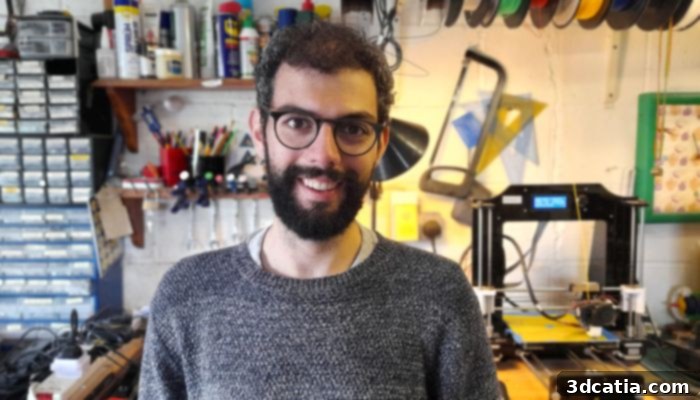
Through his design studio AKD, Alex Kimber champions the sustainable decentralization of design, pushing boundaries in digital manufacturing.
The Genesis of a Passion: Discovering Additive Manufacturing
3DN: How did your journey into the world of additive manufacturing begin, and what captivated you about it?
My fascination with additive manufacturing, or 3D printing as it was more commonly known then, truly ignited during my college years – what we refer to as high school in the UK. It was in a product design class where our teacher, while detailing various manufacturing technologies, first introduced us to the concept of 3D printing. Having already gained some practical experience with traditional machining techniques, I immediately grasped the immense potential of this new technology. From that moment, I was completely hooked. I eagerly volunteered my time after classes, assisting with the college’s RepRap 3D printer, which was a groundbreaking open-source project aimed at creating self-replicating machines. This hands-on experience deepened my understanding and fueled my curiosity about desktop fabrication.
My academic interest culminated in writing one of my most significant papers on AM, provocatively titled “What is the Future in Additive Manufacture?” Looking back, it’s quite remarkable how accurate my teenage estimations of the AM industry’s trajectory over the subsequent decade proved to be, particularly regarding its move towards industrial applications and greater accessibility. This early immersion solidified my commitment to the technology. While at university, I took the leap and purchased my very first 3D printer: the Printrbot Simple, constructed primarily from plywood. Compared to the sophisticated machines available today, it was, admittedly, a terrible contraption in terms of reliability and print quality. However, the sheer excitement of sending the first home axis command to that small, clunky device and watching it spring to life on my desk, building a physical object layer by layer, was unparalleled. That initial thrill has never truly faded; I still experience a distinct buzz every single time I send something to print and the machine begins its intricate movements – probably because, deep down, a part of me never quite expects it to actually work flawlessly. This enduring sense of wonder and excitement continues to drive my engagement with AM and its transformative capabilities in product development.
A Day in the Life: The Multifaceted Role of an Industrial Designer
3DN: Can you describe your current role and what a typical day looks like for an industrial designer focusing on digital manufacturing?
My current designation is industrial designer, but in reality, I find myself wearing many different hats throughout the day. In my primary role at Aktiva, I operate within a small, highly collaborative design team. Our main responsibility here is to develop a wide array of customizations for our existing product lines. This can range from minor configurations in size and finish – ensuring products meet specific aesthetic or spatial requirements – all the way to crafting entirely bespoke designs from scratch, catering to unique client visions. What sets this line of work apart from other design disciplines, such as graphic design or UX design, is the direct engagement with clients. Unlike scenarios where an account manager might serve as an intermediary, defining the brief and managing tasks for the design team, we, as industrial designers, liaise directly with our clients. This means a significant portion of my day involves being on the phone, actively communicating with various stakeholders to understand their needs, gather feedback, and present design concepts effectively.
The nature of our work necessitates meticulous design documentation and rigorous version control. When issuing numerous technical drawings to a variety of fabricators, contractors, and other partners, ensuring clarity, accuracy, and up-to-date information is paramount to prevent costly errors and delays. Beyond the creative and communicative aspects, a considerable amount of my time is spent delving into spreadsheets – I often jokingly refer to myself as a bit of an “Excel warrior.” This involves poring over detailed product costings, conducting complex technical calculations to ensure feasibility and performance, and meticulously managing production schedules. While it might sound less glamorous than pure design work, these administrative and analytical tasks are absolutely essential for the successful realization of any product, forming a critical, albeit sometimes monotonous, part of the job.
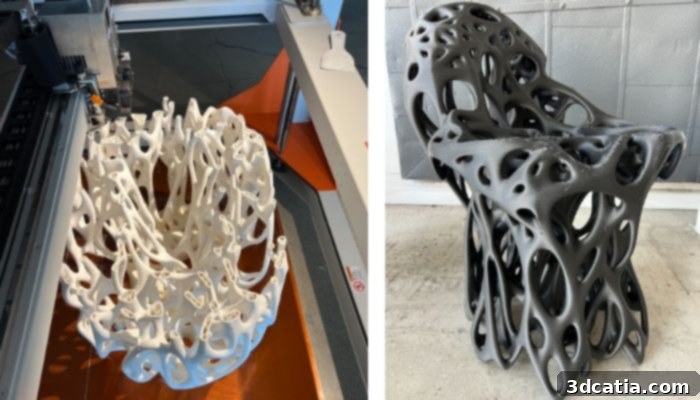
An industrial designer’s responsibilities extend far beyond mere aesthetics; they encompass customization, rigorous feasibility checks, and comprehensive documentation for seamless production.
In relation to additive manufacturing, a substantial part of our workflow involves numerous 3D printed components. These are typically outsourced to specialized print bureaus, necessitating a structured process: from the initial modeling of the parts, through careful ordering, to the crucial checking-in process upon their arrival. This final step is vital to ensure that all components are compliant with specifications, meet quality standards, and will seamlessly integrate into the assembly process, preventing any bottlenecks or rework. In my own studio work at AKD, my days are a dynamic blend of commercial duties, strategic marketing activities, and the often intricate process of “wrangling” with Grasshopper. Grasshopper, a visual programming language for parametric modeling, is instrumental in exploring complex geometries and generative designs that are particularly well-suited for additive manufacturing, allowing me to push creative boundaries.
Undoubtedly, the most engaging yet challenging aspect of my day is the iterative process of design exploration. This often involves having a tutorial playing on one screen, guiding me through new techniques or concepts, while simultaneously grappling with a complex, often tangled, Grasshopper file on the other. It’s a constant mental exercise of trying to translate an abstract idea into a tangible, modelable form, meticulously thinking through the exact steps and logic required. While it can certainly be frustrating at times, especially when encountering unforeseen computational hurdles, the ultimate satisfaction comes from learning how to overcome a particularly vexing problem and successfully realizing an innovative idea. That breakthrough moment, when a complex design finally comes together and is ready for production, is incredibly rewarding and a core driver of my passion. Then, as the day winds down, a calming chamomile tea is usually the perfect way to unwind and reflect on the day’s achievements and lessons.
Pathways to Industrial Design: Qualifications and Essential Skills
3DN: What qualifications and experience are typically required to pursue a career as an Industrial Designer, especially with a focus on AM?
Traditionally, a career in industrial design typically necessitates a bachelor’s degree in a relevant field such as industrial design, product design, or engineering. Many aspiring designers, myself included, opt to further their education by pursuing a master’s degree, which can provide specialized knowledge and a competitive edge in specific areas like advanced manufacturing or user experience design. However, it’s important to acknowledge that a purely academic route isn’t the only path. I firmly believe it should be entirely possible, and indeed valuable, to enter the design profession through a more vocational trajectory. Hands-on experience, apprenticeships, and self-taught skills, particularly in digital fabrication and software proficiency, can be just as crucial.
Regardless of the pathway, a significant amount of technical knowledge is indispensable. This includes understanding materials science, manufacturing processes (both traditional and digital), ergonomics, aesthetics, and basic engineering principles. Alongside this, strong “hard skills” are essential, particularly proficiency in industry-standard software packages. This encompasses not just CAD (Computer-Aided Design) for creating 3D models and technical drawings, but also rendering software for compelling visualizations, simulation tools for testing product performance under various conditions, and potentially CAM (Computer-Aided Manufacturing) for direct fabrication. A reputable university course typically guides students through these foundational areas. However, formal education often falls short in preparing designers for the practical, day-to-day realities of the business world. For instance, universities rarely teach you how to effectively manage the inherent conflicts of interest that can arise between fabricators striving for efficiency and clients demanding specific features or timelines. Nor do they typically cover the practical administrative work – from managing invoices and budgets to handling logistics and client expectations – that is crucial for running a small business or even navigating larger organizations. Therefore, securing work experience, even if it initially seems unrelated to design, can be incredibly invaluable. It provides practical insights into project management, communication, problem-solving under real-world constraints, and the often-overlooked business acumen necessary for a successful design career.
Navigating the Landscape: Key Challenges in AM Product Design
3DN: What are some of the biggest challenges you regularly encounter in your work as an industrial designer focusing on additive manufacturing?
Honestly, the most significant challenges often stem from the business side of things, rather than the pure design or technical aspects. Finding elegant technical solutions to complex problems is precisely what I’m trained to do, and being inspired to create groundbreaking new designs using additive manufacturing is undoubtedly my passion. The real difficulty lies in effectively communicating the tangible value and advantages of AM to various stakeholders and, crucially, to end customers, without resorting to overly technical jargon. Bridging this communication gap and articulating why AM is the optimal solution for a particular product or application requires a different skill set than pure engineering, demanding a focus on benefits over features.
Another considerable challenge has been accurately identifying which design solutions, leveraging AM, will ultimately prove to be commercially viable. A traditional design consultancy might receive a brief and then explore various manufacturing approaches to find the one that best suits the conceptual design solution. However, when your starting point is inherently the manufacturing approach – in my case, additive manufacturing – it can be incredibly difficult to translate the specific technical benefits of AM (such as geometric complexity, lightweighting, part consolidation, or on-demand production) into clear, demonstrable, and tangible value propositions that resonate with customers and justify the investment. This requires a deep understanding of market needs, cost structures, and economic realities, rather than just technical prowess.
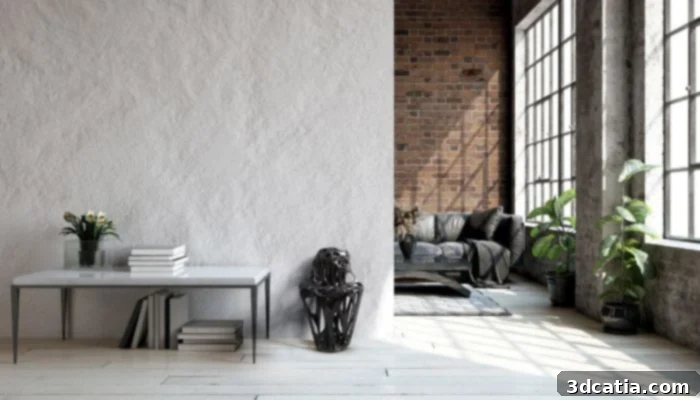
Achieving the optimal balance between extensive customizability and practical, functional use is a key consideration when designing components with additive manufacturing.
Consider customization, for example. Additive manufacturing inherently facilitates mass customization, which, on the surface, opens up truly amazing opportunities for personalized products across various industries. But the critical question remains: which products *should* be customized? Do customers genuinely desire every single item in their home to be entirely personalized, or are there specific contexts where personalization adds significant value, such as medical devices, specialized tooling, or unique aesthetic pieces? It boils down to finding the precise “right fit” – aligning what the technology is capable of offering with what people actually need, want, and are willing to pay for. And then, the subsequent challenge is communicating that value proposition in an accessible and compelling manner. This is often a hard feat for most engineers, myself included, who naturally gravitate towards discussing the intricate technical aspects of a solution rather than its broader market appeal or emotional connection to a user.
Furthermore, other challenges include navigating the evolving material landscape of AM. While new materials are constantly being developed, designers must contend with limitations in terms of strength, flexibility, heat resistance, and biocompatibility compared to traditionally manufactured materials. Post-processing requirements, which can include cleaning, support removal, sanding, or curing, can also add significant time, labor, and cost to AM projects, often undercutting the perceived speed and efficiency benefits of the printing process itself. Designers must also be acutely aware of the economic scaling of AM; while excellent for prototyping, low-volume production, and highly complex geometries, its cost-effectiveness can diminish significantly at higher volumes compared to injection molding or other mass production techniques. Understanding these nuances is crucial for making informed design decisions and setting realistic expectations for clients regarding lead times, costs, and material properties.
Expert Guidance: Advice for Aspiring AM Industrial Designers
3DN: What essential advice would you offer to someone aspiring to become an Industrial Designer with a specialization in additive manufacturing?
My advice for aspiring industrial designers looking to specialize in additive manufacturing is multifaceted, beginning with foundational technical skills and extending to a broader philosophical shift in approach. Firstly, and crucially, you should dedicate time to learning surface modeling software. Programs like Grasshopper, Blender, Maya, or CATIA are invaluable in the context of AM. While many university programs often focus predominantly on parametric CAD software, surface modeling allows for the creation of much more organic, complex, and free-form geometries that additive manufacturing excels at producing. These types of forms are critical for applications like lightweighting through intricate lattice structures, generative design explorations, and highly integrated functional components that cannot be easily produced otherwise. The good news is that there are abundant free or highly affordable online courses and tutorials available, so there’s no reason to delay – just start learning whenever you can.
Another critical consideration to internalize is that additive manufacturing, despite its incredible capabilities, has its limitations. Yes, it offers unparalleled geometric freedom compared to subtractive or formative methods, allowing for internal channels, complex overhangs, and variable densities. However, in the practical world of creating functional products that reliably work for people, the notion that you can simply “print anything you can imagine” is a pervasive misconception and fundamentally untrue. I can certainly envision numerous designs that, while conceptually exciting, are either not physically possible due to material constraints or printer capabilities, economically viable for the target market, or practically appropriate to be 3D printed with current technologies. Therefore, any designer working with this technology must engage in continuous dialogue with their technicians, engineers, and print bureaus. These experts possess invaluable insights into the specific capabilities and constraints of different AM processes, materials, and machines, covering aspects like minimum wall thickness, achievable tolerances, surface finish, and necessary support structures. By understanding these boundaries – what can and cannot be done, what works best, and what poses significant challenges – you may not only avoid costly mistakes but also discover even better, more optimized solutions to your design problems through informed collaboration. This iterative process of Design for Additive Manufacturing (DfAM) is paramount.
Crucially, additive manufacturing should not merely be viewed as just another manufacturing technology; it represents an entirely different manufacturing *category*. This necessitates a fundamental shift in mindset. The way you approach problem-solving changes drastically, your design constraints are different, and consequently, your entire workflows must adapt. For instance, AM allows for a much greater degree of geometric freedom, enabling designs like biophilic structures which mimic natural forms for improved aesthetics and function, or highly integrated parts that consolidate multiple components into one, reducing assembly time and part count. The workflow for modeling, iterating, and developing such a biophilic or highly optimized design would be radically different from that of a more traditional, mechanically designed solution. This difference extends from the choice of software you use, to the specific parameters and specifications you set for the printing process, and even to the type and detail of design documentation you produce, which might need to account for anisotropic material properties or support structure removal.
But this required shift in mindset extends even further than just how you design and make individual things. AM truly unlocks new paradigms for production. It allows for distributed production, enabling localized manufacturing closer to the point of need, and makes small batch scales economically feasible for highly customized or niche products. When we consider these aspects, we are really delving into systems thinking. This technology has the potential to fundamentally change the traditional relationship between designers and consumers, fostering greater collaboration and responsiveness to local demands. It also inherently challenges established, linear supply chains, promoting more agile, resilient, and potentially sustainable models by reducing transportation and inventory waste. So, my ultimate advice would be to cultivate an open mind to the vast, evolving potential of this technology, and to actively start thinking systemically about its broader implications for industry, society, and the environment. Embrace the disruption and innovation it offers, rather than trying to fit it into old paradigms of mass production.
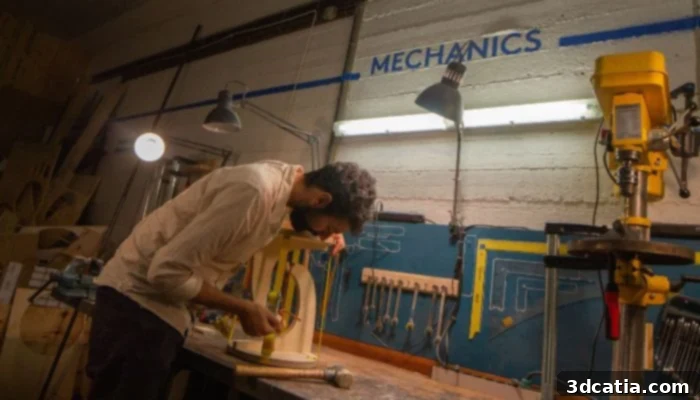
For an industrial designer leveraging additive manufacturing, a blend of insatiable curiosity and a clear understanding of AM’s practical limits is absolutely essential.
To discover more about Alex Kimber Design (AKD) and his pioneering work, you can visit his website here. We’d love to hear your thoughts: What do you envision as the evolving role of an industrial designer within the exciting field of additive manufacturing? Share your insights and perspectives in a comment below or connect with us on our social media channels: LinkedIn, Facebook, and Twitter! Don’t forget to sign up for our free weekly newsletter here to receive the latest 3D printing news and industry updates directly in your inbox. You can also explore all our engaging videos and interviews on our dedicated YouTube channel.
*All Photo Credits: Alex Kimber