
Revolutionizing Heritage Weaving: How 3D Printing Safeguards the Future of Harris Tweed
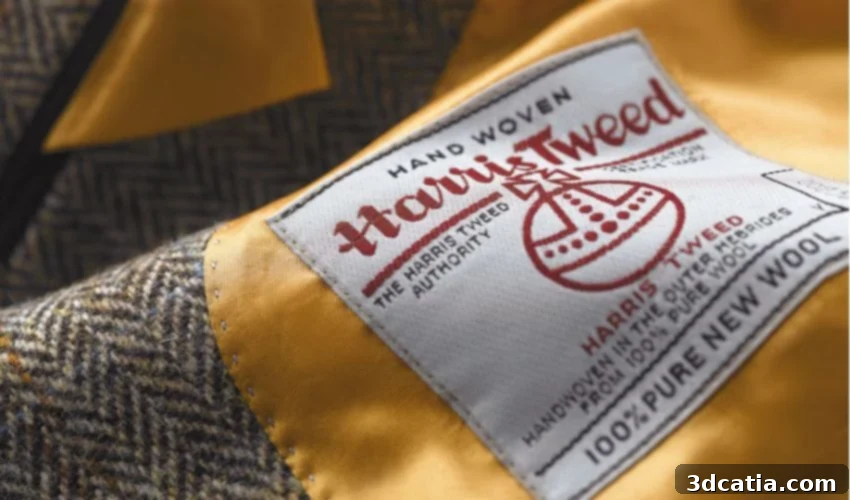
For centuries, the rugged Outer Hebrides of Scotland have been the sole home to a weaving tradition that has captivated the world: Harris Tweed. More than just a fabric, Harris Tweed is a testament to an enduring craft, meticulously hand-woven by islanders using virgin wool, dyed, spun, and finished in the Outer Hebrides. This intricate art, passed down through generations, is not only cherished but also legally protected by the Harris Tweed Act of 1993. This legislation dictates that only fabric meeting stringent criteria – specifically, being hand-woven by Outer Hebridean weavers at their homes – can bear the coveted Orb Mark and be officially called Harris Tweed. This commitment to tradition has ensured the authenticity and exceptional quality of the textile, earning it global recognition among discerning fashion houses and individuals alike. However, even the most deeply rooted traditions face modern challenges. In a remarkable blend of old and new, a significant innovation is now taking place within this time-honored craft: the looms central to Harris Tweed production are being reimagined and future-proofed with the transformative power of 3D printing, securing this precious heritage for generations to come.
The Harris Tweed industry is a vital part of the Outer Hebrides’ economy and cultural identity, with its distinctive woolen fabric exported to over 60 countries. Esteemed fashion designers and brands, including global giants like Vivienne Westwood and Dior, regularly incorporate Harris Tweed into their collections, a testament to its unparalleled quality, durability, and timeless appeal. Yet, the intricate production process behind this iconic fabric often remains unseen. At its heart lies a specialized loom, an engineering marvel composed of countless complex and interconnected components. While these traditional machines have served weavers faithfully for decades, their age and unique construction pose a significant logistical challenge: what happens when one of these essential, often bespoke, components inevitably breaks down?
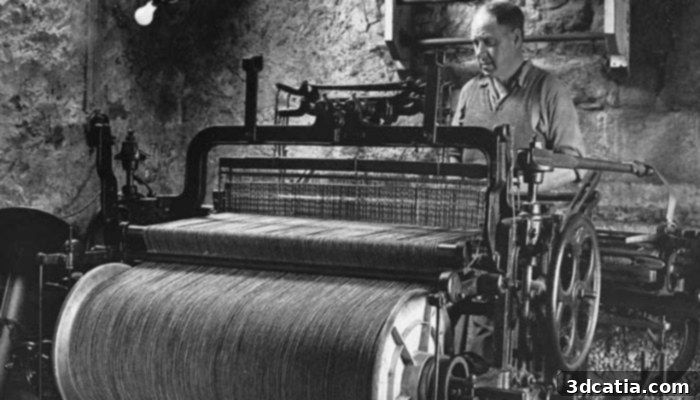
A traditional loom from the early 20th century, integral to the Harris Tweed weaving process.
The answer, until recently, has often been a frustrating and costly delay. Weavers frequently faced agonizing waits of up to six months for replacement parts to be manufactured and shipped, especially given the remote location of the Outer Hebrides. Such extended downtime could cripple a weaver’s productivity and income, creating immense pressure to find immediate, albeit unconventional, solutions. The ingenuity of these island weavers is legendary; they have always had to adapt and innovate to keep their looms operational, often resorting to creative, on-the-spot repairs. John Bennie, a veteran Harris Tweed weaver, eloquently describes the impact: “When a vital part of the loom breaks, it can halt production for weeks, which is incredibly frustrating. Finding a way to keep the loom running smoothly is essential.” His personal anecdote perfectly illustrates this resourcefulness: when a crucial component of his loom failed, he famously repaired it using a flywheel from his old Ford Ka car. This kind of ad-hoc problem-solving, while effective in the short term, highlights the urgent need for a more sustainable and efficient solution to loom maintenance and part replacement. The very survival of this treasured craft hinges on finding innovative ways to support its traditional machinery.
Integrating Innovation: How 3D Printing Transforms Loom Maintenance
Recognizing this critical challenge and the potential threat it posed to the traditional craft, Harris Tweed Loom Spares Co. embarked on a groundbreaking initiative. They announced a strategic collaboration with the National Manufacturing Institute of Scotland (NMIS), a part of the University of Strathclyde and the High Value Manufacturing (HVM) Catapult. This powerful partnership unites traditional craftsmanship with cutting-edge engineering expertise, aiming to revolutionize the way replacement parts for traditional Harris Tweed looms are designed, produced, and distributed. Their collective goal is to leverage additive manufacturing – commonly known as 3D printing – to enable local, rapid, and cost-effective production of these vital components, thereby safeguarding the industry’s future. This collaborative effort represents a significant step towards modernizing supply chains for heritage crafts, ensuring resilience and continuity.
At the NMIS Digital Factory, a dedicated project team has been diligently working to bring this vision to life. Their extensive research involved testing numerous advanced materials, carefully evaluating their suitability to create loom parts that are not only exceptionally durable but also capable of upholding the unwavering high quality standards for which Harris Tweed is renowned. This step is crucial, as even the slightest deviation in a loom component can profoundly impact the intricate weave, texture, and overall quality of the final woolen fabric. The team’s rigorous testing ensures that any 3D-printed parts will integrate seamlessly into the traditional machinery, maintaining the integrity and authenticity of the weaving process without compromise. This scientific approach ensures that innovation serves tradition, rather than undermining it, building a bridge between historical techniques and modern technological prowess.
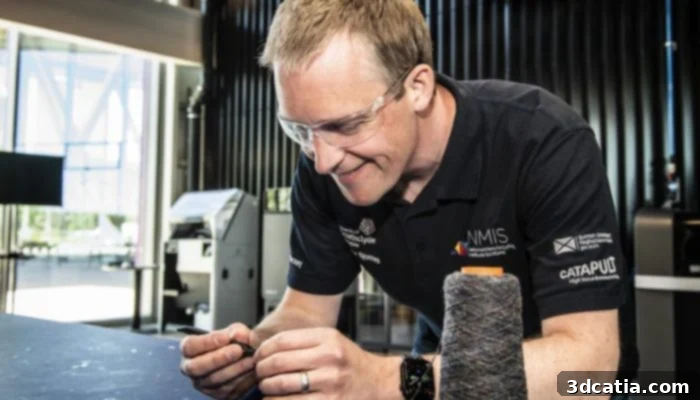
A member of the team tests a freshly 3D printed component, ensuring its quality and functionality for traditional looms (Photo Credit: NMIS).
One of the project’s most significant achievements has been the ingenious simplification and re-engineering of complicated loom components. A particularly complex part, which originally comprised seven individual sub-components, has been brilliantly redesigned. Through innovative engineering, it is now consolidated into just three 3D-printed parts, expertly crafted from a durable composite material. This simplification not only reduces complexity but also significantly streamlines the manufacturing process. Thanks to these intelligent modifications and the efficiencies of additive manufacturing, the cost of producing this new loom part assembly has plummeted by an astonishing 99% compared to its original, traditionally manufactured counterpart. Furthermore, these redesigned components can now be printed or repaired locally within a mere two hours, drastically cutting down the lead times that once plagued weavers. John Bennie, who was among the first to experience this transformative technology, enthusiastically affirms its impact: “It’s been great to be one of the first to try out the new 3D-printed assembly. The ability to get what we need, when we need it, will make a huge difference, as it means we can minimise downtime and focus on our work without unnecessary interruptions.” This immediate availability empowers weavers to maintain continuous production, ensuring their livelihoods and the consistent supply of Harris Tweed to the world, thereby strengthening the local economy.
Securing Heritage: The Future of Harris Tweed and the Outer Hebrides Community
The project emphasizes a collaborative approach, recognizing that the weavers themselves are the ultimate experts on their machinery. Scottish weavers are an integral part of the design and testing team, working closely with engineers to ensure that the new components meet real-world operational needs and seamlessly integrate with existing looms. This invaluable feedback loop ensures that the technological advancements remain deeply rooted in the practical realities of traditional weaving. Having successfully tested and optimized the initial set of components, the team is now poised to advance to the next critical phase: generalizing these components. This presents a unique challenge, as each loom, having undergone countless improvisational repairs and modifications over the years, possesses its own distinct quirks and characteristics. The ultimate goal, therefore, is to create adaptable, “plug-and-play” parts that are not only easy to install but also robust enough to ensure the enduring integrity of the time-honored Harris Tweed weaving process across a diverse range of existing looms.
The preservation of traditional craftsmanship, such as Harris Tweed weaving, faces multifaceted threats in the modern era. Beyond the inherent fragility of aging machinery, the rapid shift towards “fast fashion” and mass production often overshadows the value of slow, artisanal processes. This is where innovation, like the integration of 3D printing, becomes not just beneficial, but essential for survival. Kelly McDonald, Operations Manager at the Harris Tweed Authority, articulates the delicate balance between heritage and progress: “We take pride in our craftsmanship and tradition, but we also know that innovation is vital for keeping our industry strong for the generations to come. Working with NMIS is a significant step forward in future-proofing the looms critical to the production of Harris Tweed®. With the ability to replace parts quickly, easily, and affordably, our weavers can focus on what they do best without worrying about delays. This not only safeguards the future of our fabric but also supports the livelihoods of the island community who dedicate their skills to preserving the craft.” This sentiment underscores the profound impact of this project, extending far beyond mere mechanical repair to encompass the cultural and economic well-being of the entire Outer Hebrides community, ensuring its vibrant continuation.
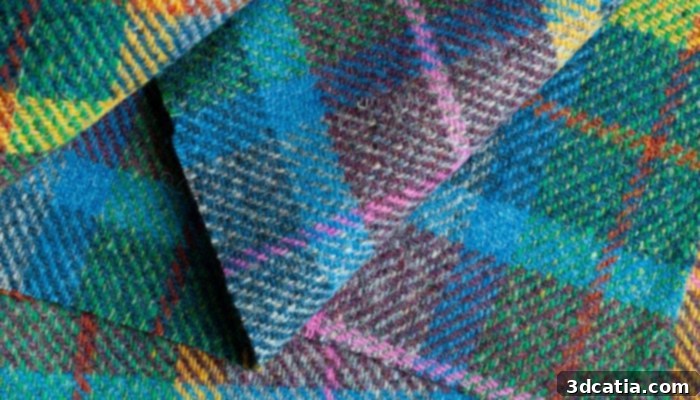
The hand-woven Harris Tweed is known worldwide for its exceptional quality and heritage.
This inspiring narrative brilliantly showcases the powerful synergy between age-old tradition and cutting-edge technology. It offers an impressive glimpse into the transformative potential of additive manufacturing when thoughtfully applied to sustain and elevate traditional crafts. By embracing 3D printing, the Harris Tweed industry is not just repairing old looms; it is actively weaving a more robust, sustainable, and economically resilient future for its unique product and the community that creates it. This collaboration demonstrates how modern innovation can serve as a guardian of heritage, ensuring that the cherished art of Harris Tweed weaving continues to thrive for centuries more. This model could also inspire other traditional industries facing similar challenges, proving that technological adoption can be a powerful tool for cultural and economic preservation. For more detailed information on this pioneering project, you can find further insights HERE.
What are your thoughts on Harris Tweed’s innovative embrace of 3D printing technology? We invite you to share your perspectives in a comment below or join the conversation on our LinkedIn or Facebook pages! Don’t forget to sign up for our free weekly Newsletter to receive the latest 3D printing news directly in your inbox. You can also explore all our videos on our YouTube channel.
*Cover Photo Credits: Harris Tweed Authority