

Gulf Wind Technology Revolutionizes Wind Turbine Design with Stratasys SLA 3D Printing
In a significant stride for renewable energy and advanced manufacturing, Gulf Wind Technology (GWT), a pioneering American company dedicated to advancing wind turbine rotor development, announced a groundbreaking partnership on November 20th. GWT has integrated Stratasys additive manufacturing solutions, specifically the Stratasys Neo stereolithography (SLA) technology, into its core operations. This strategic adoption is fundamentally transforming the way GWT designs, tests, and refines wind turbine models, dramatically accelerating the entire development cycle for critical wind tunnel prototypes. This collaboration underscores a growing trend where sophisticated 3D printing technologies are becoming indispensable tools in the quest for more efficient and robust wind energy solutions.
GWT’s innovative use of 3D printing for wind energy equipment production is part of a broader industry shift. For years, additive manufacturing (AM) has been progressively leveraged for rapid prototyping and creating highly customized, complex parts across various sectors of the wind energy industry. This trend is not new, but its adoption is gaining momentum and scale. For instance, industrial giants like General Electric began 3D printing large-scale wind turbine components as early as 2019, recognizing the immense potential for customization and lead-time reduction. Furthermore, innovative startups such as Orbital Composites have made headlines by utilizing on-site, large-scale additive manufacturing to construct entire wind turbines, including blades, foundations, and towers, backed by crucial funding from the US Department of Energy. These examples highlight a clear trajectory: 3D printing is no longer just for small prototypes but is increasingly a viable method for producing functional, structural components within the renewable energy landscape, pushing the boundaries of what’s possible in sustainable power generation.
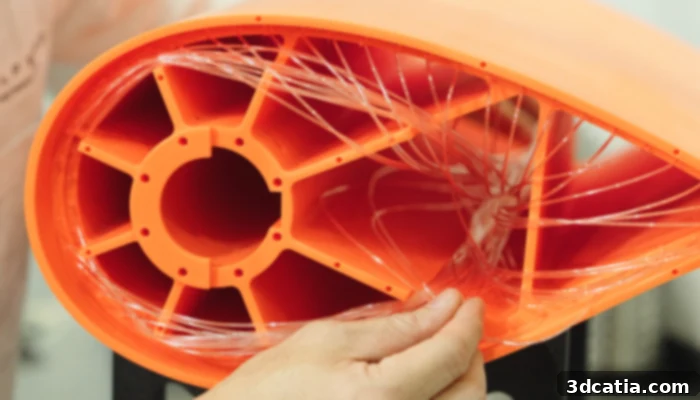
GWT can fabricate wind tunnel models dramatically faster with SLA technology, enhancing development cycles.
So, why are these leading companies, from established industry players to agile startups, increasingly turning to advanced additive manufacturing technologies? The allure stems from several compelling advantages that traditional manufacturing methods simply cannot match. Primarily, 3D printing’s inherent ability to create highly complex parts or functional prototypes with unprecedented speed and at a significantly lower price point is a major draw in this capital-intensive sector. For GWT’s demanding wind tunnel models, the impact of additive manufacturing has been nothing short of staggering. What once was a laborious design and iteration process, requiring 30 to 40 days to finalize a single model for testing, can now be completed in a mere three to four days. This tenfold reduction in lead time translates directly into faster innovation cycles, allowing engineers to test more hypotheses, identify optimal designs quicker, and bring superior wind turbine technologies to market at an accelerated pace, ultimately driving the global transition to clean energy.
Beyond Speed: Enhancing Design Complexity and Data Generation
While the remarkable gains in efficiency and speed are undeniable benefits of adopting the Stratasys Neo SLA system, they are far from the only advantages GWT is realizing. The true power of additive manufacturing lies in its capacity to unlock design freedoms that were previously impossible with conventional fabrication techniques. James Martin, CEO of Gulf Wind Technology, eloquently articulated this transformative aspect: “Additive manufacturing allows our engineers to design internal structures, and pressure taps directly into our test models, which we couldn’t achieve with traditional methods. By leveraging the Stratasys Neo® SLA system we can generate far more data in a shorter time. This has enabled us to run our design process with more rigor, become more efficient, and take on business that we previously had to turn away.”
This ability to embed intricate internal geometries and pressure taps directly within the printed models is revolutionary for aerodynamic testing. Traditional manufacturing often necessitates assembling multiple components or laboriously machining complex channels, which is time-consuming, expensive, and can introduce inaccuracies. With SLA, these features are integral to the print, ensuring precision and structural integrity. This allows GWT’s engineers to collect far more comprehensive and accurate data during wind tunnel tests, providing deeper insights into aerodynamic performance and structural behavior. Such detailed feedback loops enable rapid design optimization, validating theoretical models with real-world empirical data, and ultimately leading to the development of more aerodynamically efficient and reliable wind turbine rotors. The result is a significant competitive edge for GWT, allowing them to expand their capabilities and undertake more ambitious projects than ever before.
The Critical Role of Materials in High-Performance 3D Printing
The success of GWT’s wind tunnel testing hinges not just on the advanced SLA technology, but also on the high-performance materials used in the printing process. GWT strategically employs Stratasys’ Somos PerFORM Reflect material to print its intricate wind turbine models. This specific resin is highly favored for its exceptional mechanical and thermal properties, which are absolutely vital for the rigorous demands of wind tunnel testing. Somos PerFORM Reflect boasts high strength, ensuring the models can withstand significant aerodynamic forces without deformation or failure during tests. Its inherent stiffness is crucial for maintaining precise geometries and preventing unwanted flex, which could skew critical aerodynamic data. Furthermore, its excellent temperature resistance is paramount, as wind tunnels can experience varying thermal conditions, and material stability under these conditions is key to consistent and accurate results.
Beyond its impressive mechanical and thermal characteristics, Somos PerFORM Reflect also offers practical benefits in terms of ease of handling and post-processing. After printing, models often require cleaning, curing, and sometimes surface finishing. A material that simplifies these post-processing steps contributes significantly to the overall efficiency of the workflow, further reinforcing the speed benefits of the SLA system. The combination of Stratasys’ robust SLA hardware and high-performance, application-specific resins like Somos PerFORM Reflect creates a powerful synergy that enables GWT to produce highly accurate, durable, and functional wind tunnel models quickly and reliably, pushing the boundaries of wind energy innovation.
An Unlikely Source of Inspiration: Cross-Industry Innovation
The decision to adopt SLA technology for wind turbine development was a truly innovative choice for Gulf Wind Technology, demonstrating a forward-thinking approach to engineering challenges. What’s particularly fascinating about this strategic pivot is its origin story: GWT’s engineers drew their initial inspiration from observing the sophisticated application of 3D printing in the highly competitive world of Formula 1 racing. In F1, rapid prototyping and aerodynamic testing using additive manufacturing are standard practices, allowing teams to quickly iterate and optimize car designs for maximum performance. Recognizing the parallels between the aerodynamic challenges in motorsports and those in wind turbine design, GWT engineers astutely identified the immense potential of this technology for their own sector.
This cross-industry inspiration highlights a crucial aspect of modern innovation: groundbreaking solutions often emerge from applying proven technologies from one field to entirely different domains. The lessons learned from F1’s pursuit of marginal gains in aerodynamics and structural efficiency translated perfectly into GWT’s mission to enhance wind turbine performance. This innovative leap has enabled GWT to dramatically accelerate their design process, allowing them to experiment with more radical geometries and test new aerodynamic concepts with a speed and precision previously unattainable, ultimately paving the way for more efficient and powerful wind energy systems.
A Strategic Partnership Driving the Future of Wind Energy
The partnership between Gulf Wind Technology and Stratasys exemplifies how collaborative efforts and advanced technology adoption can propel an industry forward. Rich Garrity, Chief Business Unit Officer at Stratasys, eloquently summarized the impact of this collaboration: “Our work with Gulf Wind Technology demonstrates how manufacturers are adopting additive manufacturing where it makes the most sense for their business. By leveraging its unique advantages, Gulf Wind Technology can rapidly prototype and test complex designs, greatly improving their efficiency and ability to innovate.” This statement underscores a critical paradigm shift: additive manufacturing is not merely a tool but a strategic enabler that empowers companies to achieve previously unreachable levels of design freedom, speed, and overall innovation. For GWT, this translates into a tangible competitive advantage in the rapidly evolving wind energy sector, allowing them to lead the charge in developing the next generation of high-performance wind turbine rotors.
The future of wind energy relies heavily on continuous innovation, pushing the boundaries of efficiency, durability, and cost-effectiveness. GWT’s adoption of Stratasys’s SLA technology is a clear indicator of how advanced manufacturing techniques are becoming foundational to these efforts. By dramatically reducing development cycles, enabling complex internal structures for superior data collection, and leveraging high-performance materials, GWT is not only optimizing its own operations but also contributing significantly to the broader advancements in renewable energy technology. This symbiotic relationship between advanced manufacturing providers like Stratasys and innovative engineering firms like GWT is set to define the trajectory of sustainable energy solutions for years to come. To delve deeper into GWT’s pioneering use of SLA technology and their contributions to wind energy, interested readers are encouraged to visit the company’s website here for more detailed insights.
Join the Conversation on 3D Printing and Wind Energy
What do you think of Gulf Wind Technology’s groundbreaking integration of additive manufacturing into their wind turbine development process? How do you foresee 3D printing further shaping the future of the renewable energy sector? We invite you to share your thoughts and insights by leaving a comment below or engaging with us on our LinkedIn, Facebook, and Twitter pages. Don’t miss out on the latest advancements and breaking news in the additive manufacturing world! Be sure to sign up for our free weekly Newsletter here, delivering the most pertinent 3D printing news straight to your inbox. Additionally, you can explore all our exclusive videos and in-depth content on our official YouTube channel for a visual journey into the innovations shaping our future. Your engagement helps foster a vibrant community dedicated to exploring the transformative potential of 3D printing across all industries.
*All Photo Credits: Business Wire