
Weekly 3D Printing News: Advancements in Ocean Conservation, Aerospace, Rail, and Post-Processing
Welcome to this week’s edition of #3DEXPRESS, your comprehensive update on the most impactful news and developments from the dynamic world of additive manufacturing. This week, we explore groundbreaking collaborations and significant technological enhancements that are pushing the boundaries of what’s possible with 3D printing. We’ll start by looking at QOROX’s innovative partnership with CyBe Construction, leveraging 3D printing to create artificial reefs, a crucial step towards promoting marine biodiversity and facilitating habitat reconstruction for a multitude of marine species. Following this, American industrial giant Honeywell has partnered with French manufacturing specialist Prodways to revolutionize the production process for its advanced turboprop engines, showcasing additive manufacturing’s critical role in high-stakes industries. Furthermore, NEVO3D and KIMYA are introducing a pioneering new material specifically designed for the rail industry, capitalizing on the immense benefits of 3D printing for critical repairs and component fabrication. Finally, we’ll examine Solukon’s latest update to its SFM-AT350 Solution, significantly enhancing its capabilities with a range of technical improvements. Let’s dive into these exciting innovations!
3D Printing for Ocean Conservation and Habitat Restoration
The innovative application of 3D printing technology is increasingly being harnessed as a powerful tool for environmental stewardship, playing a pivotal role in developing sustainable recycling solutions and, most notably, in protecting our fragile oceans and their invaluable biodiversity. A compelling illustration of this transformative potential can be found in a visionary project spearheaded by Eke Panuku and QOROX in New Zealand. This collaborative effort magnificently demonstrates the innovative capabilities of concrete 3D printing in environmental restoration.
Working in close partnership with CyBe Construction, these three pioneering entities have successfully embarked on an ambitious initiative to create artificial coral reefs. These meticulously designed and 3D printed structures are not merely decorative elements; they are strategically engineered to serve as vital microhabitats for a diverse array of marine species. By mimicking the complex structures of natural reefs, these 3D printed concrete formations provide essential shelter, safe breeding grounds, and crucial feeding areas, thereby playing a fundamental role in the conservation and revitalization of marine ecosystems. Traditional methods of reef creation are often labor-intensive, costly, and lack the precision required to replicate natural complexities. However, additive manufacturing offers unparalleled design freedom, allowing for intricate geometries that enhance habitat complexity and ecological functionality. This approach not only accelerates the restoration process but also provides a more sustainable and scalable solution for mitigating the widespread damage caused by climate change, pollution, and destructive fishing practices to natural coral systems globally.
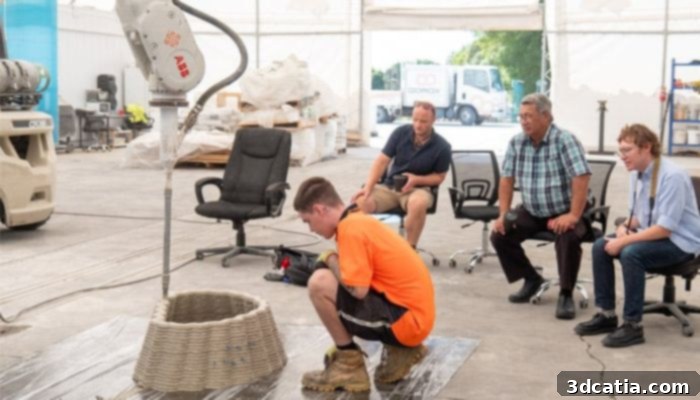
(Photo Credits: QOROX)
Honeywell Partners with Prodways for Advanced Turboprop Engine Manufacturing
The American multinational conglomerate Honeywell, a globally recognized leader renowned for its cutting-edge solutions across critical sectors such as nuclear, aerospace, and construction, has strategically engaged with the acclaimed French manufacturer Prodways. This significant collaboration aims to dramatically enhance and streamline the manufacturing process for Honeywell’s sophisticated turboprop engines, a move that underscores the growing reliance on advanced additive manufacturing in highly regulated and demanding industries.
At the heart of this partnership lies the adoption of ceramic 3D printing technology, specifically utilized for the intricate design and production of molds essential for casting turbine blades. Historically, Honeywell, like many in the aerospace industry, relied on the conventional lost-wax casting process. While effective, this traditional method is notoriously time-consuming, expensive, and often limits design complexity, thereby impacting innovation cycles. The transition to ceramic 3D printing marks a paradigm shift. According to the collaborative teams, this revolutionary approach now enables them to manufacture a turbine blade in an astonishing 7 to 8 weeks, a monumental improvement when compared to the one to two years previously required. This drastic reduction in lead time not only translates into substantial cost savings but also significantly accelerates product development and market deployment.
Beyond the impressive speed and cost efficiencies, these advanced 3D printed ceramic molds offer superior material properties. They exhibit significantly enhanced resistance to wear and corrosion, crucial factors in the high-temperature and high-stress environments of turboprop engine manufacturing. Furthermore, the precision and design freedom afforded by additive manufacturing allow for the creation of more complex geometries and optimized internal structures within the molds themselves. This capability, in turn, facilitates a whole series of comprehensive tests and rigorous validations to be carried out much more easily and efficiently, ensuring the highest standards of quality and performance for the final turbine blades. This collaboration exemplifies how 3D printing is not just a tool for prototyping, but a transformative force in industrial production, driving innovation, reducing costs, and accelerating advancements in mission-critical applications.
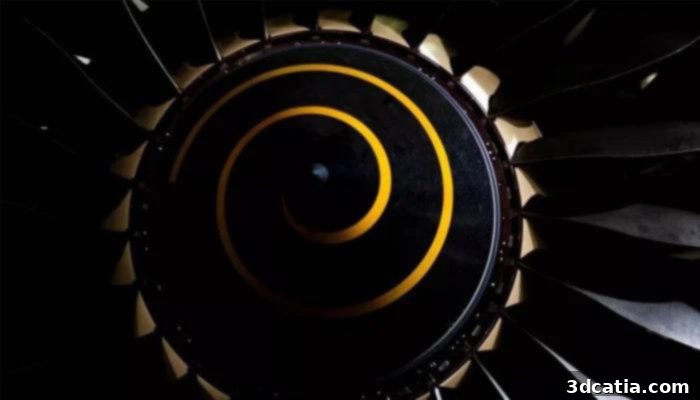
(Photo Credits: Honeywell)
NEVO3D and KIMYA Introduce New Certified Material for the Rail Industry
In a significant development for the transportation sector, NEVO3D (formerly known as EVO-tech) and materials manufacturer KIMYA have jointly announced the launch of a revolutionary new material specifically engineered for the demanding requirements of the rail industry. This pioneering advancement is strategically timed to capitalize on the rapidly expanding adoption of 3D printing for the repair of existing components and the efficient production of spare parts that are no longer manufactured using traditional methods. The ability to rapidly produce specialized components on demand not only helps to extend the operational lifespan of critical train parts but also dramatically facilitates more efficient and responsive maintenance schedules, minimizing downtime and optimizing operational costs.
However, the integration of new materials into the rail industry is subject to stringent regulatory oversight. All materials must rigorously comply with current international standards, particularly the critical fire safety standard EN-45545-2 R1/HL3, which governs the fire protection requirements for railway vehicle components. Recognizing this paramount need for safety and compliance, NEVO3D and KIMYA collaborated extensively to develop a certified material tailored specifically for additive manufacturing applications within trains. Their innovative solution, built upon a robust polycarbonate and E-140 base, offers an impressive array of benefits. Most notably, it promises significant cost savings of up to 80%. These substantial reductions are achieved through several key factors: lower material costs compared to traditional manufacturing alternatives, reduced waste, and a diminished requirement for highly specialized 3D processing printers, making the technology more accessible and economically viable for railway operators.
The primary objective of this strategic partnership is to provide robust support to the Austrian Federal Railways (ÖBB) in achieving their operational efficiency and sustainability objectives. Beyond this, the collaboration aims to deliver a portfolio of highly promising material solutions for the broader global railway industry. This innovation not only addresses immediate maintenance challenges but also paves the way for a more sustainable and agile future for rail transport, demonstrating the profound impact of advanced materials and additive manufacturing in a vital industrial sector where safety, durability, and efficiency are paramount.
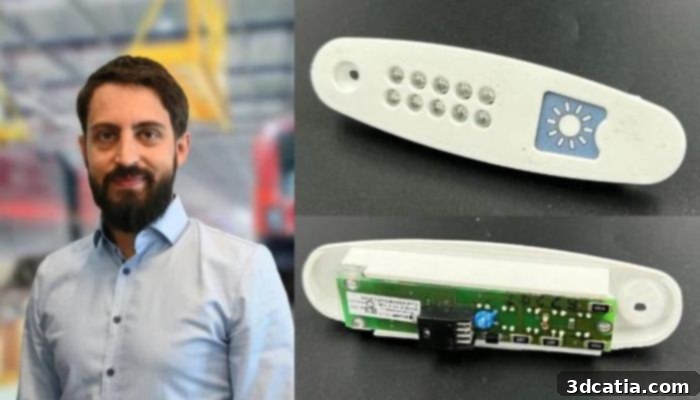
(Photo Credits: ÖBB)
Solukon Enhances SFM-AT350 Solution for Increased Post-Processing Capacity
Launched in October 2021, the SFM-AT350 post-processing solution developed by Solukon has quickly become a cornerstone in the additive manufacturing workflow. Now, Solukon has announced a significant upgrade to this acclaimed system, designed to offer even greater capacity and versatility. This depowdering system, critical for cleaning intricate 3D printed parts, can now efficiently handle larger and substantially heavier structures, addressing a key demand from industries working with industrial-scale additive manufacturing.
Initially, the SFM-AT350 was engineered to process parts weighing up to 60 kg and with dimensions up to 350 mm along the X-axis. The latest iteration of the SFM-AT350 represents a substantial leap forward: it can now comfortably manage parts weighing up to 100 kg. Furthermore, its processing envelope has been expanded to accommodate larger geometries, now supporting dimensions of 400 x 400 x 400 mm or an alternative configuration of 500 x 280 x 400 mm. This enhanced capability makes the SFM-AT350 suitable for a much broader range of industrial components, increasing throughput and efficiency for manufacturers.
A remarkable engineering feat of this new upgrade is that these capacity improvements were achieved by cleverly adapting the arm design within the existing framework, without sacrificing the original chamber volume or increasing inert gas consumption. This optimized design ensures that users benefit from expanded capabilities while maintaining cost-effective operation and environmental efficiency. Moreover, the updated SFM-AT350 solution now boasts enhanced compatibility with leading 3D printers, including the renowned EOS M 400 and Nikon SLM® 500 systems. This expanded compatibility makes it an ideal and highly flexible post-processing solution for medium-sized parts produced across a variety of demanding additive manufacturing applications. According to the expert team at Solukon, these strategic improvements firmly position the SFM-AT350 as an optimal solution for the critical, complex components found in high-stakes industries such as aerospace and medical, where precision, reliability, and efficient post-processing are absolutely paramount.
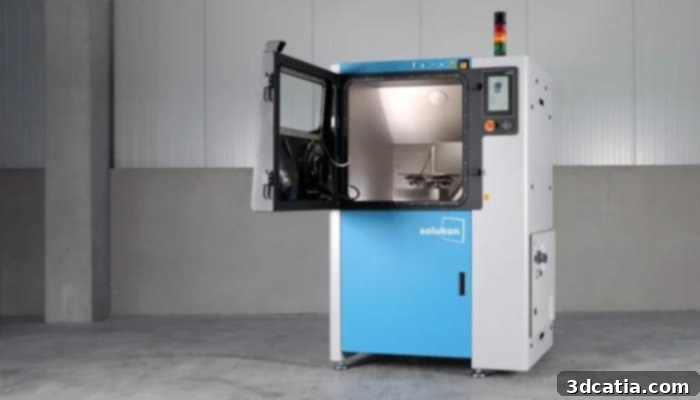
(Photo Credits: Solukon)
These innovations underscore the ever-evolving landscape of additive manufacturing and its profound impact across diverse sectors. What do you think of the ocean conservation efforts spearheaded by QOROX, or Honeywell’s groundbreaking shift in turboprop engine production? We invite you to share your thoughts and opinions in a comment below or join the conversation on our official LinkedIn, Facebook, and Twitter pages! To stay informed about the very latest in 3D printing news and insights, don’t forget to sign up for our free weekly newsletter here , delivered straight to your inbox! You can also find all our engaging videos and in-depth discussions on our dedicated YouTube channel.