
Beyond Aesthetics: MIT’s Cilllia Unlocks Functional 3D Printed Hair, Fur, and Micro-Structures
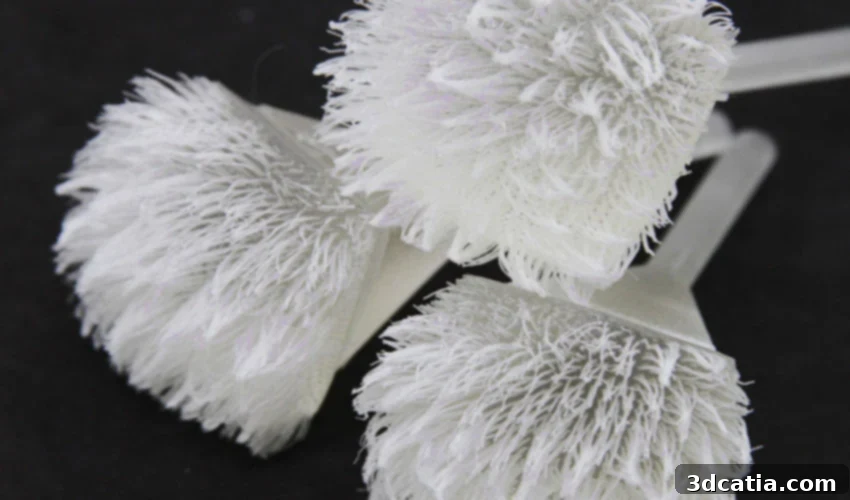
The Massachusetts Institute of Technology (MIT), particularly its renowned Media Lab, has consistently pushed the boundaries of innovation, especially in the realm of additive manufacturing. Known for transforming groundbreaking research into tangible, often inspiring, projects, MIT continues to surprise the world with its inventive applications of 3D printing. A prime example of their pioneering spirit was the development of the G3DP2 system, a sophisticated technology capable of 3D printing glass, which captivated the industry in January of a previous year. Following this trajectory of visionary design and engineering, MIT embarked on another ambitious endeavor in 2016: Project Cilllia. Spearheaded by Professor Hiroshi Ishii and developed by the Tangible Media Group, a core component of the MIT Media Lab, Cilllia sought to bridge the digital and physical worlds by imbuing digital information with dynamic physical forms. This project specifically delves into the intricate structure and multifaceted purpose of hair, presenting a unique application of 3D printing that, while not widely discussed, holds immense potential for numerous future innovations.
The Uncharted Territory: 3D Printing Fine, Hair-Like Structures
Despite the remarkable advancements in 3D printing technology, enabling the fabrication of an astonishing array of objects, certain features continue to pose significant challenges. Among these are naturally occurring structures like hair, fur, and other dense arrays of extremely fine, delicate elements. The complexity involved in designing and printing such features is immense. Conventional methods, typically relying on CAD (Computer-Aided Design) software, struggle with the sheer computational demands. Imagine trying to digitally draw, model, and prepare thousands upon thousands of individual strands, each with unique characteristics and orientations – the processing power and time required would be prohibitive, rendering the task practically impossible for intricate designs. This limitation highlights a critical gap in the capabilities of traditional additive manufacturing, preventing the faithful replication or novel creation of biological-inspired textures and functional surfaces.
Introducing Cilllia: A Novel Approach to Micro-Feature Design
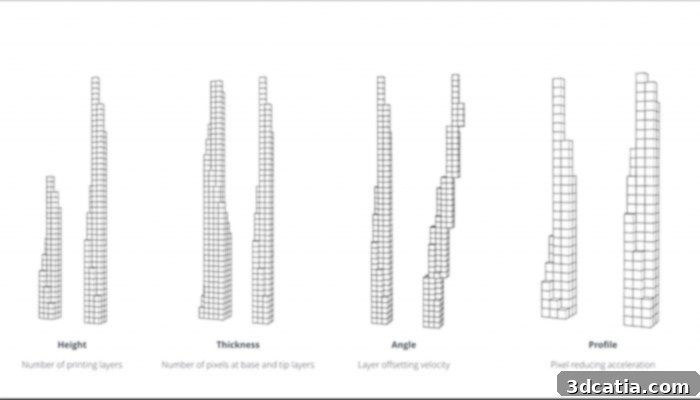
Recognizing this significant hurdle, the Tangible Media Group at MIT devised an innovative solution. Instead of attempting to painstakingly model each hair individually within existing CAD frameworks, the team developed an entirely new software platform specifically named Cilllia. This bespoke software radically simplifies the design process for hair-like structures, shifting the paradigm from individual element modeling to a parameter-driven approach. The Cilllia platform empowers users to effortlessly define and control critical characteristics for thousands of hair-like features in a matter of minutes. Designers can precisely specify the angle at which the structures emerge from a surface, their thickness, the overall density of the array, and their height. This intuitive control allows for rapid iteration and exploration of diverse textures, from coarse bristles to incredibly fine fur, applied to both flat and complex curved surfaces. The precision achieved with Cilllia is remarkable, enabling the design of hair-like arrays with an impressive resolution of 50 microns – roughly the width of a human hair. After the design phase, these sophisticated hair arrays can then be brought to life using a conventional 3D printer, demonstrating that the innovation lies not just in the hardware, but crucially, in the software intelligence that drives it.
Transformative Applications Beyond Aesthetics: Sensing, Adhesion, and Actuation
The true genius of Cilllia lies not in its ability to merely replicate cosmetic hair for wigs or extensions, but in its potential for revolutionary functional applications. The MIT researchers envision these precisely engineered hair-like structures transforming diverse fields through their capabilities in **sensing, adhesion, and actuation**. This opens up a vast new frontier for 3D printed functional materials.
Sensing Capabilities
Imagine surfaces embedded with arrays of microscopic hairs that can detect subtle changes in their environment. These structures could act as sophisticated sensors for various parameters. For instance, changes in airflow could be detected by the movement or vibration of these hairs, enabling applications in fluid dynamics research or even smart personal devices that monitor environmental conditions. Similarly, delicate touch or pressure could be registered, leading to ultra-sensitive tactile interfaces for robotics, medical diagnostics, or even advanced human-computer interaction. The varying rigidity and flexibility of these printed hairs allow for tunable sensitivity, meaning they could be designed to respond to specific stimuli within a defined range.
Advanced Adhesion
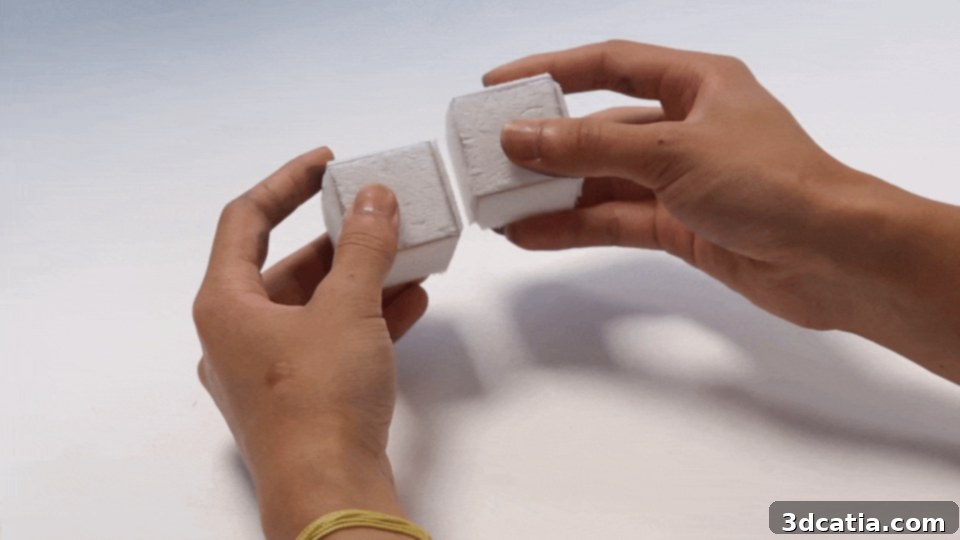
The team has already demonstrated impressive advancements in adhesion, inspired by nature’s most effective examples. By printing arrays of hairs at specific angles, they successfully created Velcro-like bristle pads. Unlike traditional Velcro, which relies on hooks and loops, these structures achieve adhesion through carefully designed intermeshing bristles. Crucially, the force of adhesion can be precisely controlled and tuned by altering the angle and density of the printed hairs. This biomimetic approach draws inspiration from organisms like geckos, whose remarkable climbing abilities are due to millions of microscopic hairs on their feet. Such technology could revolutionize temporary fasteners, reversible adhesives, or even develop new materials for climbing assistance in robotics or human applications where traditional methods are unsuitable.
Innovative Actuation
Perhaps one of the most exciting prospects is the application in actuation – the ability of these structures to move or create movement. While still an emerging area, the controlled deformation of these hair arrays could lead to micro-robotics that propel through fluids, active surfaces that change texture or direct airflow, or even sophisticated soft robotics components. By embedding responsive materials within the hair structures or controlling external forces, these arrays could be programmed to perform intricate movements, opening doors for advanced filtration systems, self-cleaning surfaces, or even micro-fluidic pumps. The precise control over individual hair properties means that complex, coordinated movements could be achieved, mimicking biological cilia that move fluids or filter particles in living organisms.
Drawing Inspiration from Nature’s Ingenuity
The genesis of the Cilllia project is deeply rooted in biomimicry – the emulation of models, systems, and elements of nature for the purpose of solving complex human problems. Jifei Ou, one of the graduate students in media arts and sciences involved in the project, articulated this inspiration perfectly: “It’s very inspiring to see how these structures occur in nature and how they can achieve different functions. We’re just trying to think how can we fully utilise the potential of 3D printing, and create new functional materials whose properties are easily tunable and controllable.” Nature offers a boundless repository of efficient and elegant designs where hair-like structures serve a multitude of critical functions. Human hair, for instance, provides insulation and protection. In the respiratory system, microscopic cilia play a vital role in trapping and expelling dust and pathogens. Animals possess fur for warmth, camouflage, and sensory input. Insects use fine hairs on their antennae for touch, smell, and even detecting minute air currents. Plants utilize trichomes (plant hairs) for defense, water absorption, or reducing water loss. By understanding and replicating these natural marvels with high fidelity through 3D printing, researchers can harness their inherent efficiency and adaptability, developing materials with unprecedented functional versatility and customizability. Cilllia provides the tools to translate these natural wonders into engineered solutions.
Challenging the Conventions of 3D Printing
The impact of the Cilllia project extends far beyond its specific applications; it fundamentally challenges our perception of what 3D printing can achieve. As Schaefer, an observer not directly involved in the research, aptly noted, “Perhaps more inspiring than any single output from this team is the idea of rethinking the 3D printing process itself and the purpose of 3D printed objects. The Cilllia team has challenged some of the current constraints of 3D printing processes, which makes me wonder what other constraints can be challenged and potentially eliminated.” This sentiment encapsulates the transformative nature of MIT’s work. By addressing the design and fabrication complexities of fine, hair-like features, Cilllia pushes the boundaries of resolution, computational efficiency, and material functionality in additive manufacturing. It encourages the wider research community and industry to re-evaluate existing limitations and explore new frontiers for creating highly complex, customizable, and functional materials. This approach paves the way for a future where previously unprintable intricate geometries become standard, unlocking possibilities for advanced textiles, micro-electronic components, bespoke medical devices, and self-adaptive surfaces that were once confined to the realm of science fiction.
Further Research and Future Outlook
For those interested in delving deeper into the technical intricacies and foundational research behind Project Cilllia, more information can be found in the comprehensive paper published by the team in 2016. The work of the Tangible Media Group, under Professor Hiroshi Ishii, continues to inspire and redefine the interface between digital information and physical reality. Cilllia serves as a testament to their vision, demonstrating how innovative software can unlock the true potential of 3D printing hardware, enabling the creation of functional materials with properties that are easily tunable and precisely controllable. This ongoing exploration into new design methodologies and advanced manufacturing techniques is crucial for the future of digital fabrication, promising to revolutionize how we interact with and utilize engineered objects in countless aspects of our lives.
We encourage you to share your thoughts and insights on this groundbreaking research! Join the conversation and let us know what you think in a comment on our Facebook and Twitter pages. Don’t miss out on the latest advancements in additive manufacturing – sign up for our free weekly Newsletter to get all the news in 3D printing delivered straight to your inbox!