
3D Printing Innovations: Shaping the Future of Aerospace, Medicine, and Manufacturing
The world of 3D printing, also known as additive manufacturing, continues its rapid evolution, pushing boundaries across diverse industries from aerospace to personalized medicine. This week’s edition of #3DExpress highlights several pivotal developments that underscore the growing maturity and transformative potential of this technology. Central to these advancements is the emphasis on certification and quality assurance, ensuring that 3D printed components meet the most stringent safety and performance standards. We delve into Materialise’s significant EN 9100 certification for metal additive manufacturing, paving the way for flight-ready aerospace parts. Additionally, we explore DEEP Manufacturing’s groundbreaking DNV approval for 3D printed pressure vessels designed for human occupancy, a truly remarkable feat. The article also covers a collaborative effort between Stratasys and Siemens Healthineers to enhance the accuracy of medical imaging phantoms, SUNLU’s practical new filament dryer, and MB Therapeutics’ successful €2 million funding round aimed at revolutionizing drug production. Join us as we explore these exciting innovations that are not just shaping the present but also defining the future landscape of additive manufacturing.
Materialise Secures EN 9100 Certification for Metal Additive Manufacturing in Aerospace
Materialise, a global leader in 3D printing software and services, has achieved a significant milestone by securing EN 9100 certification for its metal additive manufacturing (AM) processes. This crucial certification, widely recognized as the quality management system standard for the aerospace industry, signifies Materialise’s unwavering commitment to product quality, robust process control, strict regulatory compliance, and a culture of continuous improvement. This achievement is particularly noteworthy as Materialise already held the EN 9100 certification for its polymer AM processes, making it one of the few companies to possess this dual accreditation across both major material categories.
The aerospace sector demands the highest levels of precision, reliability, and safety, where even minor defects can have catastrophic consequences. By obtaining the EN 9100 certification for metal AM, Materialise can now play an even more expansive role in supporting the entire aerospace value chain. This enables aircraft manufacturers, component suppliers, and maintenance organizations to confidently identify, develop, and source flight-ready 3D printed parts, whether they are made from high-performance polymers or durable metals. This certification streamlines the qualification process for complex metal components, accelerating their adoption in critical aerospace applications, from lightweight structural parts to intricate engine components.
Erik de Zeeuw, Market Manager for Aerospace at Materialise, emphasized the importance of this development, stating, “The quality and process control system we have in place simplifies the digital thread necessary for qualifying 3D-printed metal parts. And that’s something we are incredibly excited about. We are ready to talk to and work with our extensive network of partners in space and aviation to identify, produce, and develop the perfect applications for metal AM. Together, we will definitely see a whole raft of new opportunities quite literally take flight.” This statement highlights Materialise’s readiness to collaborate and innovate, fostering new possibilities for metal AM components to be integrated into diverse aerospace applications, ultimately enhancing performance and efficiency, and ensuring the highest safety standards in airborne vehicles.
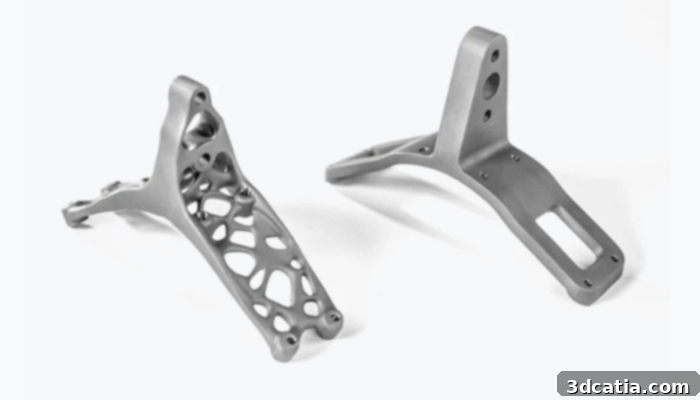
Photo Credits: Materialise
DEEP Manufacturing Achieves DNV Approval for 3D Printed Pressure Vessels for Human Occupancy
In a truly pioneering move, UK-based DEEP Manufacturing Limited (DML) has received DNV (Det Norske Veritas) approval for its innovative use of wire arc additive manufacturing (WAAM) technology to produce steel pressure vessels. What makes this achievement particularly groundbreaking is that these vessels are deemed suitable for human occupancy, opening up entirely new avenues for subsea exploration, habitation, and other critical deep-sea applications. This approval from DNV, a leading global assurance and risk management provider, underscores the robustness, safety, and reliability of DML’s additive manufacturing processes, confirming they meet the highest international standards for integrity and performance.
DML operates an impressive and extensive network of WAAM systems, boasting one of the largest concentrations globally, with 20 systems housed at its Advanced Manufacturing Center of Excellence. This substantial capacity allows DML to produce large-scale, complex metallic parts with unparalleled efficiency and precision. Each individual robotic WAAM system is capable of fabricating components up to three meters in diameter. Furthermore, by employing a sophisticated six-arm synchronized configuration, DML can push the boundaries even further, creating exceptionally large parts up to 6.1 meters in diameter and 3.2 meters in height. These capabilities are crucial for manufacturing robust structures like subsea habitats, submersible hulls, scientific research modules, and other large pressure-resistant components where structural integrity is paramount.
Peter Richards, Chief Executive Officer of DEEP Manufacturing, highlighted the transformative potential of their approach: “Using DEEP Manufacturing’s additive manufacturing process allows companies to stay ahead of the game in their subsea projects. Additive manufacturing is the fast, safe solution to manufacturing large-scale, complex metal parts. If subsea companies are still relying on traditional forge and casting methods, they risk falling behind. There is a need for a mindset shift toward innovation and proactive measures to enhance industry-wide resilience.” Richards’ remarks emphasize the competitive edge that additive manufacturing offers over conventional methods, which are often slower, more costly, and limited in design complexity. He concluded, “As we move forward, we want to support our customers to embrace innovation and build more adaptable, resilient operations. This is a tipping point for our industry, and it is time to fully leverage the benefits that additive manufacturing offers.” This DNV approval not only validates DML’s technology but also serves as a strong signal for the subsea industry to accelerate its adoption of additive manufacturing for enhanced safety, efficiency, and innovative design in challenging, high-pressure environments, fundamentally changing how deep-sea structures are conceived and built.
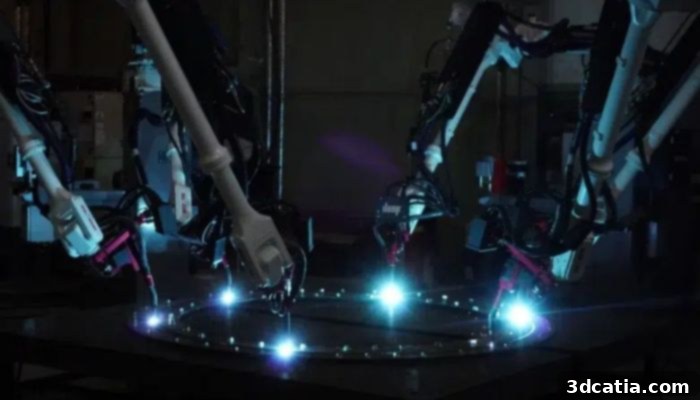
Photo Credits: DML
Stratasys and Siemens Healthineers Advance Medical Imaging with Accurate 3D Printed Phantoms
In a significant development for the healthcare industry, Stratasys and Siemens Healthineers have unveiled the successful results of their collaborative initiative focused on creating highly accurate 3D printed phantoms for medical imaging. This partnership strategically combined Stratasys’ cutting-edge RadioMatrix materials and Digital Anatomy technology with Siemens Healthineers’ advanced imaging algorithms. The synergy between these innovative technologies has led to a remarkable improvement in the quality and realism of medical imaging systems, enabling them to faithfully reproduce a patient’s complex anatomy with unprecedented fidelity, both physically and radiologically.
These sophisticated 3D printed models are not merely static representations; they are designed to mimic human tissues and organs with unprecedented fidelity in terms of their physical and radiological properties, including radiopacity and tissue density. This allows medical professionals to utilize them for a variety of critical applications. Doctors can now leverage these realistic phantoms for comprehensive surgical planning, practicing intricate procedures in a risk-free environment before operating on actual patients. This leads to improved surgical outcomes, reduced operative times, and enhanced patient safety. Furthermore, these phantoms serve as invaluable tools for medical education and training, providing students and practitioners with hands-on experience in diagnosing and treating conditions. They are also instrumental in the calibration and verification of modern CT (Computed Tomography) systems, ensuring that diagnostic equipment delivers consistent and accurate results for various pathologies and patient anatomies.
Jesús Fernández Léon, Head of Computed Tomography Product and Clinical Marketing at Siemens Healthineers, articulated the profound impact of this collaboration: “The integration of 3D-printing solutions to create patient-realistic CT phantoms, combined with the Digital Anatomy® technology from Stratasys, represents a significant innovation in the field of computed tomography. This cooperation not only enhances our ability to assess and verify the performance of modern CT systems but also ensures that our algorithms can rely on a highly realistic depiction of human anatomy. By working together, we are setting new standards in medical imaging.” This partnership exemplifies how additive manufacturing is directly contributing to advancements in diagnostic accuracy, surgical precision, and ultimately, patient care, paving the way for more personalized and effective medical interventions and training.
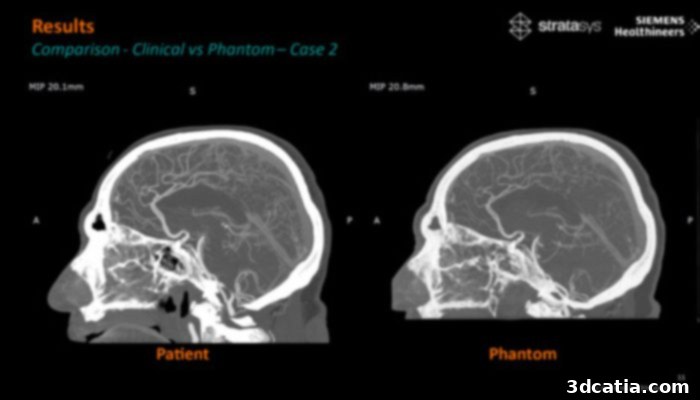
Photo Credits: Business Wire
SUNLU Introduces FilaDryer E2: An Advanced Solution for Filament Drying
Chinese manufacturer SUNLU, a recognized specialist in the development and production of 3D printing filaments and accessories, has unveiled its latest innovation: the FilaDryer E2. This new device addresses a common and often frustrating challenge faced by 3D printing enthusiasts and professionals alike – moisture absorption by filaments. When hygroscopic filaments, such as nylon, PETG, or even common PLA, absorb moisture from the air, it can lead to a host of printing problems, including stringing, bubbling, poor layer adhesion, and weakened mechanical properties of the printed part. The FilaDryer E2 is engineered to mitigate these issues by effectively drying filaments, ensuring optimal print quality, reliability, and preventing material degradation.
The FilaDryer E2 stands out with its impressive technical capabilities and user-friendly features. It is capable of reaching internal temperatures up to 110°C, a critical specification that makes it compatible with a wide array of demanding thermoplastics. This includes common engineering materials like polyamide (Nylon), polycarbonate (PC), and even high-performance polymers such as PEI (Polyetherimide), which are known for their strong hygroscopic properties and often require meticulous drying. Its generous heating chamber, measuring 372 x 192 x 186 mm, offers ample space to accommodate either two standard one-kilogram spools simultaneously or a single larger spool weighing between two and three kilograms, providing flexibility for various printing needs and material storage. Furthermore, the device is equipped with an intuitive touch screen interface, allowing users to effortlessly set and monitor drying cycles, customize temperatures, and schedule drying durations, making the process straightforward and efficient for achieving perfect printing conditions.
With a starting price of $400, the SUNLU FilaDryer E2 presents a valuable investment for anyone serious about achieving consistent, high-quality 3D prints. By eliminating the detrimental effects of moisture, this advanced filament dryer helps reduce material waste, saves time spent troubleshooting print failures, and ultimately enhances the overall 3D printing experience, making it a crucial accessory for any serious additive manufacturing setup aiming for professional-grade results.
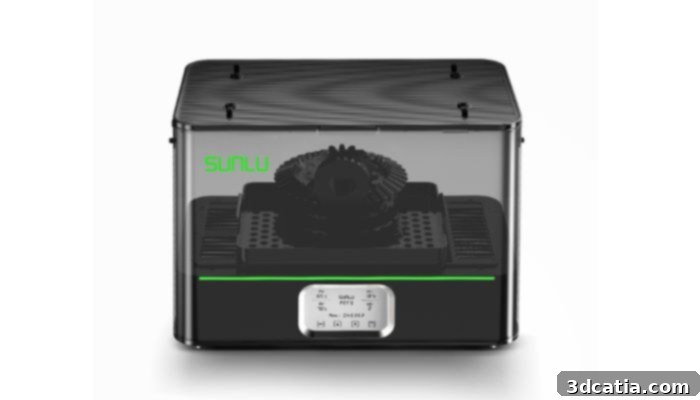
Photo Credits: SUNLU
MB Therapeutics Secures €2 Million Funding to Revolutionize Personalized Drug Production
MB Therapeutics, an innovative French start-up based in Montpellier, has successfully concluded a significant €2 million funding round, marking a pivotal moment in its mission to transform pharmaceutical manufacturing. Specializing in the burgeoning field of 3D printing for drugs, the start-up is poised to establish Europe’s first dedicated pharmaceutical structure focused on creating solutions compatible with 3D printing technology within the pharmaceutical sector. This substantial investment underscores the growing recognition of additive manufacturing’s potential to fundamentally reshape how medicines are produced and distributed, moving towards a more patient-centric model.
The core vision of MB Therapeutics is profoundly impactful: to enable the on-site, customized printing of medications directly within pharmacies equipped with a specialized preparatory unit. This revolutionary approach promises to address numerous critical challenges currently faced by the pharmaceutical industry and healthcare providers. By facilitating local production, MB Therapeutics aims to significantly improve drug quality control by allowing for immediate adjustment and verification, better anticipate and mitigate stock shortages that often disrupt supply chains, and, most importantly, meet the rapidly growing demand for personalized medicines. Traditional drug manufacturing often involves mass production of fixed-dose combinations, which can struggle to cater to individual patient needs, such as specific dosages, unique drug combinations, or tailored release profiles. 3D printing offers the flexibility to create bespoke medications tailored to a patient’s unique requirements, right when and where they are needed, enhancing therapeutic outcomes and reducing adverse effects.
The potential market for MB Therapeutics’ innovative solution is substantial, targeting over 1,000 pharmacies across Europe that could benefit from this localized production model. Dr. Stéphane Roulon, CEO and co-founder of MB Therapeutics, articulated the profound benefits: “Local production in pharmacies or hospital pharmacies of customized medicines guarantees rapid availability and precise doses, essential for urgent and personalized care.” This capability is especially critical for vulnerable patient populations, including children and the elderly, who often require precise, non-standard dosages that are difficult to achieve with commercially available drugs. The €2 million funding will accelerate MB Therapeutics’ research and development efforts, scale up its operational infrastructure, and strengthen its position as a pioneer in the personalized medicine landscape, ultimately bringing safer, more effective, and more accessible healthcare solutions to patients across the continent and potentially globally.
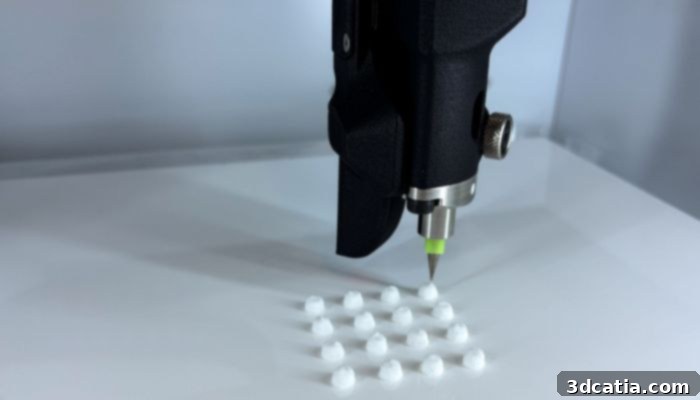
Photo Credits: MB Therapeutics
The innovations highlighted this week underscore the dynamic and diverse impact of additive manufacturing across critical sectors. From ensuring flight-readiness in aerospace with Materialise’s EN 9100 certification to enabling human-occupied subsea vessels through DEEP Manufacturing’s DNV approval, and from enhancing medical diagnostics with Stratasys and Siemens Healthineers’ advanced phantoms to streamlining 3D printing processes with SUNLU’s FilaDryer E2, the industry is clearly moving forward with unprecedented momentum. Moreover, MB Therapeutics’ successful funding round for personalized medicine demonstrates the immense potential of 3D printing to revolutionize patient care by bringing customized drug production directly to pharmacies. These advancements collectively paint a picture of an industry that is not only maturing but also becoming increasingly integrated into essential applications, promising a future where customized, efficient, and reliable manufacturing is the norm across countless fields.
What are your thoughts on Materialise’s recent EN 9100 certification for metal AM processes and its implications for the aerospace industry’s supply chain and design capabilities? Or perhaps you’re excited about the prospect of DML’s 3D printed pressure vessels enabling new frontiers in human-occupied subsea exploration? We invite you to share your insights and opinions on these groundbreaking developments in the comments section below, or engage with us on our social media channels: LinkedIn, Facebook, and Twitter. Don’t miss out on the latest advancements and breaking news in the additive manufacturing world – sign up for our free weekly Newsletter here to get all the updates delivered straight to your inbox! You can also explore our extensive video library on our YouTube channel for more in-depth content and visual demonstrations of these exciting technologies.