
Unlock Innovation: Top Generative Design Software for 3D Printing in 2024
The journey of transforming a concept into a tangible product through 3D printing begins with design – a critical phase that dictates the success and functionality of the final part. Even for seasoned professionals accustomed to Design for Additive Manufacturing (DfAM) principles, this initial stage can present complex challenges, often requiring innovative approaches to meet stringent performance, weight, or cost targets. This is precisely where cutting-edge software solutions become indispensable, revolutionizing how engineers and designers approach product development. While we’ve previously explored the advantages of topological optimization software, an equally vital and rapidly evolving tool gaining significant traction in the additive manufacturing landscape is generative design.
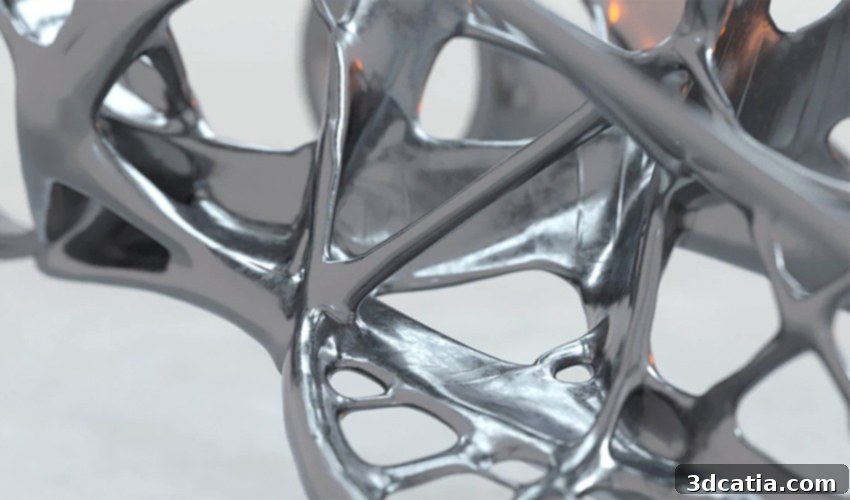
Often mentioned in conjunction with, or even offered as a feature within, topological optimization tools, generative design distinguishes itself by truly creating entirely new structures. Unlike optimization, which refines an existing design to improve specific metrics, generative design algorithms autonomously generate multiple design outputs based on a predefined set of parameters, constraints, and performance requirements inputted by the user. This innovative approach allows for the exploration of novel geometries and configurations that might be entirely unforeseen by traditional human design processes. It pushes the boundaries of what’s possible in terms of performance, weight reduction, material efficiency, and even multi-functionality, making it a cornerstone for advanced 3D printing applications. Generative design empowers designers to discover optimal solutions faster, significantly reduce development cycles, and embrace the full potential of additive manufacturing to create lighter, stronger, and more efficient parts. To provide you with a comprehensive overview of the powerful tools available today, we’ve compiled a list below (presented in alphabetical order by product name) featuring leading generative design software on the market, encompassing both dedicated generative design platforms and those integrating it as an advanced extension.
Ansys Discovery
Ansys Discovery stands out as a pioneering simulation-driven design software engineered to accelerate innovation during the crucial early stages of product conceptualization. Its core strength lies in its ability to empower engineers to rapidly explore and validate design ideas without the need for extensive physical prototyping. By seamlessly integrating the renowned Ansys Mechanical and Ansys Fluent solvers, Discovery facilitates interactive 3D modeling that responds in real-time to design changes, providing immediate visual and analytical feedback. This comprehensive tool is structured around three distinct modes: the Model mode, where users can create and modify geometric concepts with ease using direct modeling tools; the Explore mode, which offers instantaneous, real-time simulations to provide immediate feedback on performance characteristics such as stress, strain, temperature distribution, or fluid flow; and the Refine mode, designed for high-fidelity validation of mature concepts using robust, accurate solvers. This intuitive workflow ensures that all pertinent simulation data and design insights are readily accessible to team members, fostering a collaborative environment.
Discovery’s robust capabilities extend to performing multiphysics simulations, allowing for the concurrent analysis of mechanical, thermal, and electromagnetic properties within a single platform. This integrated approach is vital for understanding complex product behavior under various real-world conditions, directly aiding in the iterative optimization of designs. The software prioritizes user-friendliness and encourages a culture of innovation by making advanced simulation and generative design accessible early in the design process, enabling “what-if” scenarios to be explored efficiently. By conducting numerous virtual simulations, Ansys Discovery significantly reduces the reliance on costly and time-consuming physical prototypes and tests. This not only saves valuable time and resources but also enables engineers to identify and resolve potential design flaws proactively, leading to more robust, efficient, and market-ready products. Generative design functionalities within Ansys Discovery help users to automatically create optimized geometries given specific performance targets, material options, and manufacturing constraints, making it an invaluable asset for complex part development, especially for additive manufacturing, where intricate, organic shapes are often optimal.
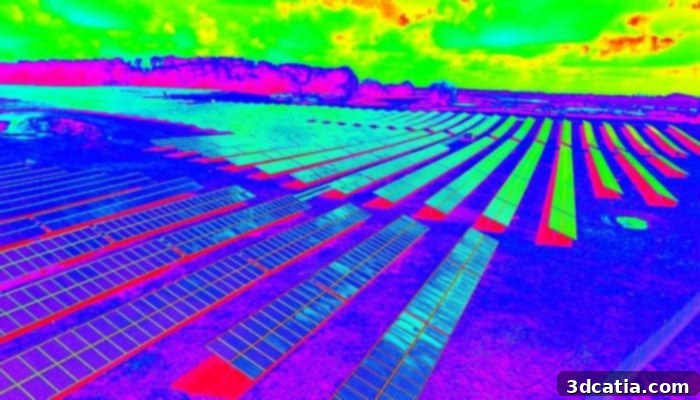
Ansys Discovery enables the analysis of concepts in terms of their thermal properties. (Photo credits: Ansys)
CATIA Generative Design Engineering – Dassault Systèmes
CATIA software, a flagship product from Dassault Systèmes, is globally recognized for its unparalleled capabilities across various domains, including product design, engineering, systems engineering, and construction. It forms a foundational component of the company’s comprehensive Industry Solution Experiences, meticulously crafted to elevate product conception across businesses of all scales and equip them with a decisive competitive edge in fast-evolving global markets. CATIA particularly excels in its capacity to facilitate the design of unconventional, intricate, and highly innovative concepts, offering advanced 3D modeling and simulation functionalities that push beyond conventional limits, making it an ideal environment for integrating generative design principles.
At the heart of CATIA’s modern offering is the intuitive and powerful 3DEXPERIENCE® platform. This cloud-based environment not only allows users to create and refine their designs but also to rigorously analyze, simulate, and compare them against various models and performance metrics, all within a unified ecosystem. Whether the final manufacturing process is additive (like 3D printing) or traditional, CATIA provides robust support throughout the entire product development lifecycle, from initial ideation to detailed manufacturing planning. The 3DEXPERIENCE platform actively fosters seamless collaboration among diverse stakeholders, including product designers, simulation engineers, and manufacturing specialists. By prioritizing user-friendliness, accessibility, and intuitive operation, it ensures a highly efficient and integrated workflow. This collaborative ecosystem empowers teams to work together effortlessly, leveraging CATIA’s generative design engineering tools to explore a multitude of design possibilities, automatically generating complex shapes tailored to specific loads, material properties, and manufacturing processes. This capability helps in achieving optimal performance, reducing material usage, improving structural integrity, and streamlining the transition from a highly innovative concept to a manufactured part with unprecedented speed and precision, ultimately enabling companies to deliver superior products to market faster.
Creo Generative Design – PTC
Creo, a powerful suite of solutions from PTC, offers a comprehensive ecosystem that spans CAD (Computer-Aided Design), PLM (Product Lifecycle Management), IoT (Internet of Things), and AR (Augmented Reality). These interconnected technologies work synergistically to establish a robust digital thread that extends across the entire product lifecycle, significantly enhancing data continuity, collaboration, and intelligence for businesses. Within Creo’s renowned CAD software environment, PTC has developed two specialized extensions specifically for generative design, allowing users to harness its transformative capabilities for innovative product development: the Creo Generative Topology Optimization Extension (GTO) and the Generative Design Extension (GDX).
The GTO extension intelligently combines the power of generative design with advanced topology optimization. This integration empowers users to rapidly explore a vast array of innovative design options, automatically generating optimized geometries that are lighter, stronger, and more efficient by removing unnecessary material while meeting performance criteria. By automating much of the design exploration and optimization process, GTO effectively reduces development time and associated costs, all while remaining seamlessly integrated within the familiar Creo design environment. For even greater flexibility and scalability, the cloud-based GDX extension takes generative design to the next level. It allows for the simultaneous creation and evaluation of multiple design projects, considering diverse material properties, various manufacturing methods (including 3D printing, casting, and machining), and different production scenarios. GDX leverages the immense computational power of cloud computing to quickly highlight the most promising options, enabling users to efficiently review, compare, and evaluate designs based on performance criteria, manufacturing feasibility, and cost-effectiveness. This allows engineers to make informed decisions faster, ensuring that the optimal design is selected for additive manufacturing or other production methods. PTC’s Creo generative design tools are instrumental in helping engineers innovate rapidly, create highly complex and optimized parts, and significantly accelerate their product development cycles, delivering superior products to market with greater efficiency.
CogniCAD – ParaMatters/Carbon
CogniCAD represents a sophisticated, cloud-based platform initially developed by ParaMatters, a pioneering leader in generative design software tailored specifically for additive manufacturing. This innovative platform recently saw a significant enhancement through its acquisition by the prominent US company Carbon. This strategic move enriched CogniCAD with additional functionalities, including even more advanced topology optimization capabilities, solidifying its position as a comprehensive design solution for high-performance applications.
CogniCAD is meticulously engineered to integrate seamlessly into the modern manufacturing workflow, combining powerful generative design principles with the unique possibilities of additive manufacturing. It intelligently tailors designs to meet the precise requirements of individual products, optimizing for performance, weight reduction, and efficient material usage. The software significantly streamlines the entire design, simulation, and manufacturing preparation process by automating critical steps such as topology optimization, finite element analysis (FEA) for structural integrity, and advanced computational geometry generation. This high level of automation eliminates the need for labor-intensive manual adjustments or complex reconstructions, dramatically accelerating the design cycle and reducing human error. Designs generated using CogniCAD are not only guaranteed to meet all specified engineering requirements but also demand minimal manufacturing preparation time, often reducing it from days to mere minutes or a few hours. By leveraging its powerful suite of generative design tools, CogniCAD consistently produces lightweight components that boast superior mechanical properties, often with complex internal structures that are ideal for 3D printing. This efficiency also extends to reducing post-processing requirements, further contributing to cost and time savings across the production line. In essence, CogniCAD provides users with a comprehensive, highly efficient, and integrated solution for generative design, simulation, and manufacturing, delivering optimized product designs and substantial time savings throughout the entire development process, particularly for complex geometries suited for advanced 3D printing technologies.
ColdStream by Diabatix
Diabatix, a cutting-edge Belgian technology company, is at the forefront of assisting businesses in significantly enhancing the cooling performance of their products. Recognizing the transformative potential of generative design and 3D printing, Diabatix leverages these technologies to create highly innovative, ultralight, and exceptionally efficient thermal heat sinks – components that are critical for managing heat in modern electronics and industrial systems. Their flagship offering, ColdStream, is a sophisticated engineering platform accessible via the cloud, designed to support and optimize the entire refrigeration design process, from initial thermal analysis through to detailed thermal design and validation.
This powerful software is meticulously crafted to guide users through every phase of the cooling design process. From optimizing initial conceptual designs for maximum thermal performance to performing rigorous virtual tests and in-depth analyses, ColdStream provides a comprehensive toolkit. It offers a wide array of features and functionalities that streamline project management and accelerate development cycles, allowing engineers to iterate rapidly. A key capability of ColdStream is its ability to precisely analyze complex heat flow performance within any given system. Based on this analysis and user-defined constraints, the software can autonomously generate customized cooling designs or intelligently incorporate and optimize standard thermal components such as fins, channels, and other specialized heat dissipators. By maximizing temperature transfer efficiency, optimizing fluid dynamics, and proactively minimizing the risk of future overheating, engineers can develop bespoke cooling solutions that are perfectly tailored to the precise operating conditions, spatial constraints, and temperature requirements of their products. This not only maximizes overall product performance, extends longevity, and ensures reliability but also contributes significantly to minimizing manufacturing and operational costs. With Diabatix’s advanced technology and ColdStream’s comprehensive generative design capabilities, businesses can achieve unparalleled efficiency in thermal management, optimizing product performance while maintaining cost-effectiveness for a wide range of applications, including those requiring complex, additively manufactured cooling structures that cannot be produced by traditional methods.
Fusion 360 Generative Design – Autodesk
Fusion360is a robust, cloud-based 3Dmodelingsoftware developed by Autodesk that masterfully integrates CAD (Computer-Aided Design), CAM (Computer-Aided Manufacturing), and CAE (Computer-Aided Engineering) tools into a singular, unified platform. This all-encompassing solution is specifically tailored to streamline and expedite product development, with a particular emphasis on leveraging the advantages of additive manufacturing for creating optimized designs.
Fusion 360 boasts an extensive array of features, encompassing sketching, parametric modeling, direct modeling, freeform modeling, surface modeling, sheet metal design, mesh modeling, assemblies, and even PCB design integrations. Its broad support for various file formats for 3D printing makes it exceptionally versatile for preparing and sending models to a 3D printer. The software also champions collaboration, enabling design teams and external stakeholders to cooperate on projects in real-time through its cloud-centric infrastructure. Central to its advanced capabilities, Fusion 360 integrates powerful generative design tools. These tools autonomously propose optimal manufacturing outcomes based on user-defined performance specifications, material types, and manufacturing methods. This enables significant weight reduction, vastly improved part performance, and effective part consolidation, transforming multi-component assemblies into single, optimized parts. Furthermore, it provides comprehensive simulation tools to rigorously assess designs under real-life applications, further reducing the need for costly physical prototyping. While some users may find certain specialized tools quite advanced and others, such as organic modeling, still developing, Fusion 360 is generally regarded as relatively user-friendly, supported by a wealth of online resources for learning and mastery. Autodesk extends a free trial of Fusion 360 for up to 30 days, providing an excellent opportunity to explore its extensive capabilities.
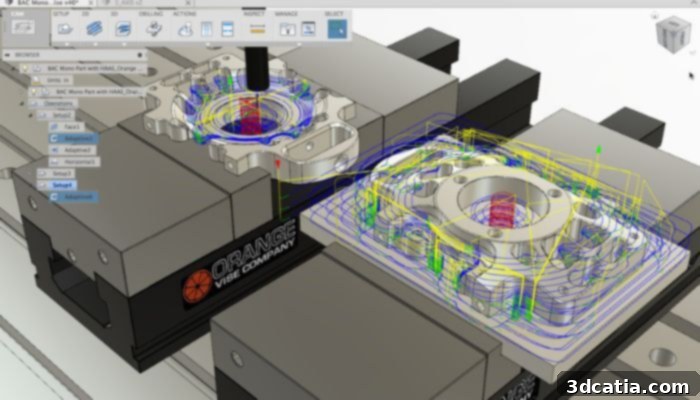
Photo credits: AutoDesk
MSC Apex Generative Design – Hexagon
MSC Apex Generative Design is an exceptionally advanced software solution developed by the Swedish technology conglomerate Hexagon. It is specifically crafted to streamline and enhance generative design processes, particularly for components destined for additive manufacturing. A hallmark of this software is its remarkably user-friendly interface, which belies the sophisticated engineering happening under the hood. It offers an automated, intuitive workflow integrated within a comprehensive CAE (Computer-Aided Engineering) environment, making complex design tasks more accessible to engineers and designers alike.
Users can effortlessly import existing part geometries, define their design objectives and constraints (such as load conditions, target weight, or material properties), initiate the generative design process, and then seamlessly export the optimized designs for manufacturing. This end-to-end efficiency significantly accelerates the product development cycle by reducing manual iteration. The software’s primary focus is on the creation of intricate and highly complex structures – geometries that are often impossible or prohibitively expensive to produce using traditional manufacturing techniques but are perfectly suited for additive manufacturing. These generatively optimized designs typically feature smooth, organic transitions between different structural elements, resulting in superior performance, reduced stress concentrations, and often a distinctive aesthetic. Crucially, MSC Apex Generative Design also incorporates intelligence for creating self-supporting structures. This eliminates or vastly reduces the need for additional support materials during the 3D printing process, which in turn saves material, reduces printing time, and minimizes costly and labor-intensive post-processing efforts. Unlike some traditional topology optimization methods that rely on density fields to generate forms, MSC Apex Generative Design employs a meticulously generated mesh composed of well-defined elements. This unique and precise approach empowers its algorithms to directly and accurately assess stress factors, deformation, and other performance metrics, enabling it to generate geometries that often surpass the creative scope of conventional human design. It’s a powerful tool for pushing the boundaries of engineering innovation and realizing designs with optimal strength-to-weight ratios and enhanced functionality for a wide array of industrial applications.
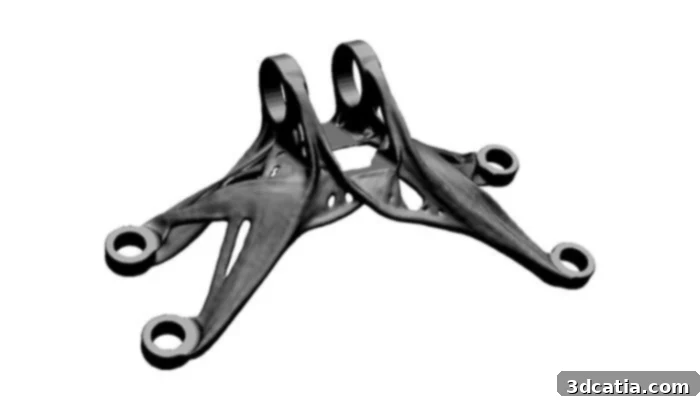
Photo credits: Hexagon
nTop – nTopology
nTopology is a visionary company that has developed nTop, a specialized engineering software specifically engineered to lead the charge for the next generation of technical design tools in additive manufacturing. Its fundamental purpose is to empower engineers and designers to conceive and create innovative solutions that were previously considered either impractical, impossible, or prohibitively expensive to achieve with traditional design methods. This powerful software platform is highly valued across a diverse range of high-tech industries, including aerospace, defense, automotive, medical, and energy sectors, where it offers advanced and unique capabilities, especially in the realm of Generative Design and advanced manufacturing.
At its core, nTop provides a comprehensive and robust set of computational design tools. These tools enable users to rapidly generate, iterate, and rigorously evaluate complex geometries based on their precisely defined design requirements, performance objectives, and manufacturing constraints. This includes advanced capabilities for various modeling operations, such as implicit modeling, field-driven design, lattice generation, and the optimization of print bed configurations for maximum efficiency and successful builds with minimal support structures. nTop’s ability to handle complex internal structures and functionally graded materials makes it a game-changer for parts requiring specific mechanical or thermal properties. Moreover, nTop offers unparalleled flexibility, allowing users to develop and integrate custom generative algorithms tailored to their specific applications, from micro-scale geometries to large industrial components. It also provides seamless integration with external design and analysis solutions, creating a powerful, interconnected workflow for a complete digital thread. This extensibility allows engineers to further refine, automate, and optimize their design results and processes, pushing the boundaries of what is achievable in product development. By enabling the creation of intricate lattice structures, architected materials, and highly complex internal geometries that are only possible with additive manufacturing, nTop is indispensable for unlocking the full potential of this technology and creating parts with superior performance, enhanced functionality, and reduced weight.
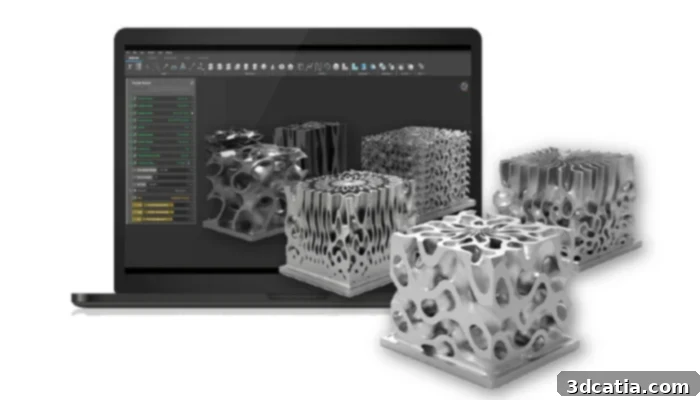
Photo credits: nTopology
NX – Siemens
The NX software, a cornerstone offering developed by Siemens Digital Industries Software, represents a comprehensive and integrated solution that caters to an expansive range of manufacturing applications. This includes, but is not limited to, advanced additive manufacturing, precision CNC machining, sophisticated robotics, and meticulous quality control processes. For businesses, NX offers a multitude of tangible advantages designed to significantly enhance efficiency and innovation across the product lifecycle. One of its most compelling features is the promise of substantially shorter product development cycles, with potential reductions of up to 50%. This impressive acceleration is achieved through minimizing the number of prototype iterations required and by streamlining post-processing requirements, which directly translates to considerable time and cost savings. NX’s unified environment ensures data integrity and seamless transitions between design, simulation, and manufacturing.
Within the Siemens ecosystem, the integration of Simcenter HEEDS provides a powerful generative design solution. Simcenter HEEDS seamlessly links NX CAD geometry with Simcenter CAE simulation capabilities, allowing for multi-disciplinary design exploration and optimization. This integration empowers engineers to automatically explore and generate a vast number of optimized designs based on specific performance targets, material properties, manufacturing method constraints, and cost considerations. These highly optimized design options are then ideally suited for realization through advanced manufacturing techniques such as 3D printing, enabling the creation of lightweight, high-performance components with complex geometries. NX software also includes a rich suite of tools dedicated to efficient build preparation for additive manufacturing. This encompasses automated support structure generation, intelligent part placement and alignment on the build plate for optimal print efficiency, and comprehensive slicing functionalities. Furthermore, NX facilitates rigorous part simulation to predict real-world performance, analyze manufacturing distortions, and ensure manufacturability. It connects seamlessly with a diverse array of 3D printing technologies, supporting powder bed fusion, FDM (Fused Deposition Modeling), multimaterial systems, and even multi-axis additive manufacturing processes. This holistic suite of features empowers manufacturers to optimize their entire workflow, achieve superior design outcomes, and fully leverage the transformative benefits of additive manufacturing, from initial conceptualization to final production and beyond.
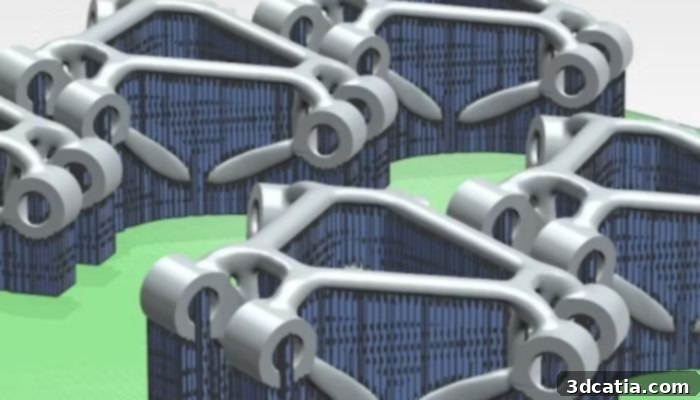
Photo credits: Siemens
OptiStruct – Altair®
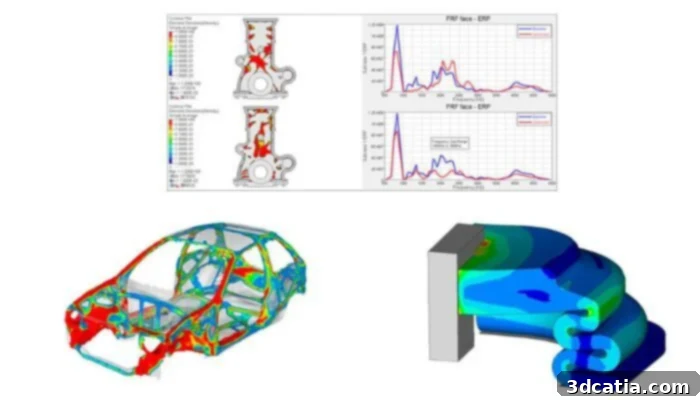
OptiStruct, a flagship product developed by Altair®, stands as a premier structural analysis and optimization solution with a distinguished history spanning over two decades. Building upon the foundational legacy of NASTRAN, a pioneering software originally developed by NASA in the late 1960s, OptiStruct has evolved by incorporating Altair’s proprietary, internally developed algorithms to deliver cutting-edge capabilities. Its core strength lies in its ability to not only perform robust structural analysis but also to intelligently optimize designed parts for superior performance, durability, and material efficiency, making it a powerful tool for generative design applications.
The software provides comprehensive support for both linear and nonlinear analyses. This distinction is crucial as it allows engineers to accurately model the complex relationships between applied forces and resulting displacements, accounting for scenarios where these relationships might be linear (proportional) or highly nonlinear. Nonlinearities can arise from various factors, including unique part geometries, advanced material properties (e.g., plastics, rubbers, composites), or intricate contact interactions between components. During the critical process of part design or optimization, OptiStruct meticulously considers a broad spectrum of physical phenomena. This includes static mechanics (behavior under steady loads), dynamic analytics (response to time-varying loads), vibrations, acoustics, fatigue (predicting damage accumulation over time due to repeated forces), heat transfer, and advanced multi-physics simulation. Multi-physics simulation is particularly powerful, allowing for the simultaneous analysis of different aspects of a physical system and their complex interactions, such as how both physical stress and temperature distribution affect a component’s performance and lifespan.
While OptiStruct is widely celebrated and renowned for its exceptional topological optimization capabilities, which are a highly effective form of generative design focused on intelligent material distribution, its offerings extend far beyond this. The software provides various other sophisticated methods for structural optimization, including shape optimization (modifying boundaries), size optimization (adjusting dimensions of structural elements), and free-form optimization (morphing shapes to meet criteria). Crucially, it offers a wide range of solutions meticulously tailored to essential manufacturing constraints, ensuring that the optimized designs are not only high-performing but also feasible and cost-effective to produce. It caters to a diverse array of production processes, including traditional manufacturing methods (like casting, forging, and stamping), advanced composite materials manufacturing, and, significantly, additive manufacturing. This comprehensive suite of tools makes OptiStruct an indispensable asset for designers and engineers aiming to push the boundaries of product innovation and performance across virtually all industrial sectors, enabling the creation of groundbreaking, optimized components.
TOffeeAM
TOffeeAM is an innovative spinout company originating from the prestigious Imperial College London, and it specializes in revolutionizing additivemanufacturing through advanced design software. Their cutting-edge software, simply named TOffee, is fundamentally transforming the design paradigm by enabling the creation of highly complex, yet exceptionally efficient, 3D printed parts and entire systems optimized for performance.
This innovative approach is known as Multiphysics Generative Design. It distinguishes itself by its ability to simultaneously optimize designs across multiple physical domains (e.g., thermal, fluid dynamics, mechanical stress) while rigorously adhering to specified manufacturing constraints inherent to additive processes. By fully embracing additive manufacturing techniques, companies that utilize TOffeeAM benefit immensely from the ability to directly print from digital prototypes, enjoy unprecedented design flexibility for complex geometries, and significantly reduce logistical complexities, material waste, and energy consumption. With worldwide recognition and strong support from prestigious academic and industry institutions, TOffeeAM’s expertise is applied across various high-stakes industries such as aerospace, automotive, and energy. They have achieved remarkable successes in optimizing critical components like coolant systems, valves, combustion chambers, power system cooling, fuel cells, vented brakes, pipes, mixers, and cogeneration systems. Their contributions have resulted in significant efficiency gains, including achieving up to a 30% increase in coolant system efficiency for aerospace applications and the successful consolidation of complex multi-component systems into a single, generatively designed component.
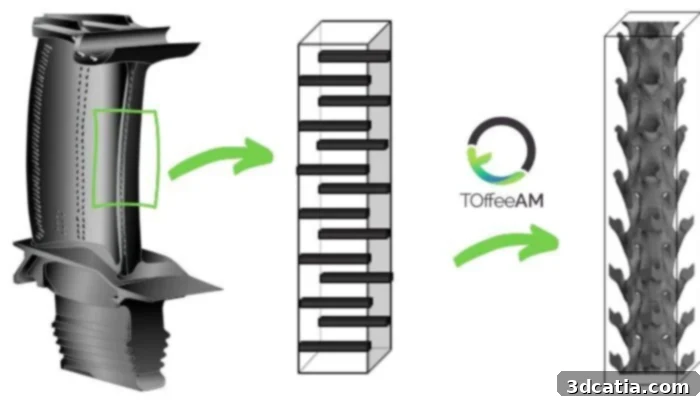
Photo credits: TOffeeAM
Transcend Design Generator
Transcend Design Generator, an innovative solution developed by the New Jersey-based company Transcend, stands as a cutting-edge generative design software specifically tailored for the intricate demands of large-scale infrastructure projects. Distinguishing itself with an exceptionally intuitive and user-friendly interface, this powerful platform delivers remarkably precise and reliable results, even for the most complex engineering challenges within the infrastructure and energy sectors. This software empowers professionals to efficiently generate preliminary designs for vast and intricate infrastructure projects, drastically reducing conventional design time by an impressive margin of up to 90%. By fundamentally streamlining processes, automating repetitive tasks, and proactively minimizing associated risks, Transcend Design Generator is revolutionizing the traditional engineering workflow for infrastructure development and planning.
At its technological core, Transcend Design Generator leverages hundreds of thousands of sophisticated decision algorithms. These algorithms work in concert with advanced simulations and dynamic modeling capabilities to not only optimize but also rigorously validate designs against a myriad of criteria including regulatory compliance, environmental impact, cost-efficiency, and operational performance. The software is designed to meticulously ensure the validity and feasibility of all inputted parameters, subsequently producing accurate, high-quality design outputs that comply with strict industry standards and regulations. By harnessing its highly automated system, the software intelligently taps into extensive global databases of components, materials, and engineering principles. This allows it to meticulously select and precisely size each individual component required for a given installation, from pipelines and pumps to electrical systems, structural elements, and process configurations. The ultimate output of this powerful process is a comprehensive 3D Building Information Modeling (BIM) model. This BIM model serves as an exceptionally solid and reliable foundation for accurate cost calculations, detailed project planning, stakeholder communication, and further intricate design development. It provides unparalleled efficiency and clarity for complex infrastructure initiatives, enabling stakeholders to visualize, analyze, and modify projects with a level of detail and speed previously unattainable, truly demonstrating the power of generative design beyond traditional product manufacturing and into large-scale engineering marvels.
The landscape of design and manufacturing is continually evolving, driven by groundbreaking innovations like generative design. The software solutions detailed above represent the pinnacle of this advancement in 2024, offering unparalleled capabilities for engineers and designers across diverse industries. From creating ultralight aerospace components and optimizing complex thermal systems to designing robust and efficient infrastructure, generative design is proving to be a game-changer for additive manufacturing and beyond. These sophisticated tools empower users to not only meet but exceed demanding performance expectations, drastically reduce material waste, and dramatically shorten product development cycles, thereby accelerating the pace of innovation and fostering a new era of engineering creativity.
Exploring these powerful platforms can open up new possibilities for your projects, enabling the creation of designs that are truly optimized for performance, cost, and manufacturability, irrespective of industry. Which of these top generative design software solutions for 2024 do you find most compelling, and how do you envision these tools shaping the future of product development and 3D printing in your field? We’d love to hear your thoughts and insights! Share your comments below or engage with us on our LinkedIn, Facebook, and Twitter pages. Don’t forget to sign up for our free weekly Newsletter here to get the latest 3D printing news delivered straight to your inbox! You can also find all our engaging videos on our YouTube channel for more in-depth content and industry insights.