
Additive Manufacturing for Aerospace: Scaling Production and Overcoming Challenges
The story of additive manufacturing in aerospace often conjures images of rockets and advanced technologies. However, the journey for many begins with a much simpler object: an ink cartridge.
Garrett Hawkins’ early fascination with 3D printing started in high school. He meticulously measured a printer cartridge, recreated it using CAD software, and then printed a replica. The successful integration of the printed cartridge back into the machine ignited his passion. This early experiment ultimately led him to Optisys, where additive manufacturing is a core technology for producing critical defense and space components.
At this year’s RAPID + TCT event in Boston, Hawkins will present “Bringing Aerospace-Rated Product to Full-Rate Production.” His presentation addresses one of the most significant challenges in the industry: achieving consistent and repeatable results with additive manufacturing. In this article, we delve into a conversation with Hawkins about the evolving perceptions of additive manufacturing in aerospace, the crucial role of comprehensive documentation, and the common pitfalls companies encounter when scaling production.
Hawkins’ journey, from a high school experiment to leading aerospace production, mirrors the trajectory of additive manufacturing itself. What was once a technology requiring constant validation is now focused on robust processes and consistent execution. At RAPID + TCT, the teacher who initially inspired Hawkins will witness the remarkable outcome of that initial ink cartridge project.
From Ink Cartridges to Aerospace Antennas: A Conversation with Garrett Hawkins
Let’s explore Garrett Hawkins’ insights into additive manufacturing and its applications in the aerospace industry.

Could you briefly introduce yourself and share your initial involvement with additive manufacturing, leading to your role at Optisys?
My introduction to 3D printing began in high school during a CAD class. We had access to one of the early Stratasys machines. My teacher challenged me to reverse engineer an ink cartridge using calipers and CAD software. That experience provided my first real exposure to the potential of additive manufacturing.
During my college years, I continued to utilize 3D printing in various mechanical engineering projects. I joined a research team focused on developing 3D-printed microfluidic devices for point-of-care diagnostics. The goal was to enable rapid and cost-effective medical testing at the point of patient care, eliminating the need for lengthy waits and high expenses associated with traditional laboratory analysis.
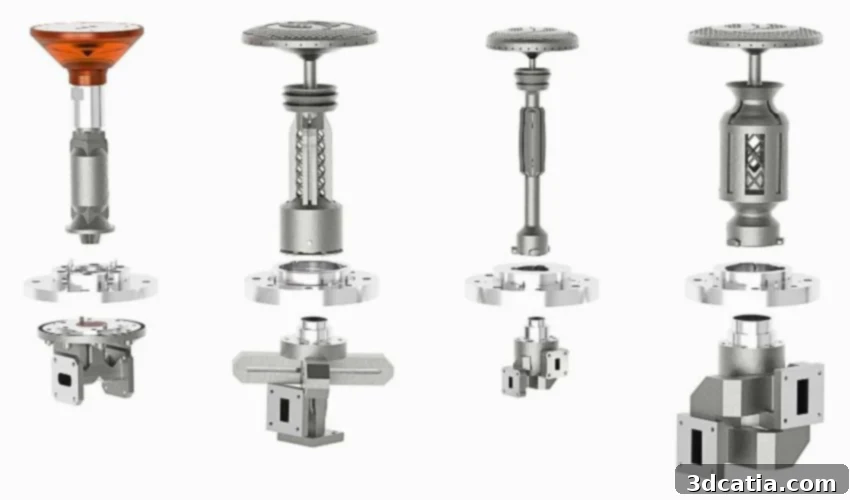
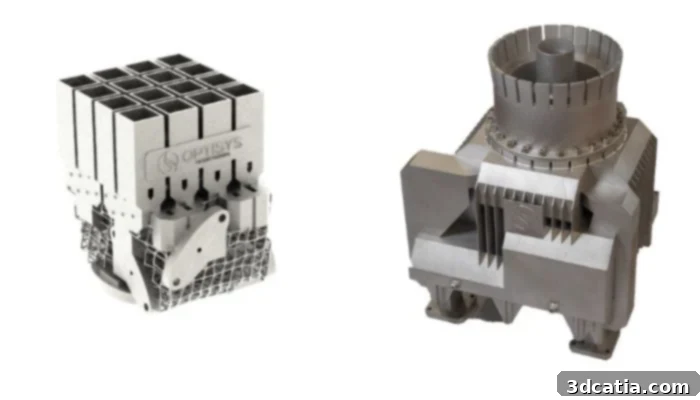
After graduation, I joined Optisys, where we specialize in designing and manufacturing 3D-printed antenna systems for critical defense, aerospace, and space applications. Our focus is on creating high-performance, lightweight solutions that meet the stringent requirements of these demanding industries.
The Evolution of Additive Manufacturing in Aerospace: A Shift in Perception
You’ve attended RAPID + TCT in the past. How have you observed the conversation surrounding additive manufacturing in aerospace evolve over time?
When I first joined Optisys, even when presenting comprehensive technical validation data, including mechanical testing, vibration analysis, and RF performance results, we still faced skepticism and lost opportunities because decision-makers were hesitant to trust 3D printing for space applications.
The most significant change I’ve witnessed is a growing openness and acceptance of the technology. Once a few successful flight-qualified parts are deployed, it becomes significantly easier for subsequent programs to embrace the technology. Each successful and validated application helps to reduce resistance and build confidence across the industry.
Lean Manufacturing and Depowdering: Influential Moments at RAPID + TCT
Was there a particular discussion or event at a previous RAPID + TCT conference that significantly influenced your approach to additive manufacturing at Optisys?
One presentation that particularly resonated with me connected lean manufacturing principles to additive manufacturing. This concept aligned with my long-standing interest in lean methodologies and reinforced the importance of efficiency alongside innovation.
Another critical topic of discussion was depowdering. While we can design intricate and complex geometries with additive manufacturing, the limitations often lie in post-processing, particularly the removal of residual powder. The discussions surrounding different approaches to depowdering and the integration of various technologies to achieve optimal results significantly influenced my perspective on production readiness.
RAPID + TCT: A Valuable Resource for Aerospace Professionals
From an aerospace perspective, what makes RAPID + TCT particularly valuable for professionals in the field?
In the aerospace and defense sectors, there’s often a tendency to dismiss a process simply because it wasn’t initially designed for aerospace applications. However, the real difference typically lies not in the process itself, but in the level of documentation and validation behind it.
The RAPID + TCT conference is invaluable because it exposes attendees to technologies from various industries that could potentially benefit aerospace applications. The key question becomes: can we adapt these processes and develop the necessary documentation to qualify them for aerospace use? Exploring the show floor exposes you to a wide array of materials, machines, and designs from across the manufacturing spectrum, serving as a catalyst for innovation.
Transitioning to Production: From Prototypes to Flight-Ready Hardware
At Optisys, you’re not just creating prototypes; you’re manufacturing flight-ready RF hardware. What technical and organizational changes are necessary when a company transitions from qualification or demonstration to full-scale production?
There’s a common saying in the aerospace and defense industry: “The customer isn’t just buying the part; they’re buying the documentation behind it.” This highlights the critical importance of comprehensive documentation and traceability.
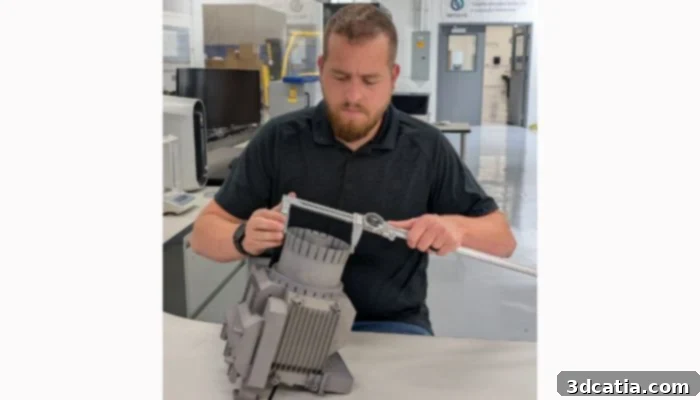
Optisys initially operated as a prototype shop. The most significant shift we experienced was a cultural one. In a prototyping environment, engineers have the freedom to handle parts, take measurements, and conduct tests as needed. However, in aerospace manufacturing, everything must be meticulously controlled and documented. Parts are carefully tracked, calibration records are maintained, and all processes are rigorously recorded.
While the core technology itself may not undergo drastic changes, the rigor and emphasis on documentation increase dramatically. This ensures accountability, repeatability, and compliance with stringent aerospace standards.
Defining Full-Rate Production in Aerospace AM
Your session is titled “Bringing Aerospace-Rated Product to Full-Rate Production.” In practical terms, what does “full-rate production” actually entail in the context of aerospace additive manufacturing?
The definition of “full-rate production” varies depending on the specific application. For Optisys, it signifies the reliable and consistent production of thousands of units year after year.
This presentation represents the culmination of a series I’ve delivered over time. The first focused on applying relevant aerospace standards. The second detailed the preparation of a facility to meet those stringent requirements. This final installment brings everything together, demonstrating the journey of a part from initial prototyping to recurring production volumes of approximately 2,000 units.
Avoiding Common Pitfalls in Scaling Additive Manufacturing
Without revealing too much, what’s one common misconception about scaling additive manufacturing in aerospace that your presentation will address?
Many companies mistakenly believe that scaling simply involves purchasing more machines to achieve full-rate production. However, my focus is on Lean Six Sigma optimization, emphasizing the importance of maximizing output with existing resources and promoting responsible growth. Investing in equipment based on a single large order can create significant financial risk if demand subsequently declines. We’ve observed this mistake repeatedly across the industry.
Who Should Attend and Key Takeaways
Who should attend your presentation this year, and what key takeaways do you hope they’ll gain?
Anyone interested in building a more sustainable and efficient manufacturing environment within their AM facility will find valuable insights in my presentation.
As part of the session, attendees will receive my simplified aerospace standards cheat sheets, along with a new guide for transitioning a facility to production capability. The goal is to provide practical information that they can directly apply to improve their business operations and achieve greater success with additive manufacturing.
Register for RAPID + TCT 2026 as 3Dnatives’ guest. Click HERE to claim your free Expo Pass, save 20% on Conference Passes and discover the latest additive manufacturing technologies, exhibitors and conference sessions across the industry. Will you be attending the event this year? Let us know in a comment below or on our LinkedIn and Facebook pages. Plus, sign up for our free weekly Newsletter to get the latest 3D printing news straight to your inbox. You can also find all our videos on our YouTube channel.
*Cover Photo Credit: Optisys